Born in Cheongju in 1928 and gone in 1990, Min Byungsan was known as the 'Street Philosopher' and 'Korea's Diogenes.' His lifelong craft of Min Byungsan-style calligraphy and prose writings now stand, thirty-six years after his death, on the frontlines of solidarity through SAF.
Philosopher of the Street — Min Byungsan and Min Byungsan-che
The philosopher Diogenes lived in a barrel. When Alexander the Great came to ask what he wanted, he asked for one thing. "Stand out of my sunlight." Min Byungsan was called the person most like him in Korea.
Diogenes From Cheongju
Min Byungsan (閔炳山) was born in 1928 in Cheongju, North Chungcheong. A writer and calligrapher. But these two words do not fully hold him. Philosopher of the street might be more precise.
That he lived a life transcending the worldly is not mere embellishment. He actually refused material abundance. He didn't cling to position or fame. He wrote; he took up the brush; and that was enough.
He passed away in 1990. Age 62. Not long enough, perhaps. But while alive, he lived enough as himself.
Min Byungsan-che — A Script Named After One Person
Scripts rarely bear a person's name. The style must be so original that it becomes identified with an individual, and the originality must be recognized by many.
Min Byungsan-che is such a script. Free and unbound. Does not follow norms. It lies outside the conventions of traditional calligraphy, but every brushstroke proves the departure came from choice rather than ignorance.
Usually, those who learn calligraphy begin by copying old model books (beopcheop). They trace the strokes of Chinese masters — Wang Xizhi, Yan Zhenqing, Ouyang Xun — tens of thousands of times, until the hand remembers. Only after tradition is imprinted on the body can one's own voice emerge. That is the orthodox line of calligraphy education.
Min Byungsan stood much further outside that line. Yet his writing carries weight. Not the freedom of the untrained, but the freedom of the one who thinks.
The Joy of Philosophy and the World of the Essay
Before being a calligrapher, Min Byungsan was a writer. His essay collection The Joy of Philosophy is representative. The title alone is paradoxical. Philosophy is usually thought to be difficult and heavy; that it is joyful?
But those who have read his writing nod. His essays are not difficult. He doesn't explain philosophical concepts in academic language; he unfolds them in the language of life. He showed in writing that writing hard is not the proof of knowledge.
"Known for a free-spirited life, a distinctive 'Min Byungsan-che,' and essay collections like 'The Joy of Philosophy,' he was an artist who practiced a life transcending the worldly."
Calligraphy and essay. For him the two aren't separable. Because writing script and writing prose are essentially the same act. Making thought into form. Converting spirit into matter.
On Transcending the Worldly
The phrase a life transcending the worldly can mislead. It can read as escape from the world. But what Min Byungsan showed was not flight but living by other measures.
It's all right without money. All right without fame. All right without a good position. What matters is whether one is honestly placing thought at the brush tip in this moment.
Easy to say, hard to live. Min Byungsan actually lived it. That made him a philosopher. Philosophy as a way of living, not a theory.
The SAF 2026 Contribution
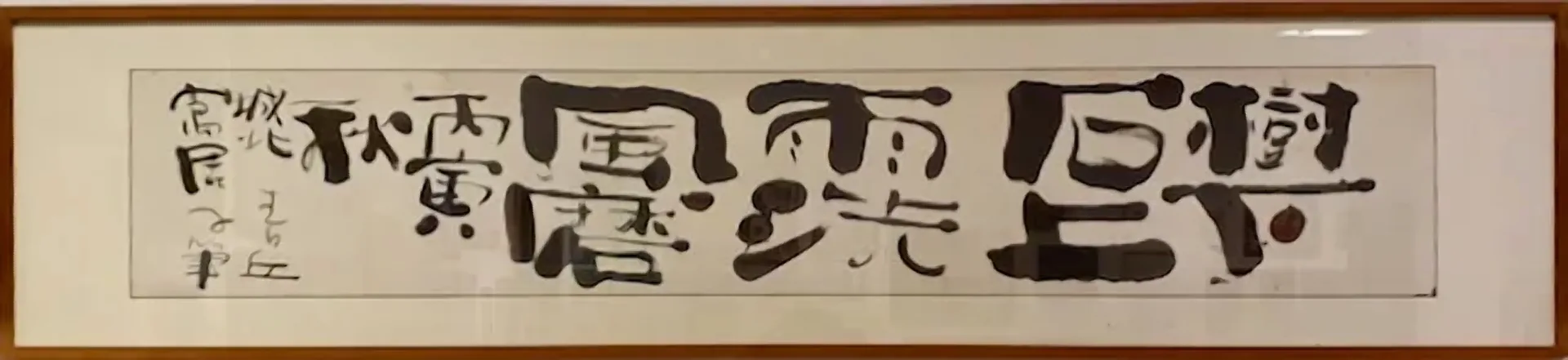
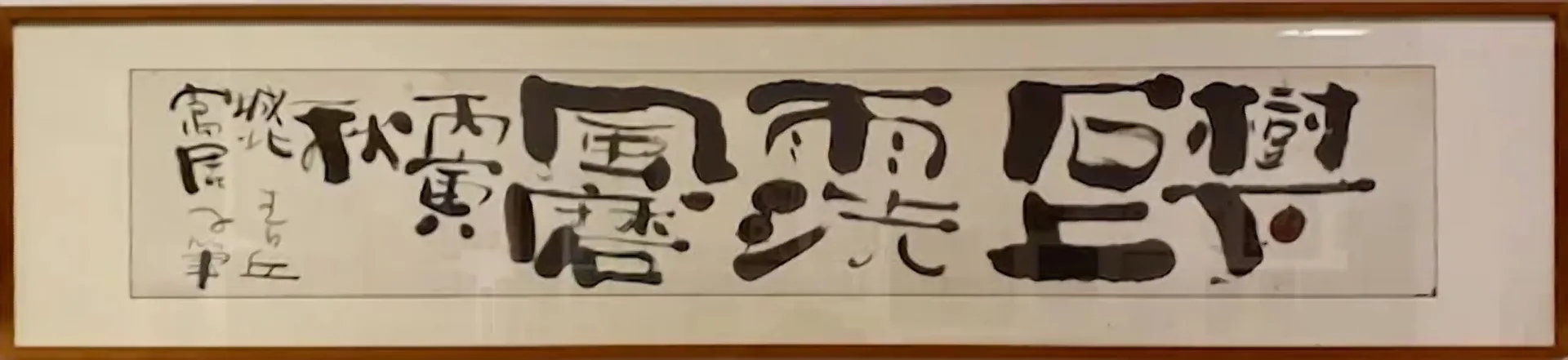
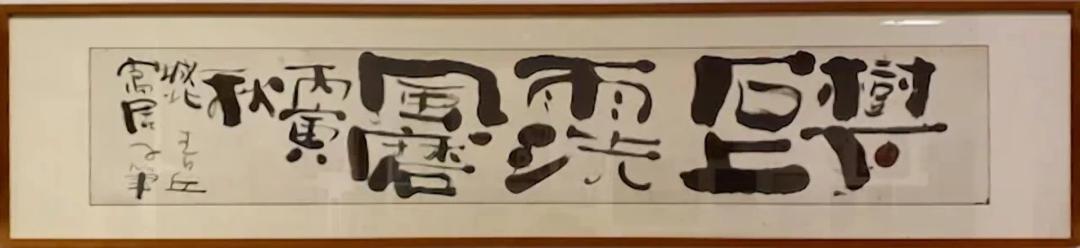
One work by Min Byungsan enters SAF 2026. Suha Seoksang (樹下石像). Stone figure under a tree.
Material: ink on paper. Size: 135.3×24 cm. Made 1986. Price: ₩5,000,000.
The tall, narrow format stands out. The vertical surface recalls traditional calligraphy. 135.3 cm in length. The form of a stone Buddha or stone figure carved with ink on paper. Min Byungsan-che will sit inside.
1986 was four years before his passing. Late work. A time when the free-spirited had ripened further.
Thirty-Six Years After His Passing, Standing in the Site of Solidarity
Min Byungsan passed away in 1990. Now 2026. Thirty-six years between.
In that time, Korea's art scene has changed a lot. Some things have not changed. The difficulty of living by art. Different standards applied to creators. The issue of financial access. These existed in Min Byungsan's time, and exist now.
SAF is a project confronting this structural problem. Artists voluntarily contribute works, and sale revenue becomes a low-interest loan for artists facing financial discrimination. The working principle of solidarity.
Min Byungsan participates with his work here. Not as the living, but because the work survives. That, too, is a mode of solidarity. Diogenes lived in a barrel, but his thought has survived over 2,000 years. Min Byungsan-che inscribed thought into its brushstrokes. Thought does not die easily.
Taking the brush, grinding ink, drawing a stroke on paper. That was everything; that was enough. The philosopher of the street remained in the world his own way.
Works by Min Byeongsan
Related reading
If this piece helped, you may also enjoy these related articles:

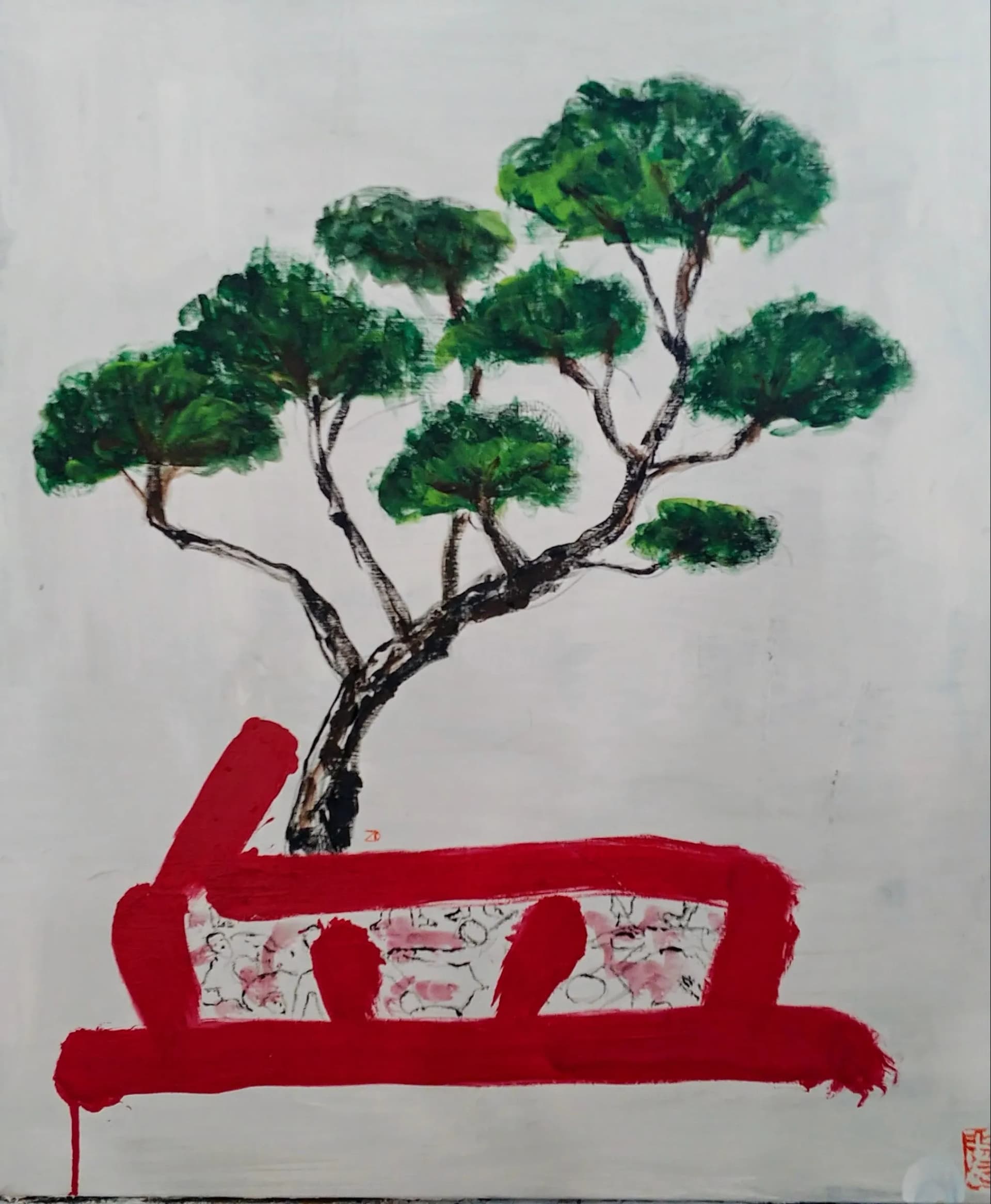
View all works by Min Byeongsan →
Related Reads
Artists on the Same Path
Collecting Guides
Seed Art Festival
·