Territory, adapted —
landscape seen in layers
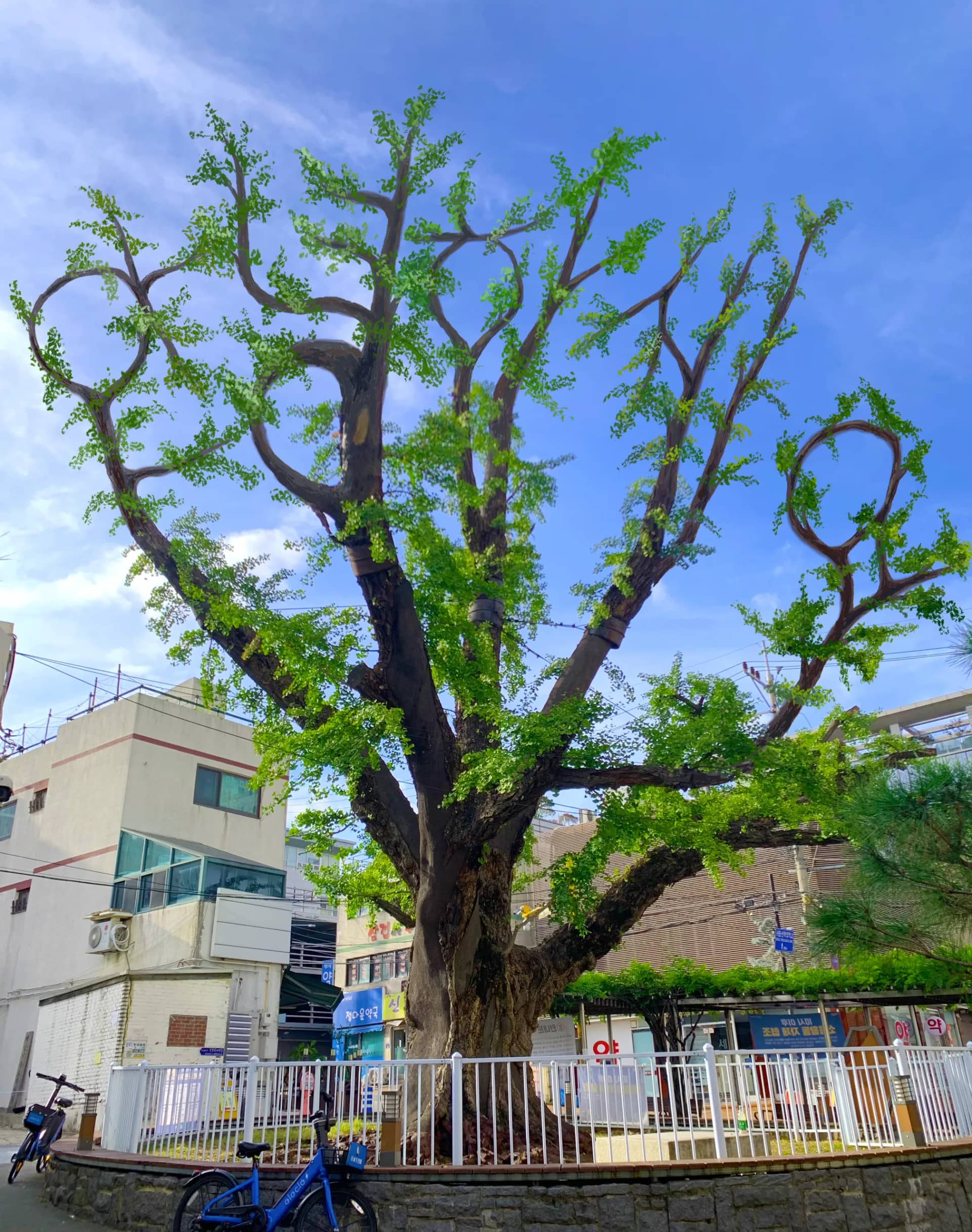
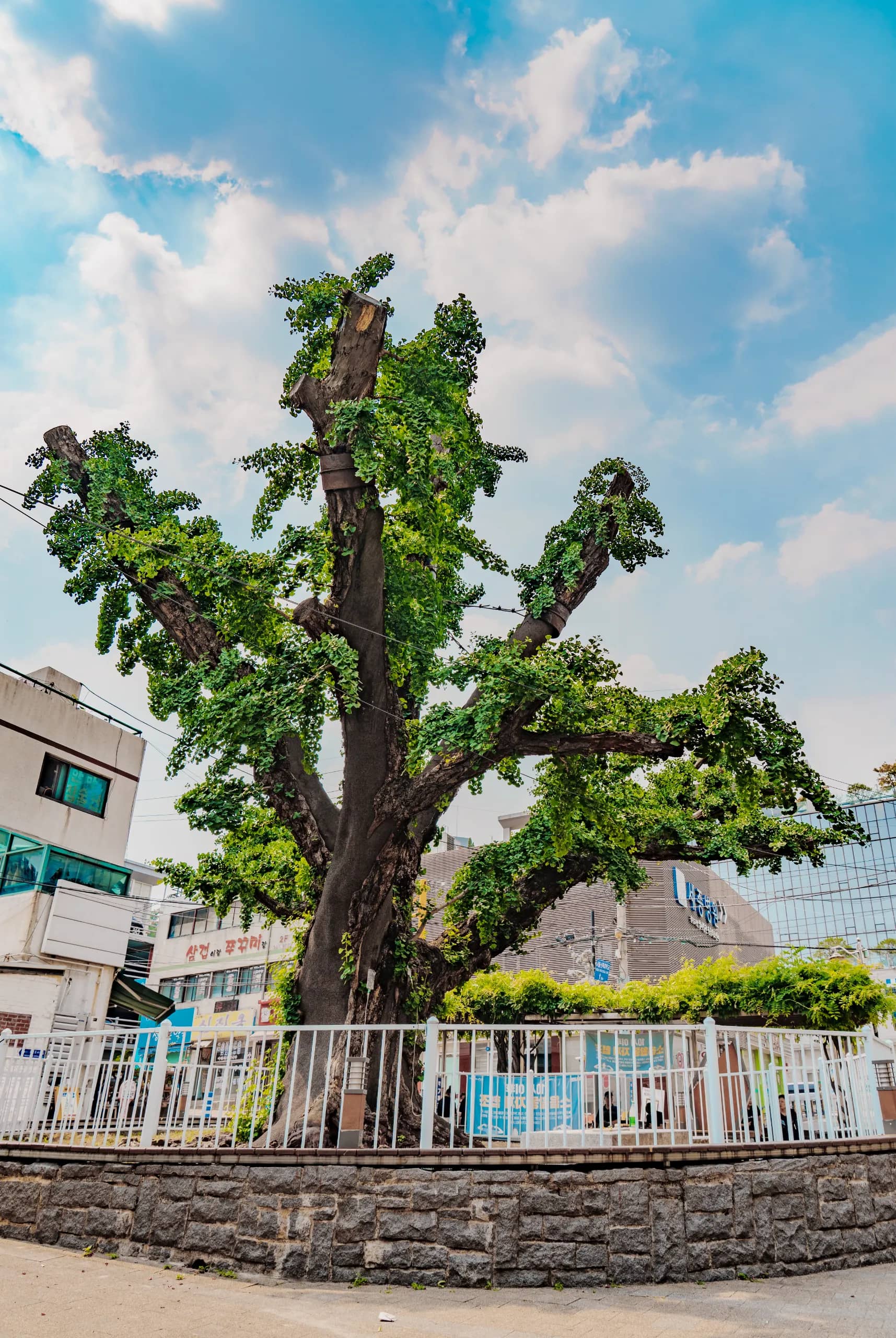
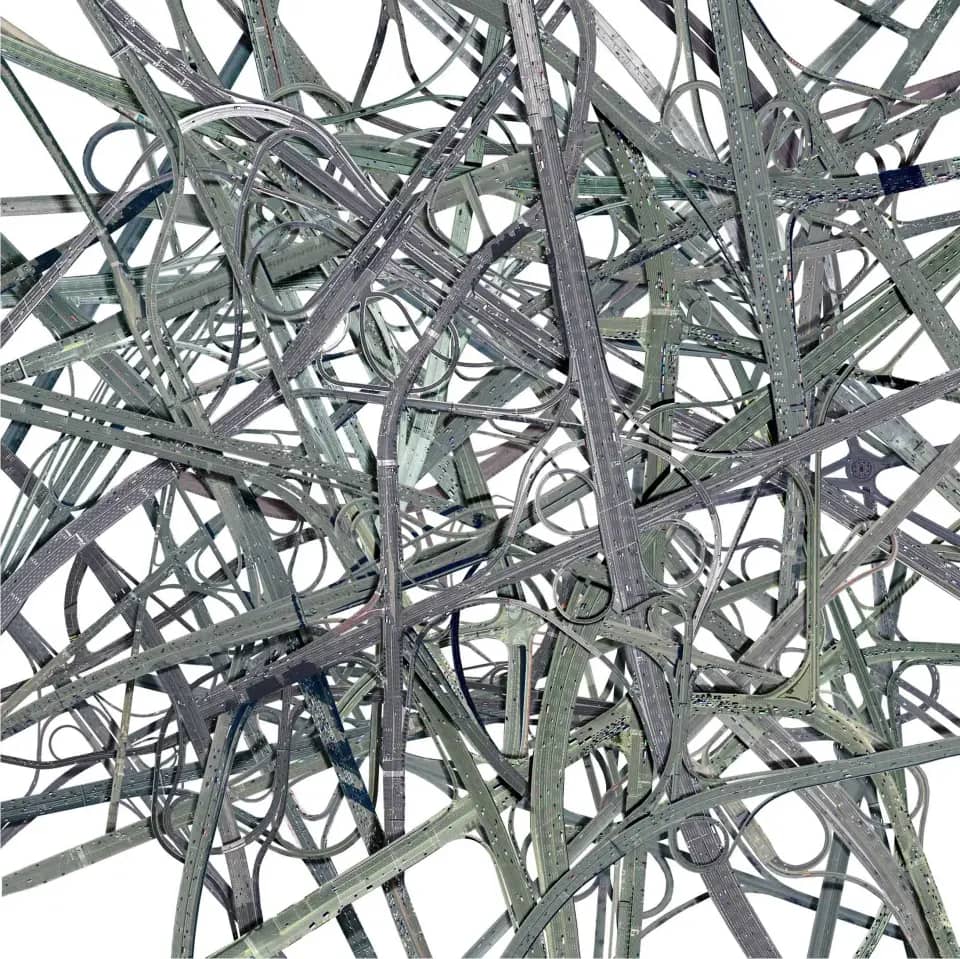
He reconstructs the gaze on landscape and territory in multiple layers.Borders and buffer zones, seen between Stuttgart and Korea.
Landscape, rearranged —
territory reconstructed in layers
Kim Tae-gyun is a visual artist who reconstructs the gaze on landscape and territory in multiple layers. Working between Stuttgart, Germany and Korea, he treats the landscape not as a single, fixed view but as a surface that can be adapted, cut apart, and rearranged.
Moving across two countries has placed borders and buffer zones at the centre of his attention. In exhibitions such as 〈Boundary 155〉 (2017, Seoul Museum of Art) and 〈Time of the Buffer Zone〉 (2022, Gyeonggi Millennium Road Gallery, Uijeongbu), the line that divides a territory becomes a subject in its own right — a place to be looked at, rather than simply crossed.
His solo exhibition 〈Adapted Territory〉 (2019, Kim Chong Yung Museum Creative Support exhibition, Seoul) names the gesture that runs through his practice: the way a territory is scripted, edited, and re-staged in the image. Earlier solo shows — 〈Eternal Vacation〉 (2013, Seoul Museum of Art New Artist selection, Space Can) and 〈Shadow of the Landscape〉 (2011, Ehingen Municipal Museum, Germany) — trace the same line of inquiry back across a decade.
His work has been shown widely in group exhibitions in Korea and Germany, including the Busan Museum of Contemporary Art and the Seoul Museum of Art new acquisitions exhibitions, MMCA Goyang Studio, APMAP by Amorepacific Museum of Art, and 〈60 Works for Baden-Württemberg〉 (2012, Singen Municipal Museum, Germany). Across these contexts the question stays constant: how is a piece of land seen, and who arranges the seeing?
Major themes
- 1
Adapted territory
Landscape treated as a surface to be scripted and rearranged — territory reconstructed image by image, layer by layer.
- 2
Borders & buffer zones
The dividing line of a territory as a subject in itself — explored in 〈Boundary 155〉 and 〈Time of the Buffer Zone〉.
- 3
Between Germany and Korea
A practice formed across Stuttgart and Korea — the doubled vantage of someone who looks at one place from the position of another.
The artist's timeline
- 2009Group exhibition 〈Zart〉, curated by Jan Hoet, Galerie ABT ART, Stuttgart.
- 2011Solo exhibition 〈Shadow of the Landscape〉, Ehingen Municipal Museum, Germany.
- 2012Group exhibition 〈60 Works for Baden-Württemberg〉, Singen Municipal Museum, Germany.
- 2013Solo exhibition 〈Eternal Vacation〉, SeMA New Artist selection, Space Can; group show 〈Events〉, MMCA Goyang Studio.
- 2014Group exhibition 〈BETWEEN WAVES〉, Amorepacific Museum of Art APMAP, Osulloc Museum, Jeju.
- 2015Group exhibition 〈Salon de SeMA〉, Seoul Museum of Art new acquisitions exhibition.
- 2016Group exhibition 〈14 Gazes〉, Gyeonggi Emerging Artists Saengsaeng Hwahwa, Goyang Aram Museum.
- 2017Group exhibition 〈Boundary 155〉, Seoul Museum of Art main building.
- 2019Solo exhibition 〈Adapted Territory〉, Kim Chong Yung Museum Creative Support exhibition, Seoul; group show 〈Formula of Imagination〉, Busan Museum of Contemporary Art new acquisitions.
- 2022Group exhibition 〈Time of the Buffer Zone〉, Gyeonggi Millennium Road Gallery, Uijeongbu.
- 2023Group exhibition 〈Keep the Peace〉, Jeon Tae-il Memorial Hall Gallery.
- 2025Group exhibition 〈Yesterday Is the Future of the Past〉, Songwon Art Center.
Selected exhibitions
- Solo: 〈Adapted Territory〉, Kim Chong Yung Museum (2019); 〈Eternal Vacation〉, Space Can (2013); 〈Shadow of the Landscape〉, Ehingen Municipal Museum, Germany (2011)
- Group: 〈Boundary 155〉, Seoul Museum of Art (2017); 〈Time of the Buffer Zone〉, Gyeonggi Millennium Road Gallery, Uijeongbu (2022)
- Group: 〈Formula of Imagination〉, Busan Museum of Contemporary Art new acquisitions (2019); 〈Salon de SeMA〉, Seoul Museum of Art new acquisitions (2015)
- Group: 〈BETWEEN WAVES〉, Amorepacific Museum of Art APMAP, Osulloc Museum, Jeju (2014); 〈Events〉, MMCA Goyang Studio (2013)
- Group: 〈60 Works for Baden-Württemberg〉, Singen Municipal Museum, Germany (2012); 〈Zart〉, curated by Jan Hoet, Galerie ABT ART, Stuttgart (2009)
Three essays —
on the work and its terrain
1Between two countries — the doubled vantage
Kim Tae-gyun works between Stuttgart, Germany and Korea. That movement is not a biographical footnote but a working method: to live between two places is to look at each one from the position of the other. A landscape stops being simply ‘here’ and becomes a thing seen from a distance, framed by another vantage.
This doubled gaze runs through his practice from the early German years — his first solo show, 〈Shadow of the Landscape〉, was held at the Ehingen Municipal Museum in 2011 — onward into the Korean work. The territory in his images is never neutral ground. It is a place already shaped by who is looking at it, and from where.
2Adapting the territory — landscape as a surface to rearrange
The 2019 solo exhibition 〈Adapted Territory〉, held as a Kim Chong Yung Museum Creative Support exhibition, gives a name to the central operation of his work. A territory, in his hands, is not recorded but adapted — scripted, edited, re-staged. The landscape becomes a surface whose layers can be lifted, shifted, and reassembled.
This is why the work reads as multilayered rather than panoramic. Where a conventional landscape offers a single coherent view, Kim's images hold several at once: a place reconstructed image by image, so that the seam between layers stays visible. The territory is shown to be a construction — something arranged, and therefore something that could have been arranged otherwise.
3Borders and buffer zones — the line as subject
Several of Kim's exhibitions turn directly to the dividing line of a territory. He took part in 〈Boundary 155〉 at the Seoul Museum of Art (2017) and 〈Time of the Buffer Zone〉 at the Gyeonggi Millennium Road Gallery in Uijeongbu (2022) — group exhibitions whose very titles name a border and the zone of pause around it.
In these contexts the line that splits a territory is not a backdrop but the subject itself. The work approaches it as something to be looked at carefully — a place where landscape, history, and the act of dividing meet. Kim's contribution stays on the visual register: how a border appears, how a buffer zone is composed in the frame, how a divided terrain is seen. The questions he raises are questions of looking, left open for the viewer.
From the galleries of Stuttgart to the museums of Seoul and Gyeonggi, Kim Tae-gyun's work has pursued a single question: how is a territory seen, and who arranges the seeing? The answer, built across a decade of solo and group exhibitions, is a body of multilayered landscapes in which territory is adapted and rearranged. He joins this campaign not as a subject of its cause but as a fellow artist in solidarity — so that those who come after might work with a little more ground beneath them.
Selected Works
4 works are featured here.
Kim Tae-gyun joined this campaign in solidarity with fellow artists. Every work sold flows directly into the artists' mutual-aid loan fund— a purchase becomes the next month's lifeline for an artist navigating financial exclusion today.