An era,
inscribed on a face
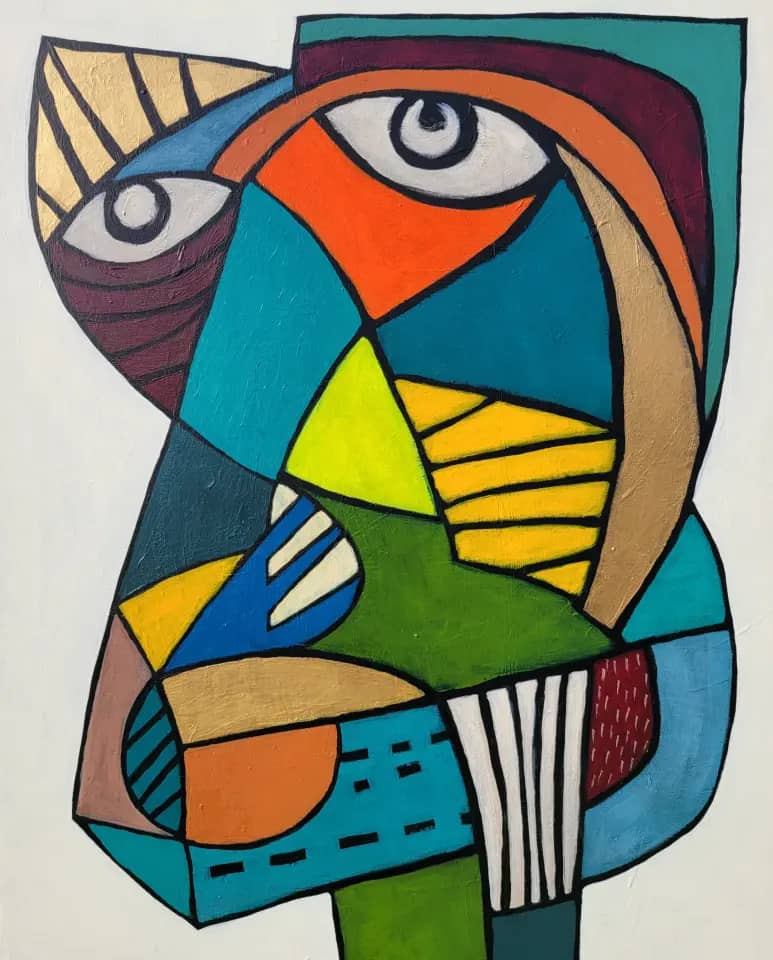
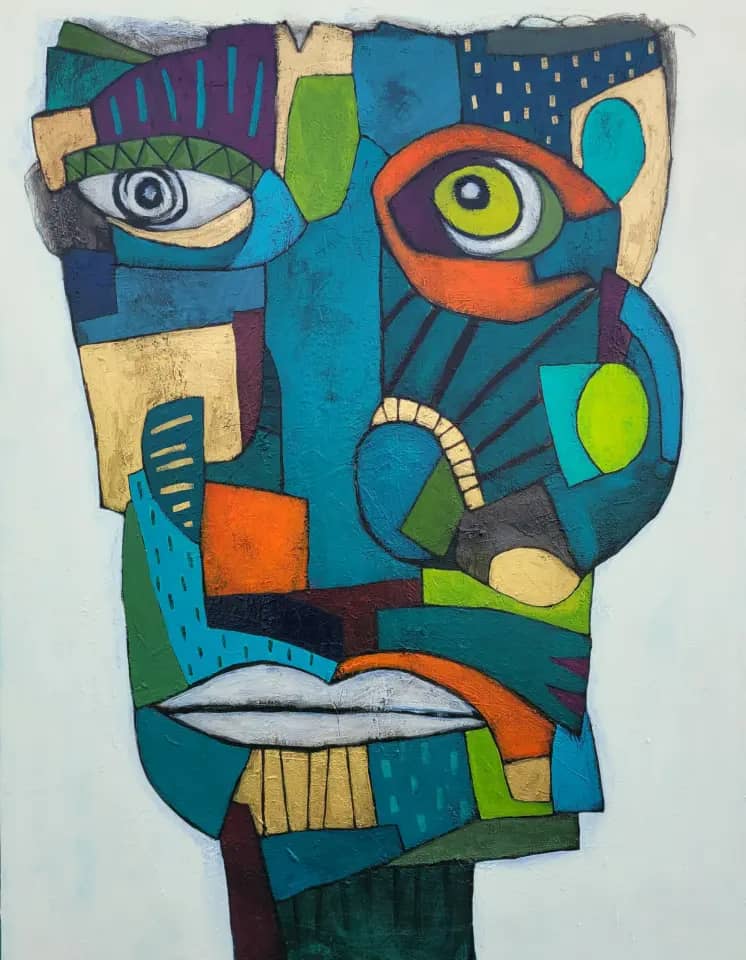
From revolutionary to painter — a life carried into color.The human face, divided by geometric line, becomes a universal reflection.
The face, reconstructed —
personal history made universal
Nam Jin Hyun (b. 1963) was born in Cheorwon, Gangwon province, and grew up in Seoul. In 1981 he entered the College of Engineering at Seoul National University, but left his studies after taking part in the student movement of the era.
In October 1990 he was arrested for activity with the South Korean Socialist Workers' League (Sanomaeng) and sentenced to thirteen years in prison, serving roughly eight before his release on August 15, 1998. Those years in confinement were the harshest of his life — and, by a paradox he would later make the subject of his work, the ground from which the painter emerged.
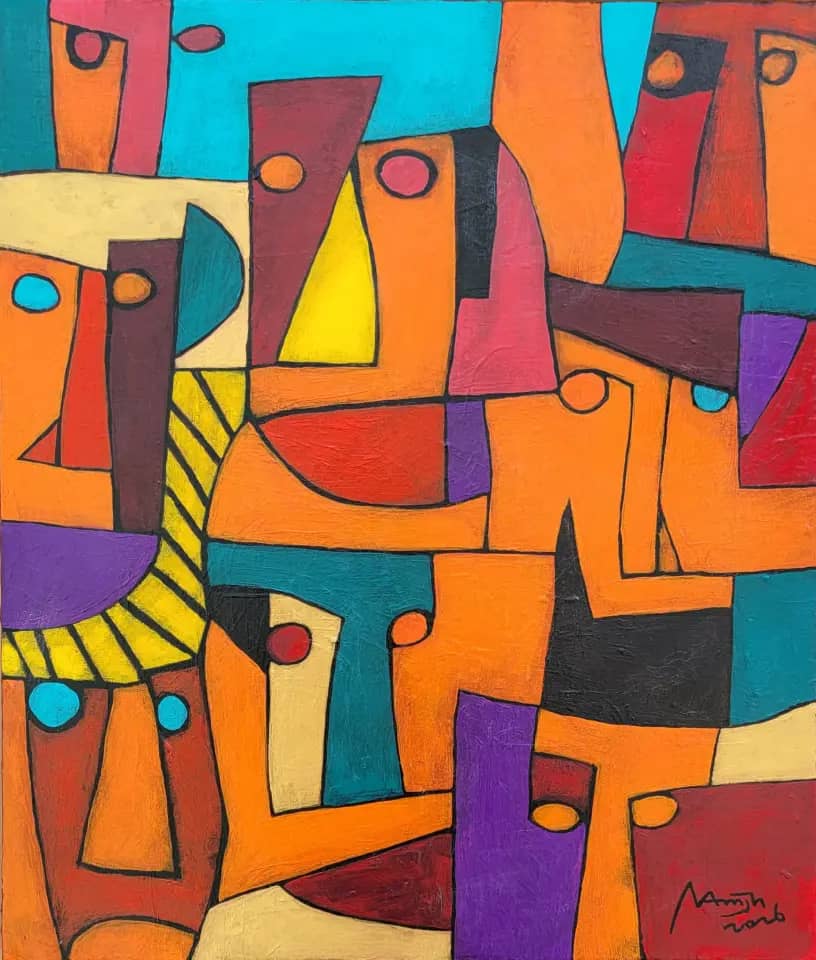
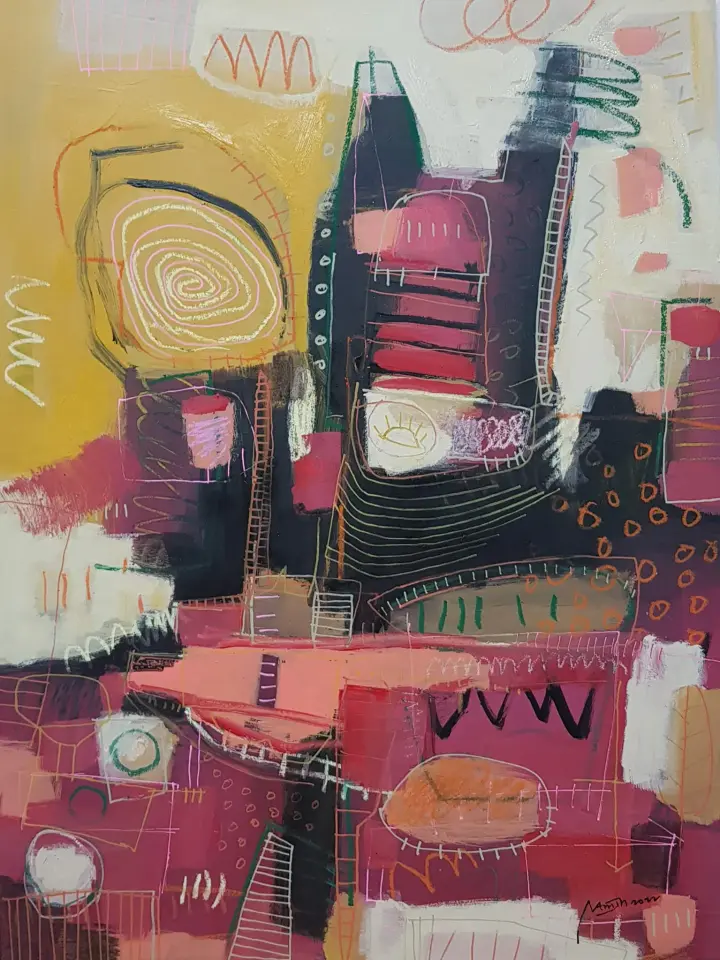
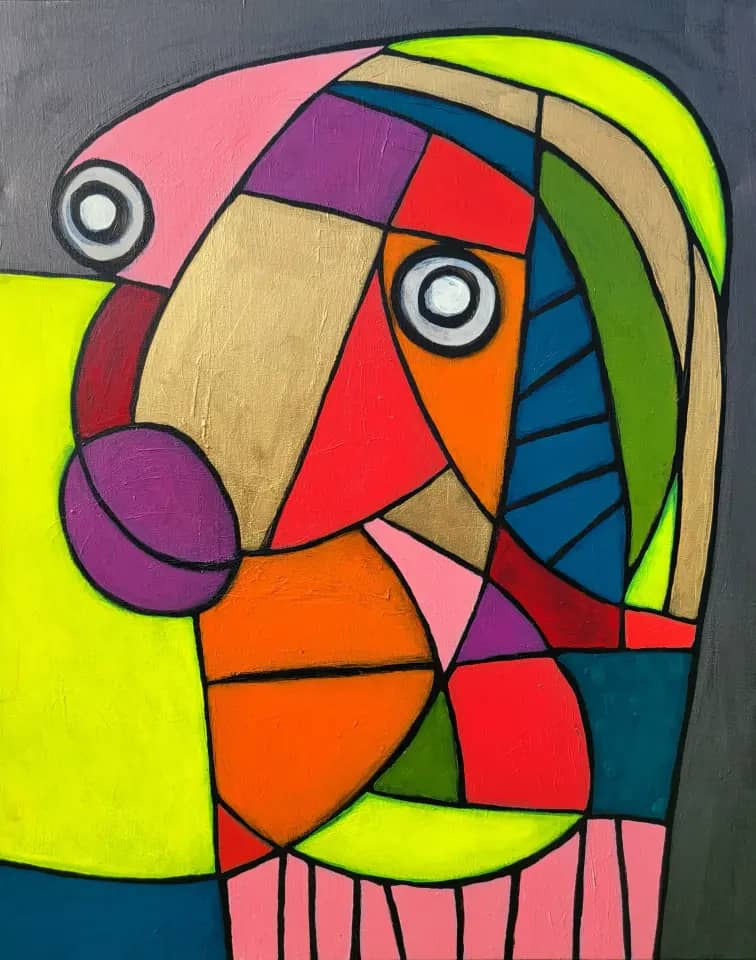
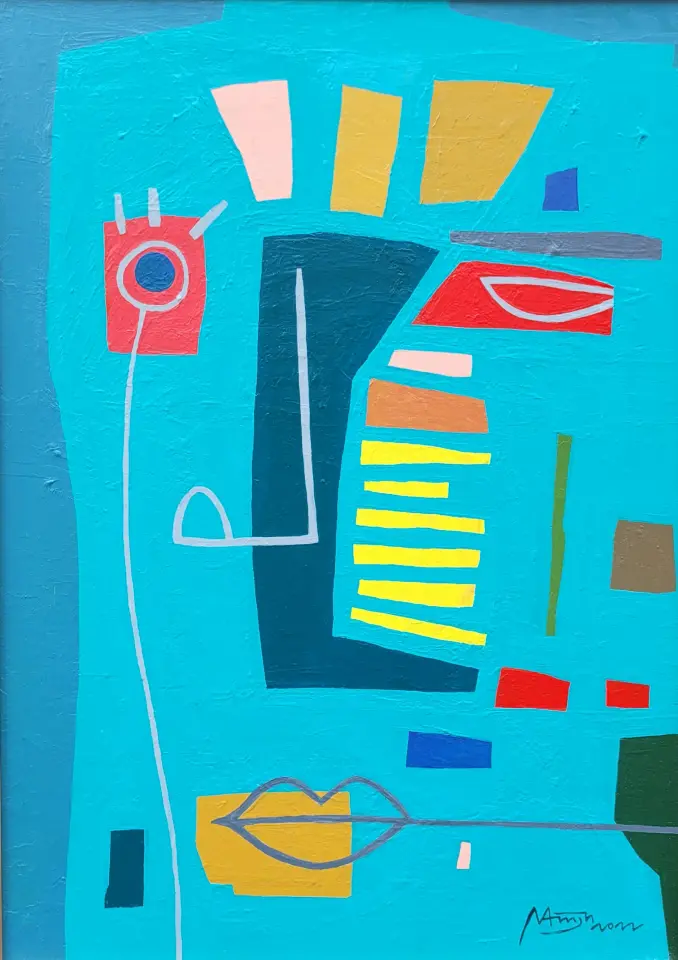
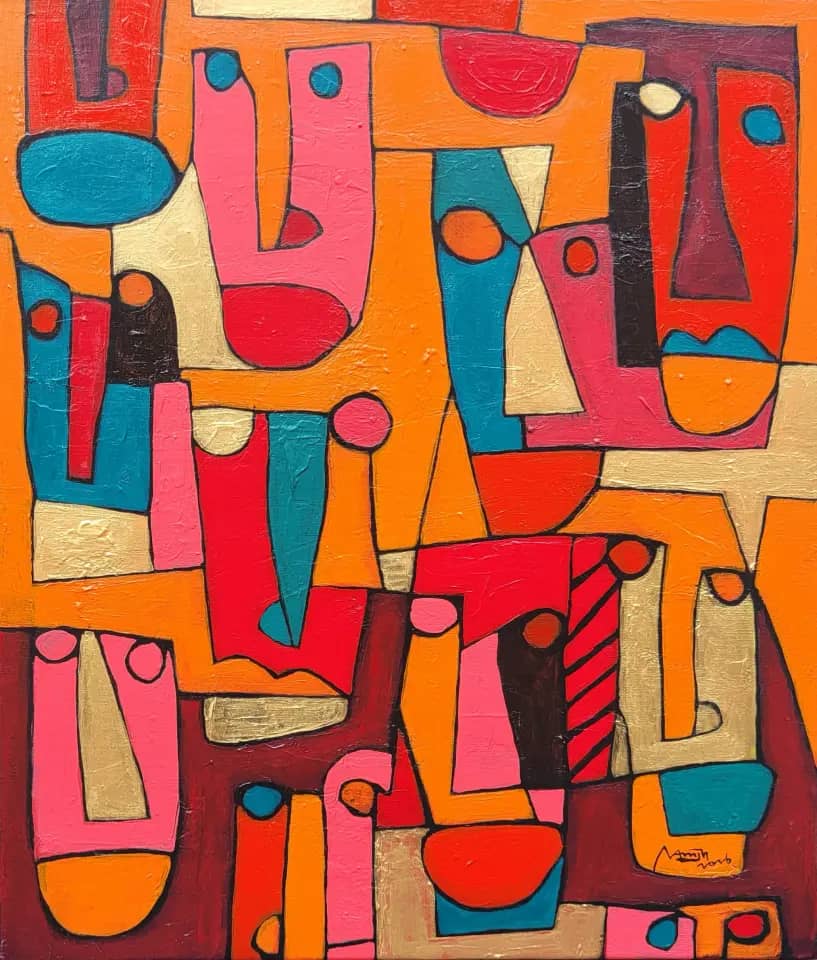
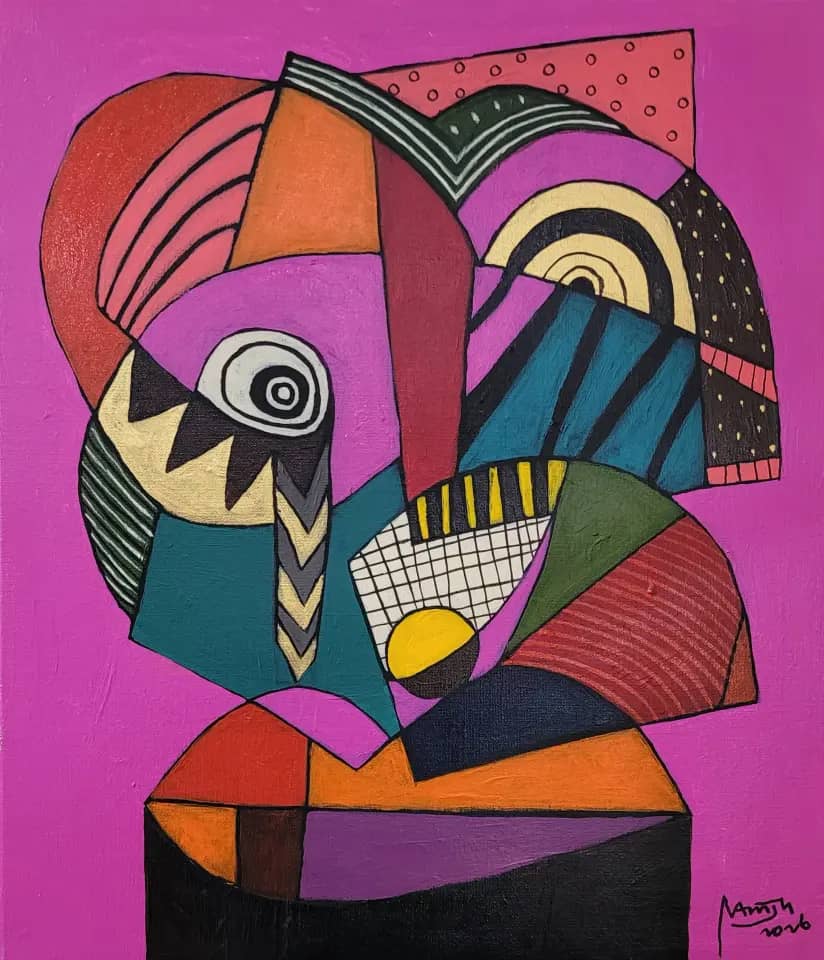
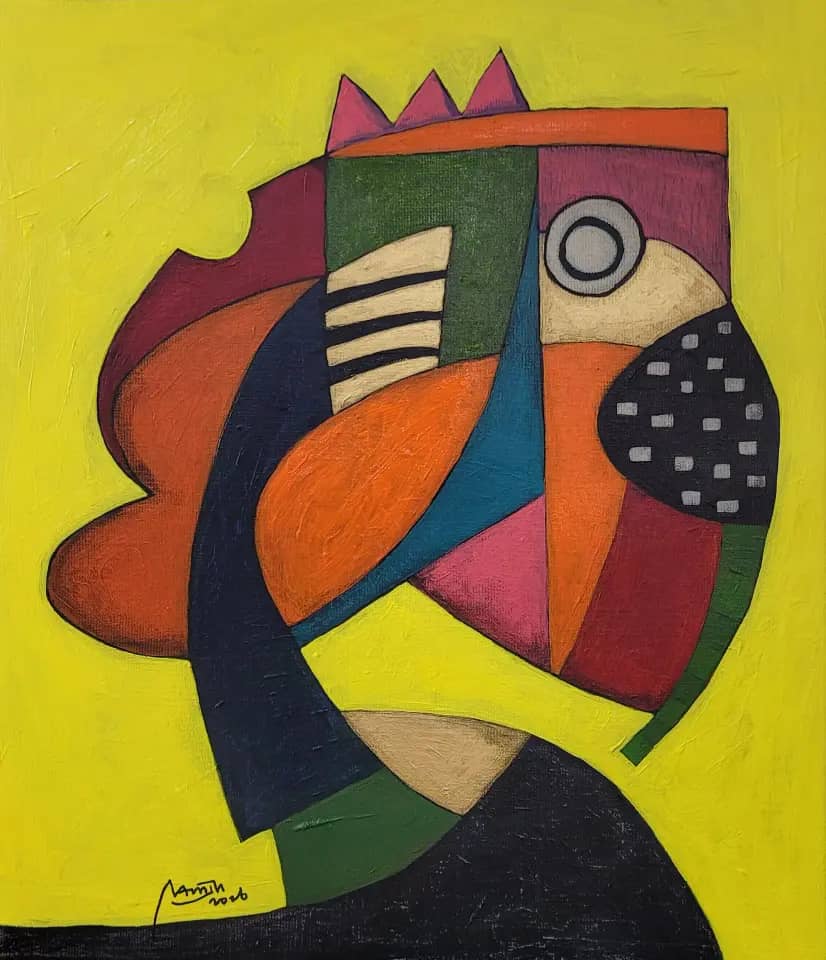
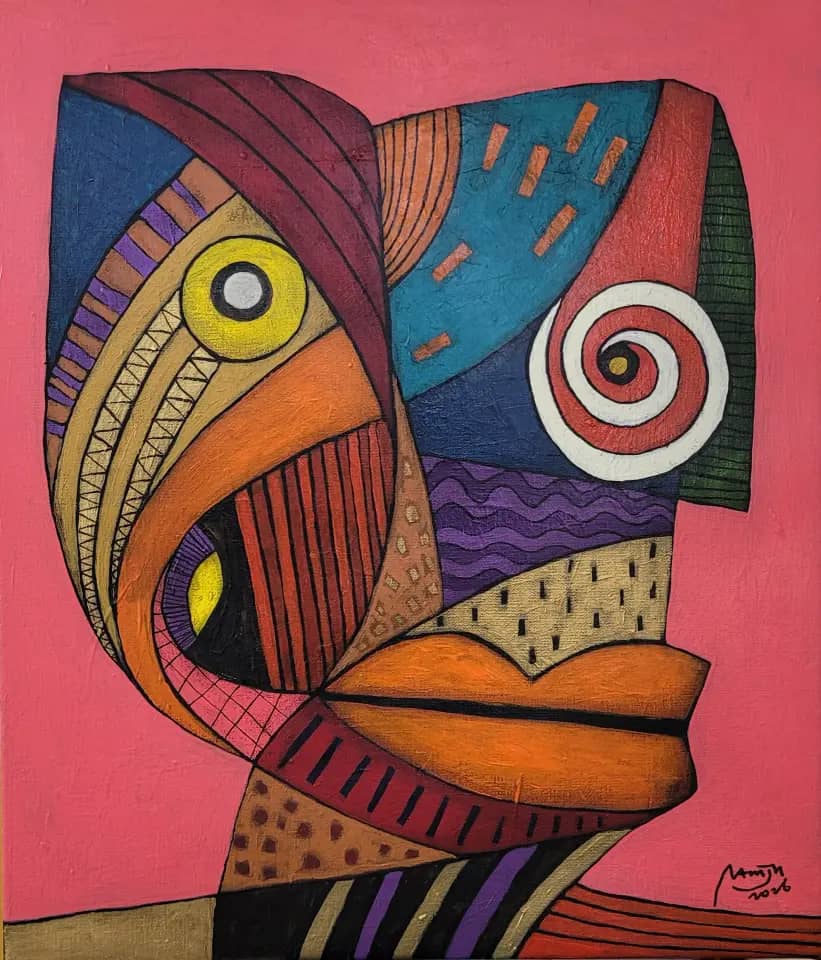
After release he ran a private academy in Daechi-dong; when it failed, he turned in 2008 to studying art in earnest. Taking the human face as his motif, he began making acrylic abstractions — dividing and reconstructing the most human of subjects into geometric line and color, so that a single individual's experience could open into a broader reflection on the human condition.
His paintings move through distinct narratives toward the substance of an era. 〈Harsh Times〉 renders the pain and grief of the prison years in blue. 〈Without a Single Shame〉 turns toward self-affirmation and dignity. The 〈World Trilogy〉 — bewildered, dislocated, absurd — probes the contradictions of contemporary society, while 〈The Human Condition〉, recalling André Malraux and Hannah Arendt, shows his work to be the result not of mere aesthetic gesture but of dialectical thought. 〈Around Sixty〉 and 〈Life, On That Blue Dream〉 set down, in line and color, a deep reckoning with six decades of a complicated life.
The film critic Jeon Chan-il has written that Nam's work “holds the power to raise a personal story into universal thought,” while the historian Jeon Woo-yong observes that “wound into his paintings are the man and the era who lived through a harsh world; through his work we come to understand the totality of the life he has lived.”
From his first solo exhibition in 2013 to his seventh in 2025, Nam has shown his work steadily, with introductions abroad at the Van Der Plas Gallery in New York, Pariskofinearts in New Jersey, and 〈2025 Art NY〉 in Manhattan. In 2023 he published the essay collection The Revolutionary Who Became a Painter (Binbin Books) — thirty paintings and their stories, carrying a personal history and the spirit of its time well beyond simple captions.
Major themes
- 1
The divided face
The most human of subjects, cut into geometric line and color — an individual face reconstructed into a universal one.
- 2
The blue of 〈Harsh Times〉
The pain and grief of the prison years, set down in blue — personal suffering transformed into a contemplative surface.
- 3
Dialectical reflection
From the 〈World Trilogy〉 to 〈The Human Condition〉, recalling Malraux and Arendt — abstraction as thought, not mere aesthetic gesture.
The artist's timeline
- 1963Born in Cheorwon, Gangwon province; grows up in Seoul.
- 1981Enters the College of Engineering, Seoul National University; leaves his studies amid the student movement.
- 1990Arrested in October for Sanomaeng activity; sentenced to thirteen years.
- 1998Released on August 15 after roughly eight years of imprisonment.
- 2008Begins to study art in earnest; takes the human face as his motif.
- 20131st solo exhibition (Insa Art Center).
- 20142nd solo exhibition (Insa Art Center).
- 2020Group exhibition, Van Der Plas Gallery (New York).
- 20213rd solo exhibition (Maru Art Center).
- 20224th solo exhibition (Gallery Boda).
- 20235th & 6th solo exhibitions; publishes the essay 〈The Revolutionary Who Became a Painter〉.
- 20257th solo exhibition (Gallery Insa Art); introduced abroad via 〈2025 Art NY〉 and others.
Selected exhibitions & abroad
- Seven solo exhibitions (2013–2025): Insa Art Center, Maru Art Center, Gallery Boda, Gallery Ssamzie-an, Gallery Insa Art.
- 〈2025 Art NY 25〉 (Manhattan); Pariskofinearts (New Jersey); Türkiye Bodrum & Adana.
- K-ART-LONDON (Mall Gallery) & K-ART-MELBOURNE (Brightspace Gallery), 2023; Van Der Plas Gallery (New York), 2020.
- Art fairs: BAMA, Gyeongju Art Fair, K Art Fair (2022); 〈100 Selected Korean Contemporary Paintings〉, Maru Art Center (2021).
- Publication: 〈The Revolutionary Who Became a Painter〉 (Binbin Books, 2023) — thirty paintings and their stories.
Three essays —
on a life turned into painting
1From revolutionary to painter — a biographical arc
Nam Jin Hyun's path to painting runs through a life that few of his contemporaries shared. Born in 1963 in Cheorwon and raised in Seoul, he entered Seoul National University's engineering college in 1981 and soon left it for the student movement. In October 1990 he was arrested for activity with the South Korean Socialist Workers' League and sentenced to thirteen years; he served roughly eight, and was released on August 15, 1998.
These are the facts of a biography, neither monument nor indictment. What matters here is what the artist himself made of them. He titled his 2023 essay collection The Revolutionary Who Became a Painter — a phrase that frames the prison years not as an end but as a passage. The harshest time of his life became, by his own account, the soil from which the painter grew.
That a person could carry such a history into the quiet labour of acrylic on canvas is itself the subject. Nam does not paint slogans; he paints faces. The turn from political conviction to the slow work of seeing is the through-line of everything that follows.
2The face as form — geometry and color
When Nam began studying art in earnest in 2008, he chose the most human of subjects: the face. But he does not render likeness. He divides the face into planes of geometric line, then reconstructs it in color, so that an individual's features dissolve into something nearer to a universal figure. The particular becomes the general; one person's face holds the weight of many.
Color carries the argument. In 〈Harsh Times〉, the blue is not decoration but temperature — the cold of confinement made visible. Elsewhere, in 〈Without a Single Shame〉, color turns toward affirmation and dignity. Across the 〈World Trilogy〉 — bewildered, dislocated, absurd — the palette tracks the contradictions of a society rather than the moods of a single sitter.
This is abstraction built from biography but addressed to everyone. The geometric fracture of the face is not a stylistic flourish; it is a way of saying that no single life is self-contained — that each face is crossed by the lines of its time.
3From the personal to the universal — what the critics see
The throughline critics return to is the movement from the personal to the universal. The film critic Jeon Chan-il writes that Nam's work “holds the power to raise a personal story into universal thought,” linking it to the philosophy of Hannah Arendt and the cinematic world of director Bong Joon-ho. The reference is apt: 〈The Human Condition〉, recalling André Malraux and Arendt, shows that these paintings are the result of dialectical thought rather than aesthetic gesture alone.
The historian Jeon Woo-yong puts it in the register of time: “wound into his paintings are the man and the era who lived through a harsh world; through his work we come to understand the totality of the life he has lived.” It is a reading that treats each canvas as a cross-section of a life and its century at once.
In the later works — 〈Around Sixty〉, 〈Life, On That Blue Dream〉 — the reckoning softens into reflection. Six decades of a complicated life are set down in line and color, no longer as wound but as understanding. The revolutionary who became a painter arrives, in the end, at a quieter and larger question: how a single face can hold an era.
From the engineering halls of 1981 to the canvases of the 2020s, Nam Jin Hyun's work has pursued a single question: how does a face carry the weight of a life, and how does color carry that face? He joins this campaign not as a subject of its cause but as a fellow artist in solidarity — so that those who come after might paint without the harshness he has borne.
Selected Works
11 works are featured here.
Nam Jin Hyun joined this campaign in solidarity with fellow artists. Every work sold flows directly into the artists' mutual-aid loan fund— a purchase becomes the next month's lifeline for an artist navigating financial exclusion today.