Fragments of the past,
shards of the future
Sculpture, installation, video, and AI — an ecology of forms.Plants and mushroom spores, drifting between the climate crisis and tomorrow.
Between spore and circuit —
an ecology of forms
Park Sohyeong is a multidisciplinary artist who works across Seoul, Boston, and New York. She earned her MFA in Sculpture from Boston University (2023) and her BFA in Fine Arts from the School of Visual Arts in New York (2021) — a trajectory that has carried her practice across three cities and several disciplines at once.
She moves freely between sculpture, installation, and video, and increasingly between media and ecology. AI-driven media work sits alongside an ecological art rooted in living material — plants and mushroom spores — so that the boundary between the synthetic and the organic becomes the very subject of the work.
Her practice is held within several communities of artists. She is a member of the New England Sculpture Association (NESA), of the Boston climate-crisis artist group I3C (Inspiring Climate Change), and of Green Recipe Lab, a group of Korean women artists. These affiliations locate her work within a wider conversation about ecology, climate, and collective practice.
In 2025 she held the invited solo exhibition 〈Recording the Day When Fragments of the Past and Shards of the Future Pass By〉 at Gallery Cheongpung in Gangneung — a title that distils her central preoccupation: how a form can hold both what has decayed and what has not yet arrived. The same year her work appeared in group exhibitions including 〈Future Yarning〉 (Piano Craft Gallery, Boston), 〈Boundary and Beyond〉 (Arts Collaborative Medford), and 〈Urban Resistance〉 (Arise Artspace, Busan).
Earlier exhibitions trace the same arc across Boston and beyond: 2024's 〈Changing tides〉 (Hopkinton Center for the Art) and the 〈Digital Soup residency〉 (Fountain Street art, Boston), and, in 2022, 〈What's Next: Perspectives, Micro to Macro〉 (Emerson College Media Art Gallery, Boston). Across them, the work keeps asking how the smallest living thing — a spore, a seed — carries the scale of a planet.
Major themes
- 1
Spore & ecology
Plants and mushroom spores as living material — an ecological art where the smallest organism holds a planetary scale.
- 2
AI & media
AI-driven media work set beside organic material, so the line between synthetic and living becomes the subject itself.
- 3
Past fragment, future shard
A form that holds both what has decayed and what has not yet arrived — sculpture as a record of overlapping time.
The artist's timeline
- 2021Earns a BFA in Fine Arts from the School of Visual Arts, New York (SVA BFA).
- 2022Group exhibition 〈What’s Next: Perspectives, Micro to Macro〉, Emerson College Media Art Gallery, Boston.
- 2023Earns an MFA in Sculpture from Boston University (BU MFA Sculpture).
- 2024Group exhibition 〈Changing tides〉 (Hopkinton Center for the Art); 〈Digital Soup residency〉 (Fountain Street art, Boston).
- 2025Invited solo exhibition 〈Recording the Day When Fragments of the Past and Shards of the Future Pass By〉, Gallery Cheongpung, Gangneung.
- 2025Group exhibitions 〈Future Yarning〉 (Piano Craft Gallery, Boston), 〈Boundary and Beyond〉 (Arts Collaborative Medford), 〈Urban Resistance〉 (Arise Artspace, Busan).
Selected exhibitions & affiliations
- Solo exhibition (invited): 〈Recording the Day When Fragments of the Past and Shards of the Future Pass By〉, Gallery Cheongpung, Gangneung (2025)
- Group exhibitions (2025): 〈Future Yarning〉 (Piano Craft Gallery, Boston), 〈Boundary and Beyond〉 (Arts Collaborative Medford), 〈Urban Resistance〉 (Arise Artspace, Busan)
- Group exhibitions (2024): 〈Changing tides〉 (Hopkinton Center for the Art), 〈Digital Soup residency〉 (Fountain Street art, Boston)
- Education: MFA Sculpture, Boston University (2023); BFA, School of Visual Arts, New York (2021)
- Affiliations: New England Sculpture Association (NESA); I3C (Inspiring Climate Change), Boston; Green Recipe Lab (Korean women artists)
Three essays —
on the work and its ecology
1Three cities, many media — a practice in motion
Park Sohyeong's practice has never settled into a single medium or a single city. After a BFA at the School of Visual Arts in New York (2021) and an MFA in Sculpture at Boston University (2023), she has continued to work across Seoul, Boston, and New York — three art ecologies with different materials, audiences, and weather.
Sculpture is her base, but installation and video pull the work outward into space and time, and AI-based media work pulls it toward the screen. Rather than treating these as separate practices, she lets them inform one another: a sculpture can become the set for a video; a video can become the documentation of an installation that no longer exists. The result is a practice that is less a fixed object than an ongoing process.
That mobility is also a method. Moving between cities and disciplines, she keeps the work attentive to context — to what a given place, material, or technology makes newly visible.
2Spores and the climate — an ecological art
At the centre of the work is living material. Plants and mushroom spores recur not as decoration but as collaborators — organisms with their own time, growth, and decay. Working with spores means working with something that changes after it leaves the artist's hands; the sculpture is never quite finished.
This ecological attention is also a political one. Park is a member of I3C (Inspiring Climate Change), a Boston artist group responding to the climate crisis, and of Green Recipe Lab, a group of Korean women artists. Her exhibitions — 〈Changing tides〉, 〈Future Yarning〉, the 〈Digital Soup residency〉 — return again and again to questions of environment, scale, and what it means to make art on a warming planet.
The smallest organism, in her work, carries the largest scale: a single spore stands in for an ecosystem, and an ecosystem for a planet under pressure.
3Fragments and shards — the 2025 solo exhibition
In 2025, Park Sohyeong held an invited solo exhibition at Gallery Cheongpung in Gangneung, under the title 〈Recording the Day When Fragments of the Past and Shards of the Future Pass By〉. The title is itself a thesis: a form that can register both what has already broken away and what has not yet taken shape.
For an artist who works with spores and AI in the same breath, the title opens a reading. The spore can read as a fragment of the past — a remnant, a survival, a carrier of deep biological time. The AI-generated image can read as a shard of the future — provisional, synthetic, arriving before we are ready for it. To hold both in a single work might be to make time itself the material.
Across her shows — from Boston to Busan, from Emerson College to Gallery Cheongpung — the work keeps recording that passing day: the moment when the decayed and the not-yet-arrived brush past each other, and a form is left to hold the trace.
From the studios of New York and Boston to galleries in Gangneung and Busan, Park Sohyeong's work pursues a single question: how can a form hold living time — the spore that decays, the image that has not yet arrived? She joins this campaign not as a subject of its cause but as a fellow artist in solidarity — so that the next generation of artists might work without the financial weight so many carry today.
Selected Works
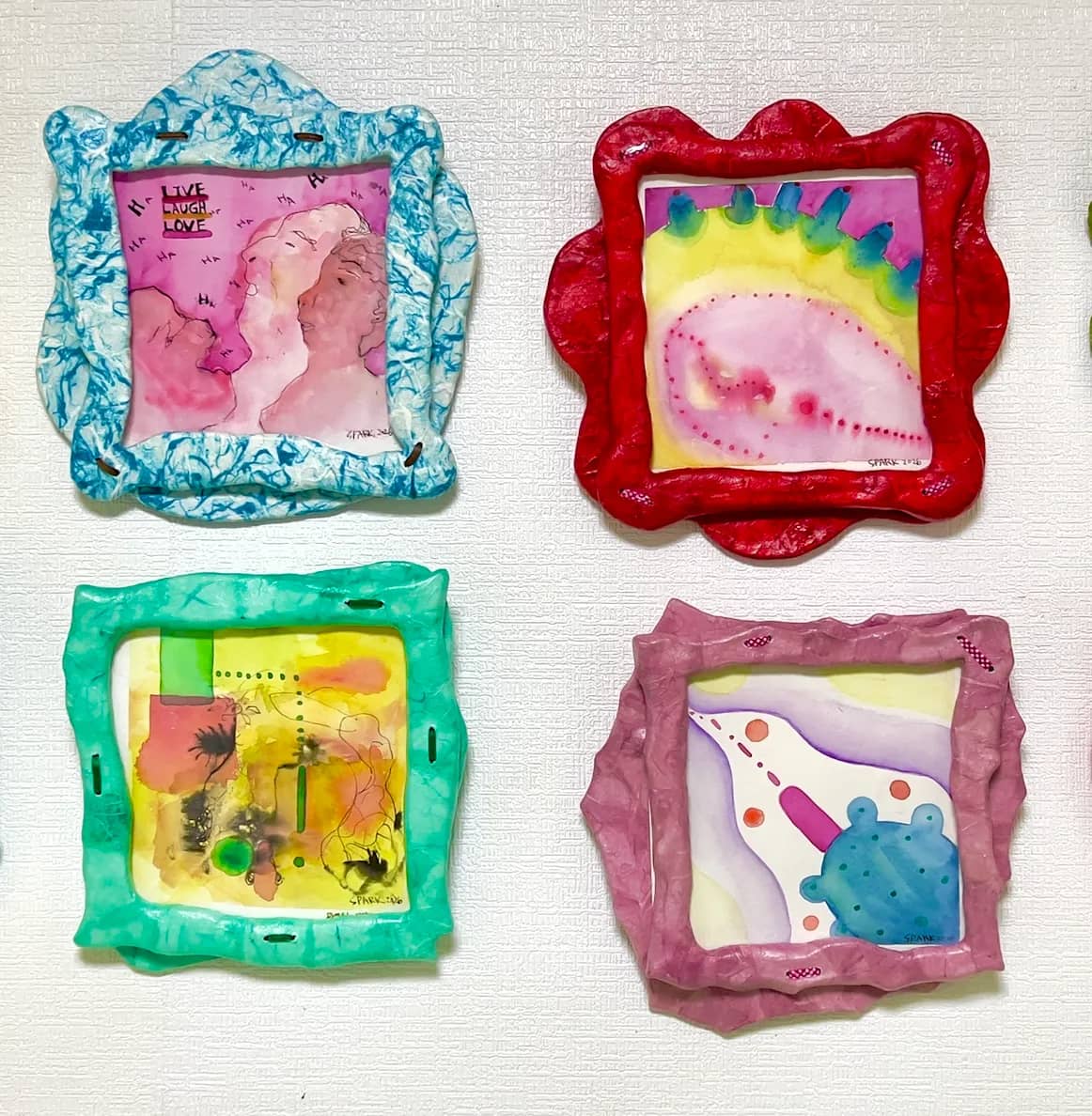
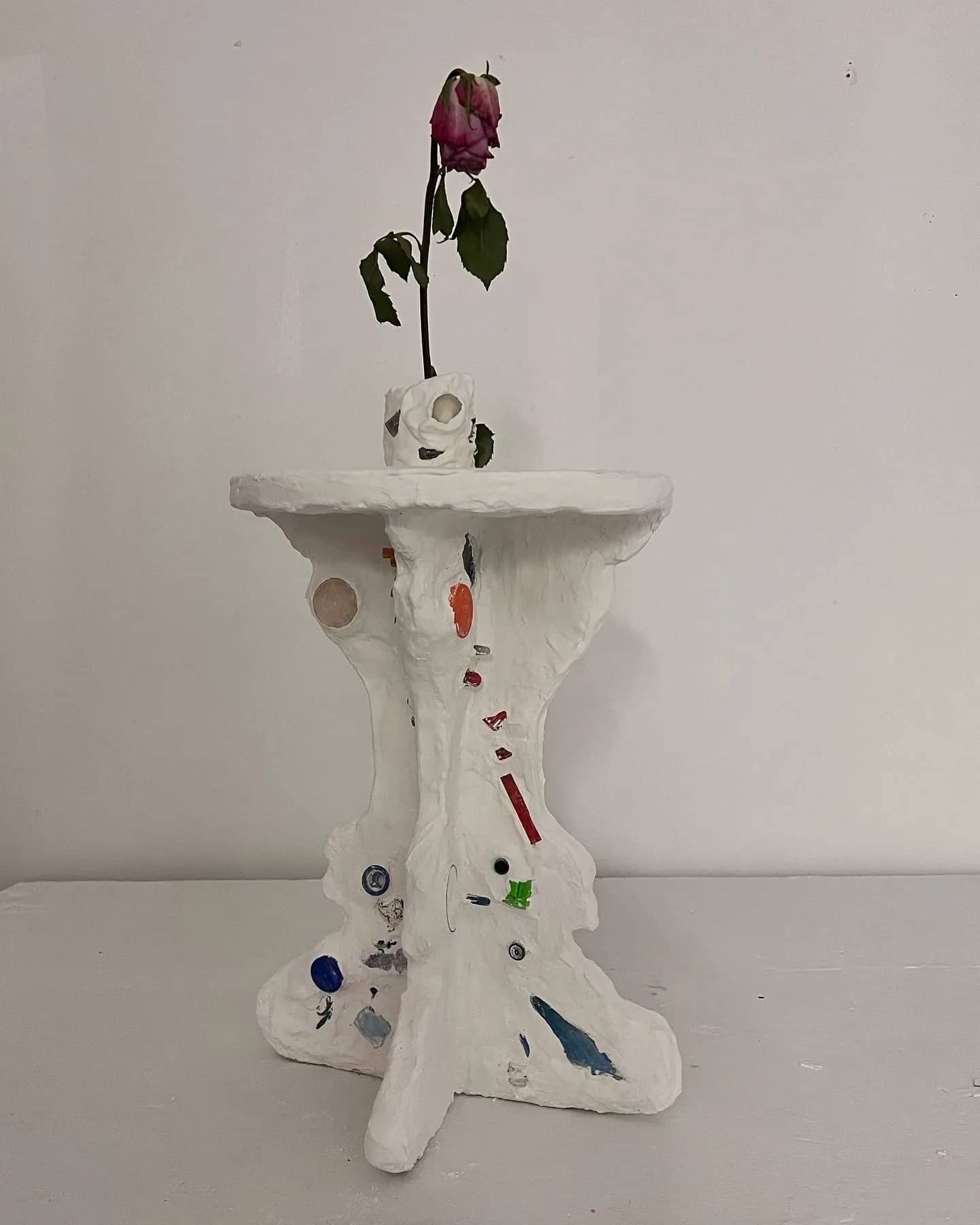
3 works are featured here.
Park Sohyeong joined this campaign in solidarity with fellow artists. Every work sold flows directly into the artists' mutual-aid loan fund— a purchase becomes the next month's lifeline for an artist navigating financial exclusion today.