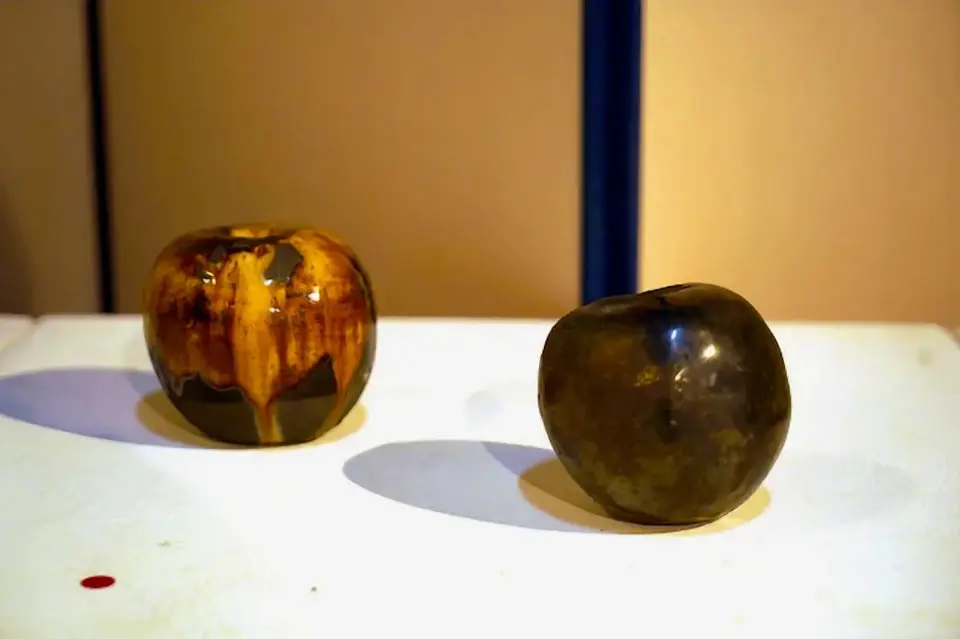
Shaped by
clay and fire
A form rises between the hand and the wheel.Glaze and kiln decide what the clay will finally become.
The hand, the wheel —
and the patience of fire
Lee Donggu is a working ceramic artist. He graduated from the Department of Ceramics at Seoul National University of Technology — now Seoul National University of Science and Technology — and has built up numerous craft competition awards over the course of his practice. Today he runs the Lee Donggu Ceramics Studio, where he continues to make work and to keep open the conversation between maker and viewer.
Ceramics is among the most patient of disciplines. It begins in earth — clay wedged and centred until it will hold a form — and it ends only after the kiln has had its say. Between those two points lies the wheel: the steady rotation against which the hand draws a vessel upward, wall by wall, out of a shapeless mass. Nothing here is instant. The material must be understood before it can be led.
Then comes the part the maker cannot fully command. Glaze goes on as a dull, chalky coat and only the heat reveals its true colour and depth; the kiln, at its peak, can lift a surface to brilliance or quietly undo a week of work. To work in clay is to accept this collaboration with fire — to plan meticulously and then to let the kiln finish the sentence.
Running a studio of one's own name adds a further dimension to that practice. A studio is not only a workshop but a place of exchange — where the slow knowledge of throwing, glazing, and firing is shared, and where pieces meet the people who will live with them. Lee Donggu's engagement is of this kind: not the spotlight of a single exhibition but the steady, daily keeping of a craft.
He joins this campaign in that same spirit of steadiness. A working ceramic artist, secure in his own practice, he sets his work down here in solidarity — so that its sale might become a low-interest lifeline for fellow artists facing financial exclusion today.
Major themes
- 1
Clay and the wheel
A form drawn upward from a shapeless mass on the steady rotation of the wheel — nothing instant, the material understood before it is led.
- 2
Glaze and kiln
Glaze goes on dull and only the heat reveals its colour and depth — the maker plans meticulously and lets the fire finish the sentence.
- 3
A studio of one’s own
The Lee Donggu Ceramics Studio is a place of exchange — the slow knowledge of a craft shared, and pieces meeting those who will live with them.
At a glance
- MediumCeramics — clay, wheel, glaze, kiln.
- EducationGraduated, Dept. of Ceramics, Seoul National University of Technology (now Seoul National University of Science and Technology).
- AwardsNumerous craft competition awards.
- StudioRuns the Lee Donggu Ceramics Studio — active practice and engagement.
Practice & background
- Graduated from the Department of Ceramics, Seoul National University of Technology (now Seoul National University of Science and Technology)
- Numerous craft competition awards to his credit
- Runs the Lee Donggu Ceramics Studio, continuing active artistic practice and engagement
Three essays —
on clay, fire, and the studio
1Clay and the wheel — form drawn from the centre
Before a vessel can be made, the clay has to be brought to centre. Wedged to drive out air and even the moisture, then pressed against the spinning wheel until it runs true, the material is prepared more than it is shaped. A wobble left in the body of the clay will widen into a fault as the walls rise; the patience spent here is invisible in the finished piece, and decisive to it.
Only then does the form begin — the hand bracing against the rotation, opening the mass, pulling the wall upward in slow, repeated passes. Each pass is a negotiation between the speed of the wheel, the wetness of the clay, and the steadiness of the hand. Ceramics rewards the maker who has learned to listen to the material rather than to impose on it.
This is the discipline at the root of Lee Donggu's practice. A trained ceramic artist, he works in the long tradition of the wheel, where mastery is measured not in speed but in the quiet authority of a form that stands true.
2Glaze and kiln — the part the fire decides
Glaze is the great act of trust in ceramics. Applied as a dull, chalky suspension, it gives almost no sign of what it will become. Its colour, its gloss, the way it pools and breaks over an edge — all of this is locked inside the chemistry of the heat, released only when the kiln reaches temperature. The maker chooses and layers in faith, then waits.
The firing itself is the least controllable hour of the whole process. A few degrees, a draft, the placement of a piece on the shelf — small variables can lift a surface to unexpected brilliance or quietly ruin a week of work. Every ceramic artist knows the particular suspense of opening a kiln, and the discipline of accepting what the fire returns.
To make in clay, then, is to plan with precision and to surrender the ending — to collaborate with a force that cannot be fully directed. The finished glaze is a record of that collaboration: the maker's intention and the kiln's verdict, fused into a single surface.
3The studio — craft kept day by day
To run a studio under one's own name is to commit to a craft as an ongoing way of life rather than an occasional event. The Lee Donggu Ceramics Studio is such a place — a working room where clay is thrown, glazed, and fired in a continuous rhythm, and where the slow knowledge of the medium accumulates through repetition.
A studio is also a place of exchange. It is where finished pieces meet the people who will use and live with them, and where the conversation between maker and viewer stays open — the engagement that keeps a craft tradition breathing rather than merely preserved. Numerous craft competition awards mark a body of work recognised along the way, but the deeper measure is this steadiness: the daily keeping of the craft.
It is from this position of steadiness — a working artist secure in his own practice — that Lee Donggu sets his work down in this campaign, in solidarity with fellow artists who carry the weight of financial exclusion.
From the centred clay on the wheel to the verdict of the kiln, Lee Donggu's practice follows the patient arc of ceramics — a craft kept day by day in a studio of his own name. He joins this campaign not as a subject of its cause but as a fellow artist in solidarity, so that the proceeds of his work might become a low-interest lifeline for artists facing financial exclusion today.
Selected Works
2 works are featured here.
Lee Donggu joined this campaign in solidarity with fellow artists. Every work sold flows directly into the artists' mutual-aid loan fund— a purchase becomes the next month's lifeline for an artist navigating financial exclusion today.