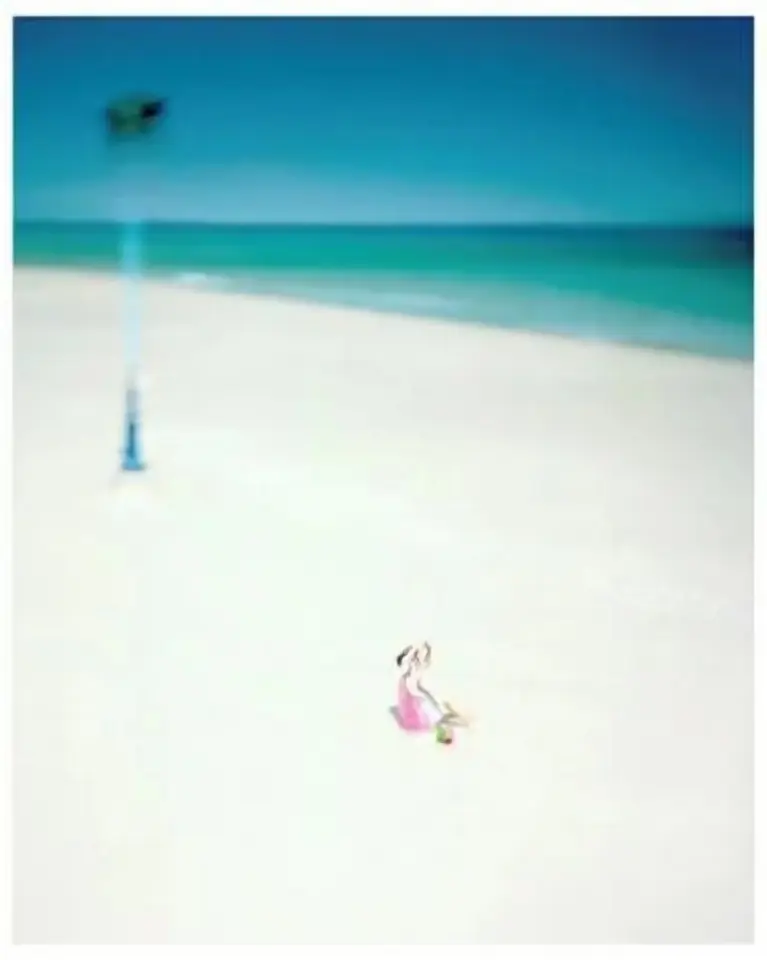
Beyond the name of a genre,
the image itself
The camera is only one mechanism for capturing a phenomenon.What matters is the image one creates — and the message it carries.
Pure photography —
and the edge of its ontology
Lee Sucheol built the foundation of his practice in the category of fine-art (“pure”) photography, studying photography at Osaka University of Art in Japan. “Pure” photography, in his understanding, is less a heroic act of carrying social message or the spirit of an age than an attitude focused on the inner, artistic value of the medium itself.
From that ground he has worked to expand the ontological boundary of photography. He does not see the photograph only as a tool for capturing its subject: embracing varied processes, he has made works through the printing process alone — without camera or film — letting the image arrive by other means.
For him, whether the result is called a “photograph,” an “image-graph,” or a “digi-graph” is not what matters. So long as the artist creates an image in his own way and carries a message through it, the work holds full artistic value. The camera, in this view, is simply one mechanism among many for capturing a phenomenon.
That conviction runs through his meditative, restrained images. After Osaka, he went on to complete graduate study at Sangmyung University's Graduate School of Art & Design (Photography — fine art / image science), and his work has unfolded across series such as 〈Journey of Memory〉, 〈Asynchronicity Jeju〉, and 〈Trace and Light〉 — each returning to the materiality of light and the print.
Major themes
- 1
Fine-art photography
An attitude focused on the inner, artistic value of the medium itself, rather than on carrying social message directly.
- 2
Expanding the ontological edge
Not only capture: he makes images through the printing process alone, without camera or film, embracing varied processes.
- 3
Beyond the name of a genre
Photograph, image-graph, or digi-graph — the label is not the point. The created image and its message are.
The artist's timeline
- Edu.Osaka University of Art, Dept. of Photography (Japan); Sangmyung University Graduate School of Art & Design, Photography — fine art / image science.
- 1999Solo exhibition 〈memories〉, Ihu Gallery — among his early solo presentations.
- 2008Solo exhibition 〈Epiphany of Illusion〉.
- 2011Solo exhibition 〈Hwamong Junggyeong〉, Grimson Gallery.
- 2018〈Asynchronicity Jeju〉, Space22 · Gallery Bresson and others.
- 2020〈Daydream〉, Gallery Hyeyum, Gwangju; participates in the Korea Galleries Art Fair (COEX).
- 2021〈Trace and Light〉, Toma Gallery, Daegu.
- 2022–〈Journey of Memory〉, Yeomi Gallery, Seosan (2022) · Gallery The Beam, Daejeon (2023) · Solaris Gallery, Osaka.
- 2025〈Hyewon Photo Album〉, invited exhibition at Space Thunder · Gallery Is.
Selected exhibitions & teaching
- Solo exhibitions include 〈Hyewon Photo Album〉 (2025), 〈Journey of Memory〉 (Osaka · Daejeon 2023 · Seosan 2022), 〈Trace and Light〉 (Daegu, 2021), 〈Daydream〉 (Gwangju, 2020), 〈Asynchronicity Jeju〉 (2018), 〈Hwamong Junggyeong〉 (2011), 〈Epiphany of Illusion〉 (2008), and 〈memories〉 (since 1999).
- Jeju International Photo Festival 〈Asynchronicity Jeju〉 (Gallery Simon); Jeju Asynchronicity solo exhibitions.
- Group exhibitions include the 2025 New Wave exhibition (Gallery Bresson) and Insadong Art Week, the 2020 Korea Galleries Art Fair (COEX), and Contemporary Art Ruhr Media Art Fair (Zollverein, Essen, Germany, 2014).
- Teaching: lecturer at Daegu Arts University (2007–2012), Kookmin University (2008–2009), Sangmyung University Dept. of Photography & Image (2013–present), and Chungnam National University (2010–present).
Two essays —
on the work and its ground
1The ground of pure photography
Lee Sucheol studied photography at Osaka University of Art, and it was there that he set the ground of his practice in fine-art — “pure” — photography. The word can be misread. “Pure” here does not mean empty of meaning; it names an attitude. Where some photography sets out, with a kind of literati seriousness, to carry social message or the spirit of an age directly, pure photography turns instead to the inner, artistic value of the medium itself.
This is not a retreat from the world but a different way of attending to it. The restraint of his images — their meditative, contemplative tone — comes from this conviction: that the photograph is, before anything else, an artistic object whose value lies in how it is made and what it allows the viewer to feel, rather than in the slogan it might be made to serve.
2Photography without a camera — the ontological edge
From that ground, Lee Sucheol asks a harder question: what, exactly, is a photograph? Most of us assume a chain — a subject, a lens, a film or sensor, a print. He has worked to loosen each link. Embracing varied processes, he has made images through the printing process alone, without camera or film, so that the result arrives not from capturing the world but from working the material of the print itself.
Out of this practice comes his indifference to the names. Whether a given work is called a photograph, an image-graph, or a digi-graph is, for him, beside the point. The genre label describes a process; it does not measure a work. What measures a work is whether the artist has created an image in his own way and carried a message through it. If he has, the work holds full artistic value — and the camera reveals itself as only one mechanism, among many, for capturing a phenomenon.
This is why his series — 〈Journey of Memory〉, 〈Asynchronicity Jeju〉, 〈Trace and Light〉 — feel less like records than like surfaces where light and the print have been allowed to do their own quiet work. The boundary of photography, in his hands, is not a wall but a horizon he keeps moving outward.
Between the print and the image it carries, between the name of a genre and the thing itself, Lee Sucheol has built a quiet, sustained body of work that keeps asking what a photograph can be. He joins this campaign in solidarity with fellow artists — so that the next generation of artists might keep making images in their own way.
Selected Works
2 works are featured here.
Lee Sucheol joined this campaign in solidarity with fellow artists. Every work sold flows directly into the artists' mutual-aid loan fund— a purchase becomes the next month's lifeline for an artist navigating financial exclusion today.