I only
photograph people
He did not visit to photograph — he went to live.Decades spent inside the lives of those the camera otherwise never enters.
To photograph a person —
you must first become their neighbor
Jo Munho was born in 1947 in Changnyeong, South Gyeongsang province. He emerged in documentary photography through the 1980s, earning the Grand Prize at the Dong-A Art Festival in 1985 with his serial work on the red-light district — the series that would eventually become the Cheongnyangni 588 body of work. The following year he won the Grand Prize at the Asian Games Documentary Photography Competition.
What distinguishes Jo Munho from most documentary photographers is a principle he has practiced across his entire career: he does not arrive to photograph and then leave. From 1983 to 1988 he lived inside the Cheongnyangni red-light district, sharing daily life with the women there. Later he moved to live among Gangwon Province mountain farmers, then among the artists and bohemians of Insadong. He has worked in the same way wherever he has turned his lens — market vendors, the residents of jjokbang neighborhoods — because for him, the photograph cannot precede the relationship.
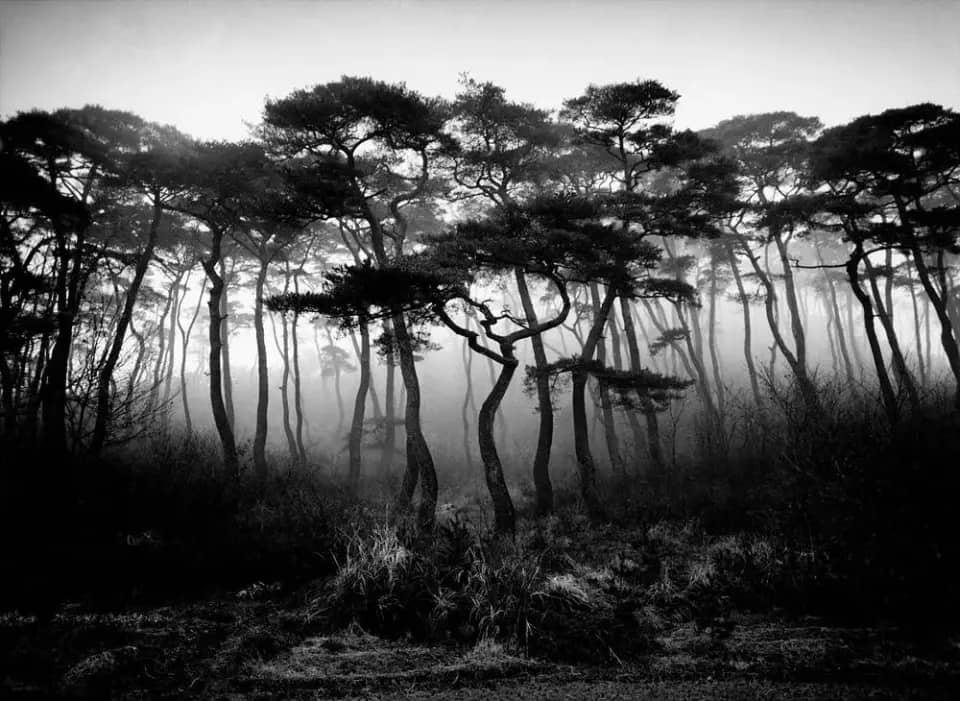
Beyond his photographic practice, Jo served as editor-in-chief of Monthly Photography, the Korean Photo Association journal, and Samsung Photo Family. From 1995 he served for ten years as president of the Korea Environmental Photographers Association, contributing to the documentation of Korea's natural environment alongside his people-centered practice.
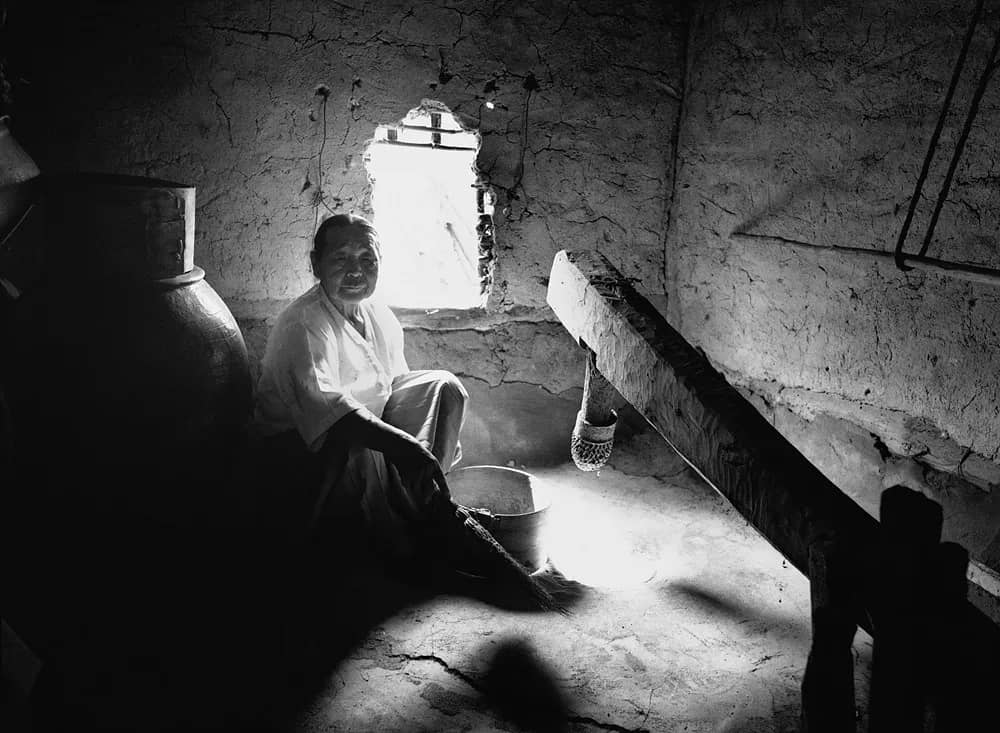
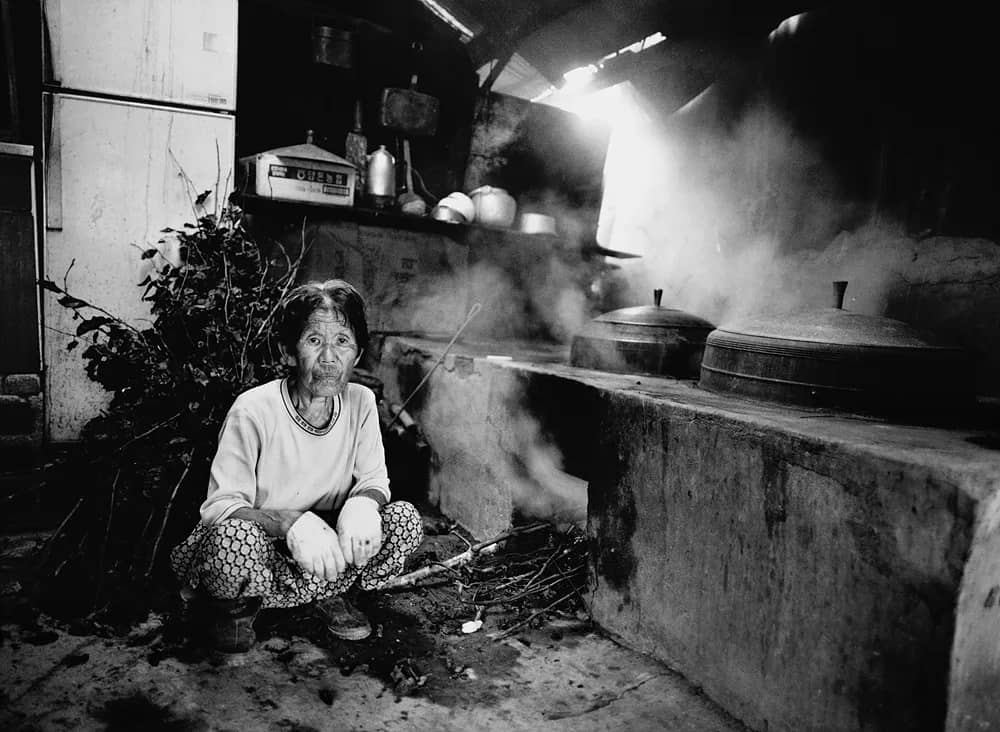
His photo books — including Cheongnyangni 588 (Nunbit Publishers), Insadong Story Photo Collection, Mountain Village People, and People of Donggang — document communities that were being changed or erased by modernization, and preserve the faces of people who might otherwise disappear without record.
Today Jo Munho lives in the Dongjadong jjokbang neighborhood, continuing to document the lives of the urban poor. The method has not changed: he is a neighbor first, a photographer second.
Major themes
- 1
Living among the subject
Not visiting to photograph, but relocating to live — for months or years — inside the communities he documents.
- 2
The overlooked and the marginalized
Women in red-light districts, mountain farmers, market vendors, the urban poor — subjects the mainstream documentary gaze consistently bypasses.
- 3
Photography as record
His work preserves what is being erased — communities, livelihoods, and faces that disappear as Korea modernizes.
The artist's timeline
- 1947Born in Changnyeong, South Gyeongsang province.
- 1983–Begins the Cheongnyangni 588 project; lives inside the red-light district for five years (through 1988).
- 1985Wins the Grand Prize at the Dong-A Art Festival with the serial work 〈Red Light District〉.
- 1986Grand Prize, Asian Games Documentary Photography Competition.
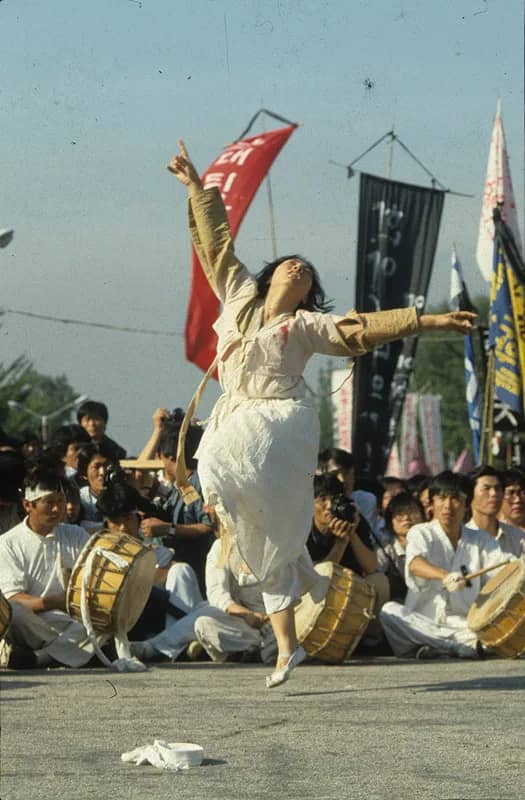
- 1987Solo exhibition documenting the pro-democracy movement.
- 1990Solo exhibition 〈Jeonnong-dong 588〉.
- 1995–Serves as president of the Korea Environmental Photographers Association for ten years (through 2005).
- 2001Solo exhibition 〈People of Donggang〉.
- 2004Solo exhibition 〈Mountain Village People〉.
- 2007Solo exhibition 〈Insadong: Landscapes of Memory〉.
- 2015Solo exhibition 〈Cheongnyangni 588〉 (25 years after initial work); photo book published by Nunbit Publishers.
- 2016Solo exhibition 〈It Is People〉, Ara Art Center, Insadong.
- 2018Solo exhibition 〈Mountain Village People〉. Seoul Culture Today Culture Grand Prize.
- 현재Lives in the Dongjadong jjokbang neighborhood, Seoul, documenting the lives of the urban poor.
Selected exhibitions & publications
- Dong-A Art Festival Grand Prize 〈Red Light District〉 series (1985) · Asian Games Documentary Photography Grand Prize (1986)
- Photo books (Nunbit Publishers): Cheongnyangni 588, Insadong Story, Mountain Village People, People of Donggang
- 〈Cheongnyangni 588〉 (2015) · 〈It Is People〉 (2016, Ara Art Center) · 〈Mountain Village People〉 (2018)
- Seoul Culture Today Culture Grand Prize (2018)
Three essays —
on a camera, a life, and the people
1I only photograph people
In a documentary tradition that trains its lens on landscapes, disasters, and social conditions, Jo Munho made a single decision that has governed his practice across five decades: only people. Not the red-light district as a place — but the women who lived there. Not the mountain as geography — but the farmers who worked it. Not the jjokbang neighborhood as social problem — but the faces of those who make it home.
This is a harder constraint than it sounds. To photograph a person honestly — to make an image that holds their dignity rather than reducing them to their circumstances — requires something the visiting photographer cannot provide. It requires time, presence, and the willingness to become, temporarily, part of the world you are entering. Jo's response to this requirement has always been the same: he moves in.
From 1983 to 1988 he did not visit Cheongnyangni to photograph. He lived there. The women of the red-light district became his neighbors. By the time he raised his camera, the distance that separates subject from photographer — the distance that makes so many documentary photographs feel extractive — had been dissolved by five years of shared life. What remains in the images is not exposure but intimacy.
2Cheongnyangni 588 — living inside the record
The Cheongnyangni red-light district in eastern Seoul — known by the address of the block, 전농동 588 — was one of the largest and most visible sites of commercial sex work in Korea through the late twentieth century. In 1983, when Jo Munho moved in to begin his work, it was also one of the most photographed addresses in Korean documentary — and yet one of the least understood, because the photographers came and went.
Jo spent five years there. He documented the women who lived and worked in the district not as symbols of social problem but as people: their daily routines, their relationships, their moments of humor and exhaustion and care for one another. In 1985 the series was recognized with the Grand Prize at the Dong-A Art Festival. In 1990 he held a solo exhibition. In 2015 — twenty-five years after the neighborhood's forced demolition — he exhibited the work again, and Nunbit Publishers released the full photo collection Cheongnyangni 588.
The Cheongnyangni work is now considered a landmark of Korean social documentary: a record of people and a place that no longer exist in the form he photographed, made possible only because he chose to inhabit rather than observe. It stands as evidence that the most durable documentary photographs are not those taken from outside a world, but from within it.
3Photography as record — from the mountains to Dongjadong
The trajectory of Jo Munho's career is not a sequence of subjects but a single continuous practice: he follows the people who are being left behind. After the Cheongnyangni work he turned to mountain farmers in Gangwon Province — communities whose ways of living were being dissolved by migration to the cities — documenting them in a series of exhibitions and the photo book Mountain Village People. He photographed the artists and figures of Insadong as that neighborhood transformed, publishing Insadong Story. He documented market vendors across Korea in an era when five-day markets were disappearing.
Each of these projects is a record of something passing. The photographs exist because Jo was there — not as observer but as resident — before the passing was complete. In that sense his entire body of work functions as an archive of Korean life in the second half of the twentieth century, assembled not through institutional commission or journalistic assignment but through the sustained choice to live where most photographers would not.
Today he lives in the Dongjadong jjokbang neighborhood in Seoul, still photographing, still living among the people he documents. The method that began in a red-light district in the early 1980s has not changed. The camera remains secondary. The neighborhood comes first.
From Cheongnyangni to Dongjadong, Jo Munho's practice has asked a single question across five decades: what does it mean to photograph a person — not a condition, not a place, not a social problem, but a person? His answer, built through decades of living inside the lives of those he documents, is one of the most sustained acts of human attention in Korean photography. He joins this campaign not as a subject of its cause but as a fellow artist in solidarity — so that those who come after might work without the precarity he has long understood from the inside.
Selected Works
5 works are featured here.
Jo Munho joined this campaign in solidarity with fellow artists. Every work sold flows directly into the artists' mutual-aid loan fund— a purchase becomes the next month's lifeline for an artist navigating financial exclusion today.