Standing in front of a gallery work, most people feel pressure to appear more knowledgeable than they are. This three-step guide starts from that discomfort — from first impression to artist statement, your reading of the work is valid.
The Feeling That You Don't Know What to Look At
A peculiar tension settles in when you enter a museum. Everyone else wears serious expressions studying works, and you feel like the only one thinking "so what is this?" A strangeness — as if there's a correct answer and you alone missed it.
Cutting to it: there isn't one. Art viewing has no right answer. But there are ways to look better — ways to stay longer, and take more away.
By stages.
Stage 1 — Trust the First Impression
The very first feeling when you stand in front of the work. That's the starting point.
- Does color register first, or form?
- Do you want to step closer, or step back?
- Does your mood lighten, or weigh?
It's important not to attach a value judgment to this first reaction. Not "good" or "bad," but "what sensation does this work give me?" Big difference. The first is about ranking; the second is about relationship.
Try explaining the first impression to yourself. Even making a single sentence — "this work gives me a sense of __" — changes the viewing that follows.
Stage 2 — Read the Information
After your first impression, look at the label next to the work. The information there says more than you'd think.
Read the title. Titles come in two kinds: descriptive and abstract.
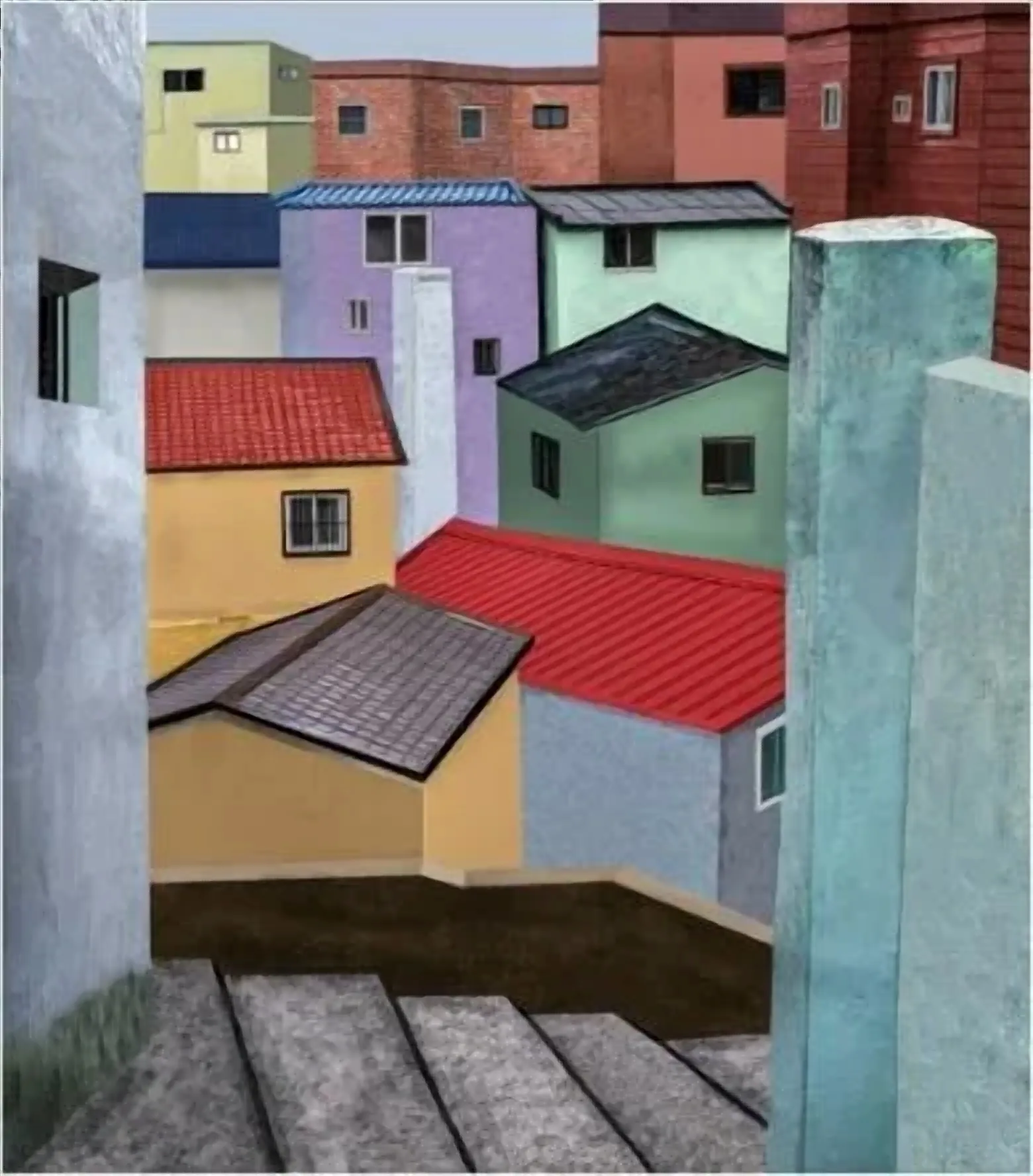
Son Eunyoung's photographic series uses locational titles like House on the Hill. Her artist note includes a sentence: "House carries an unbreakable bond with family members, a sense of shared fate — an important place of life where memories were shared and future dreams were dreamed." The moment you learn the title House isn't about a building but about family and memory, the same image reads differently.
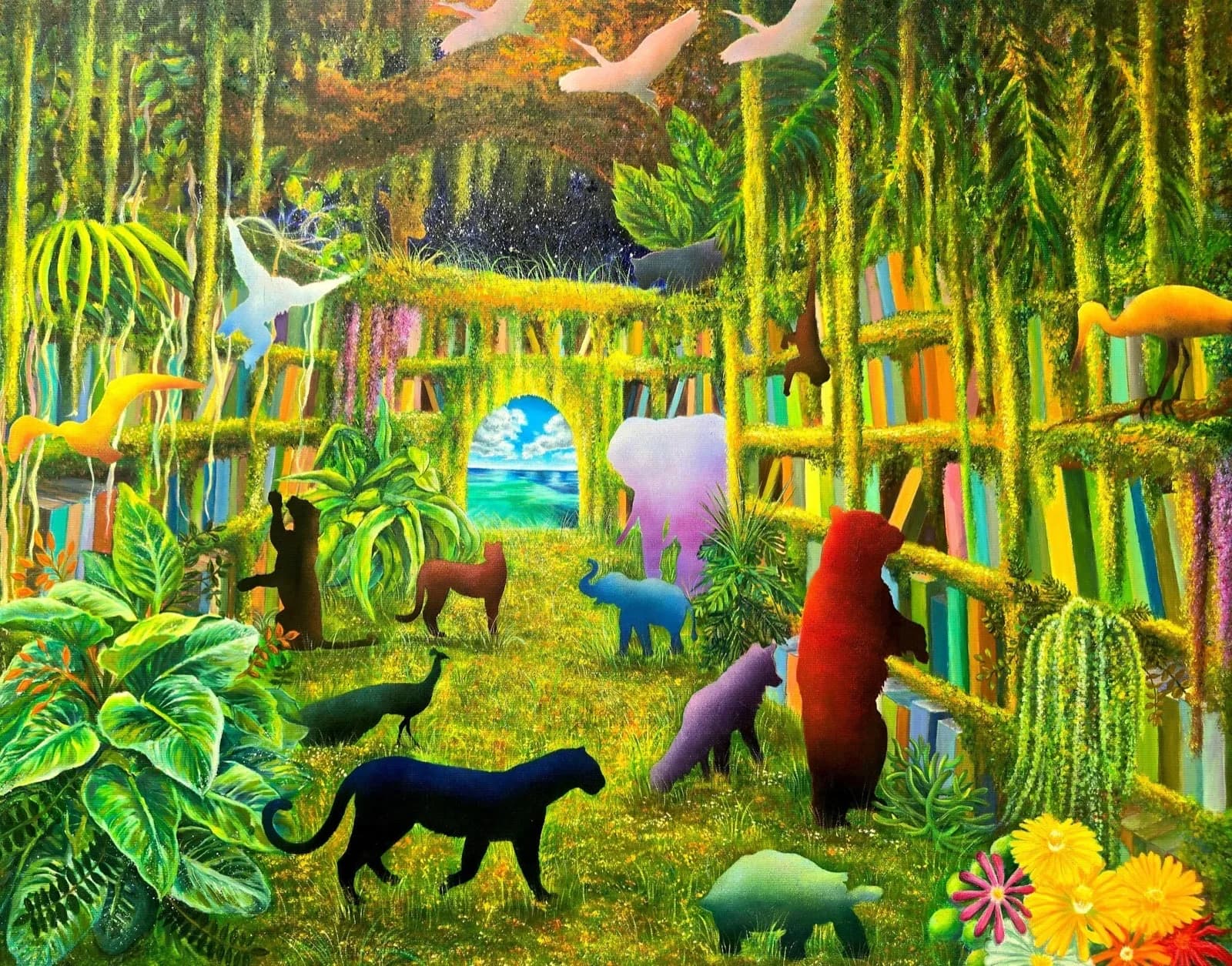
Cheon Jisu's Library Fantasy imagines a library as a giant living creature. Per her artist note, she sees books as "lives that transcend time and space." Without the title, the piece might read as a plant-filled space; with the title, it gains an entirely different context.
Read material and year. Oil on canvas and mixed media on jangji produce different experiences. Surface texture, light reflection, the feel at close range all differ. Year matters too. Placing a 2018 work beside a 2025 one by the same artist, you start seeing the change.
Stage 3 — Hold Artist Note and Your Reading Side by Side
Reading an artist note is not confirming the right answer. It's placing the artist's intent as one reference and putting your reading next to it.
An Sohyeon's NEW REMINISCENCE: "Photographs have their language. I've been doing work like songs — interpreting language inside time and space I accidentally froze." Looking again with that lens, different things come forward in the same image.
The important part: your reading doesn't have to match the artist's. If the artist said A and you felt B, B is also valid. A work leaves the artist's hands and becomes, in part, the viewer's.
Approach Abstract Work Differently
Titles are often little help for abstract work. "Untitled" is common, and without a concrete subject there's nothing to "read."
Try this instead.
- Focus on color. Warm or cool? High or low saturation? Are colors fighting or harmonizing?
- Read the brushwork. Thick paint (impasto) generates vehemence. Thin, translucent layers generate delicacy. Notice what the texture does to your body.
- Be conscious of scale. A 30 cm small work and a 2 m large work produce very different experiences of the same image. Pay attention to how your body responds.
How Long, and How Many
We've been saying "look longer" all along. Time to put numbers on it.
At least one minute per work. Sounds short; try it and it's long. Most viewing passes in a few seconds. No need to watch the clock — walk the three stages above (first impression → label → artist note beside your own reading) in order and you land there naturally.
Don't try to see the whole show. This matters more. See all 100 works in a 100-work exhibition and not one stays with you. Try two laps instead.
- First lap, fast. Sweep the whole thing and mark only the works where your feet stop. Reasons come later.
- Second lap, marked works only. Usually 5–10 remain. Spend the time here.
Past an hour, the eyes tire. At a large museum survey, ten minutes in the lobby or café beats pushing through. Force it and the later rooms don't register — costly when the good work is at the end.
Going twice is also a method. Easy enough with a free show or a permanent collection. Return a week later and things invisible the first time surface. The work didn't change; you did, slightly.
How to circle a whole exhibition space, when to time your arrival to a docent tour — that's covered separately in How to Enjoy Art Exhibitions.
Light and Time of Day Are Part of the Work
The same work looks different under different light. Not a matter of taste — a physical fact.
- Daylight changes all day. In a space with windows, morning and late afternoon give different impressions. The gap is widest with the sheen of oil paint, or with light-reflecting materials like gold leaf and mineral pigment.
- Artificial light carries a color temperature. Under warm incandescent light, blues sink and reds come alive. This is why museums are so particular about lighting.
- Shadows shift with angle. Thickly applied paint — impasto — reveals its texture when you stand at an angle rather than head-on. Move one step to the side.
A work that looked good under gallery lighting can read differently in your own living room. If you're thinking of bringing a work home, this sense is especially useful.
Etiquette in the Gallery
Finally, practical notes. Common mistakes.
- Don't touch. Obvious, but when the surface sits closer than expected, hands drift unconsciously.
- Check before photographing. Some shows allow, some don't. Other visitors photographing isn't permission for you — check.
- Keep it quiet. Loud conversation in front of a work disrupts others. Mind your voice, especially when discussing with a companion.
- If the artist is present, seize the chance. Speaking directly with an artist at their own show is rare and valuable. "What were you thinking when you made this?" is enough.
Art viewing is, ultimately, a conversation between you and the work. Knowing how to start that conversation makes the gallery feel less foreign.
Further Reading
Start Collecting
Exhibitions On Now
SAF gathers exhibition listings from the Seoul culture portal and from museum and gallery announcements, and keeps them in Exhibition News(공개 예정) — what is running now and what opens soon, with venues and dates, refreshed every morning.
Related reading
If this piece helped, you may also enjoy these related articles:
Seed Art Festival
·