Our everyday,
recorded in paint
He paints the cross-sections of an ordinary day.From 〈Our Everyday〉 to 〈Drifting the Earth〉, daily life and social reality.
The everyday, recorded —
a painter of daily life
Lee In-cheol (b. 1955) was born in Busan and graduated from the National Fisheries University of Busan, Department of Food Engineering, in 1983. He works within the current of Korean minjung art, recording daily life and social reality in painting rather than retreating into pure form.
His practice took shape through the “Our Everyday” exhibitions of the late 1980s and early 1990s. In 1989 he held 〈Our Everyday — I〉 at Geurim Madang Min in Seoul and Ondara Museum of Art in Jeonju; in 1992, 〈Our Everyday — II〉 travelled across Geurim Madang Min, Ondara, and Gallery Nouveau in Busan. The work fixed its gaze on the ordinary hours that make up a life and the social conditions woven through them.
In the mid-2000s the register shifted toward a steadier light. The 〈Good days!〉 exhibitions — Deokwon Gallery in Seoul (2005) and Busan Democracy Park (2006) — held the everyday up not as a backdrop to argument but as something worth looking at on its own terms. 〈Old story〉 (Bak Jin-hwa Art Museum, Incheon, 2010) and 〈In the paradise〉 (Namu Art Gallery, Seoul, 2018) continued that patient attention.
The recent solo exhibitions widen the frame outward. 〈Drifting the Earth〉 (Busan Democracy Park, 2021) and 〈On the street〉 (Namu Art Gallery, 2023) carry the everyday into shared, public space, and in 2025 〈Holoism (From the Invisible to the Visible)〉 was shown at Artverse in Paris — the ordinary moment placed before an international audience.
Across roughly 150 group exhibitions, his work has appeared alongside themes of peace and democracy: 〈Flipping the Plate〉 at the Gyeonggi Museum of Art (2025), the media-art special exhibition REGENERATION marking the 45th anniversary of the May 18 Democratization Movement (Alternative Art Space Ipo), the Peace Culture Festival (Dongducheon Flag of Peace exhibition), and the Chronicle of Light exhibition at the Democracy Movement Memorial Hall. He keeps painting the everyday, and lets it stand as a record of its time.
Major themes
- 1
The everyday as subject
From 〈Our Everyday〉 onward, the cross-sections of an ordinary day are held up as something worth recording in paint.
- 2
Daily life and social reality
Within the current of Korean minjung art, his painting reads ordinary hours together with the social conditions woven through them.
- 3
Alongside peace and democracy
His work has often appeared in exhibitions connected to themes of peace and democracy, standing as a record of its time.
The artist's timeline
- 1955Born in Busan.
- 1983Graduates from the National Fisheries University of Busan, Dept. of Food Engineering.
- 1989Solo exhibition 〈Our Everyday — I〉 (Geurim Madang Min, Seoul; Ondara Museum of Art, Jeonju).
- 1992Solo exhibition 〈Our Everyday — II〉 (Geurim Madang Min; Ondara; Gallery Nouveau, Busan).
- 2005Solo exhibition 〈Good days! — Everyday at peace〉 (Deokwon Gallery, Seoul).
- 2006Solo exhibition 〈Good days!!〉 (Busan Democracy Park).
- 2010Solo exhibition 〈Old story〉 (Bak Jin-hwa Art Museum, Incheon).
- 2018Solo exhibition 〈In the paradise〉 (Namu Art Gallery, Seoul).
- 2021Solo exhibition 〈Drifting the Earth〉 (Busan Democracy Park).
- 2023Solo exhibition 〈On the street〉 (Namu Art Gallery).
- 2025Solo exhibition 〈Holoism (From the Invisible to the Visible)〉 (Artverse in Paris); group exhibition 〈Flipping the Plate〉 (Gyeonggi Museum of Art).
Selected exhibitions
- Solo exhibitions: 〈Our Everyday — I·II〉 (1989, 1992), 〈Good days!〉 (2005–06), 〈Drifting the Earth〉 (2021), 〈On the street〉 (2023), 〈Holoism〉 (Artverse in Paris, 2025)
- Group exhibition: 〈Flipping the Plate〉, Gyeonggi Museum of Art (2025); roughly 150 group exhibitions in total
- Peace and democracy themed exhibitions: REGENERATION media-art special exhibition for the 45th anniversary of the May 18 Democratization Movement (Alternative Art Space Ipo); Peace Culture Festival (Dongducheon Flag of Peace exhibition); Chronicle of Light exhibition (Democracy Movement Memorial Hall)
Three essays —
on the work and the everyday
1〈Our Everyday〉 — the ordinary as subject
Lee In-cheol came to painting along an unusual route — a degree in food engineering from the National Fisheries University of Busan, completed in 1983. What he carried into the work was not an academy's formal vocabulary but an attention to the ordinary hours of ordinary people.
The 〈Our Everyday〉 exhibitions gave that attention a name. 〈Our Everyday — I〉 (1989) opened at Geurim Madang Min in Seoul and Ondara Museum of Art in Jeonju; 〈Our Everyday — II〉 (1992) extended across Geurim Madang Min, Ondara, and Gallery Nouveau in Busan. Within the current of Korean minjung art, the everyday was treated not as a backdrop but as the subject itself — the hours a life is actually made of.
The choice was quietly insistent. Rather than depict great events, the work looked at the social conditions woven through ordinary days, letting the plain cross-section of a single day stand as its own kind of record.
2From 〈Good days!〉 to 〈Drifting the Earth〉
From the mid-2000s the register softened. The 〈Good days!〉 exhibitions — Deokwon Gallery in Seoul (2005), Busan Democracy Park (2006) — held the everyday up under a steadier light, looking at ordinary days as something worth seeing on their own terms rather than as material for argument.
〈Old story〉 (Bak Jin-hwa Art Museum, Incheon, 2010) and 〈In the paradise〉 (Namu Art Gallery, Seoul, 2018) carried that patient attention forward. Then the frame widened: 〈Drifting the Earth〉 (Busan Democracy Park, 2021) and 〈On the street〉 (Namu Art Gallery, 2023) moved the everyday out into shared, public space.
In 2025, 〈Holoism (From the Invisible to the Visible)〉 was shown at Artverse in Paris — the ordinary moment, long his subject, placed before an international audience. Across four decades the through-line holds: the everyday, looked at closely, kept as a record.
3Alongside peace and democracy — roughly 150 group exhibitions
Beyond his solo exhibitions, Lee In-cheol has shown in roughly 150 group exhibitions, many of them connected to themes of peace and democracy. His everyday scenes have appeared in such settings without changing their nature — they remain, first of all, records of ordinary days.
Recent examples include 〈Flipping the Plate〉 at the Gyeonggi Museum of Art (2025); the media-art special exhibition REGENERATION marking the 45th anniversary of the May 18 Democratization Movement, at Alternative Art Space Ipo; the Peace Culture Festival (Dongducheon Flag of Peace exhibition); and the Chronicle of Light exhibition at the Democracy Movement Memorial Hall.
Placed within these contexts, his painting keeps doing what it has always done — reading the social conditions woven through daily life, and letting a plain cross-section of the everyday stand as testimony to its time.
From 〈Our Everyday〉 in the late 1980s to 〈Holoism〉 in Paris in 2025, Lee In-cheol's work has followed a single thread: the cross-section of an ordinary day, looked at closely and kept as a record. He joins this campaign not as a subject of its cause but as a fellow artist in solidarity — so that others, too, might keep painting their everyday without the weight of financial exclusion.
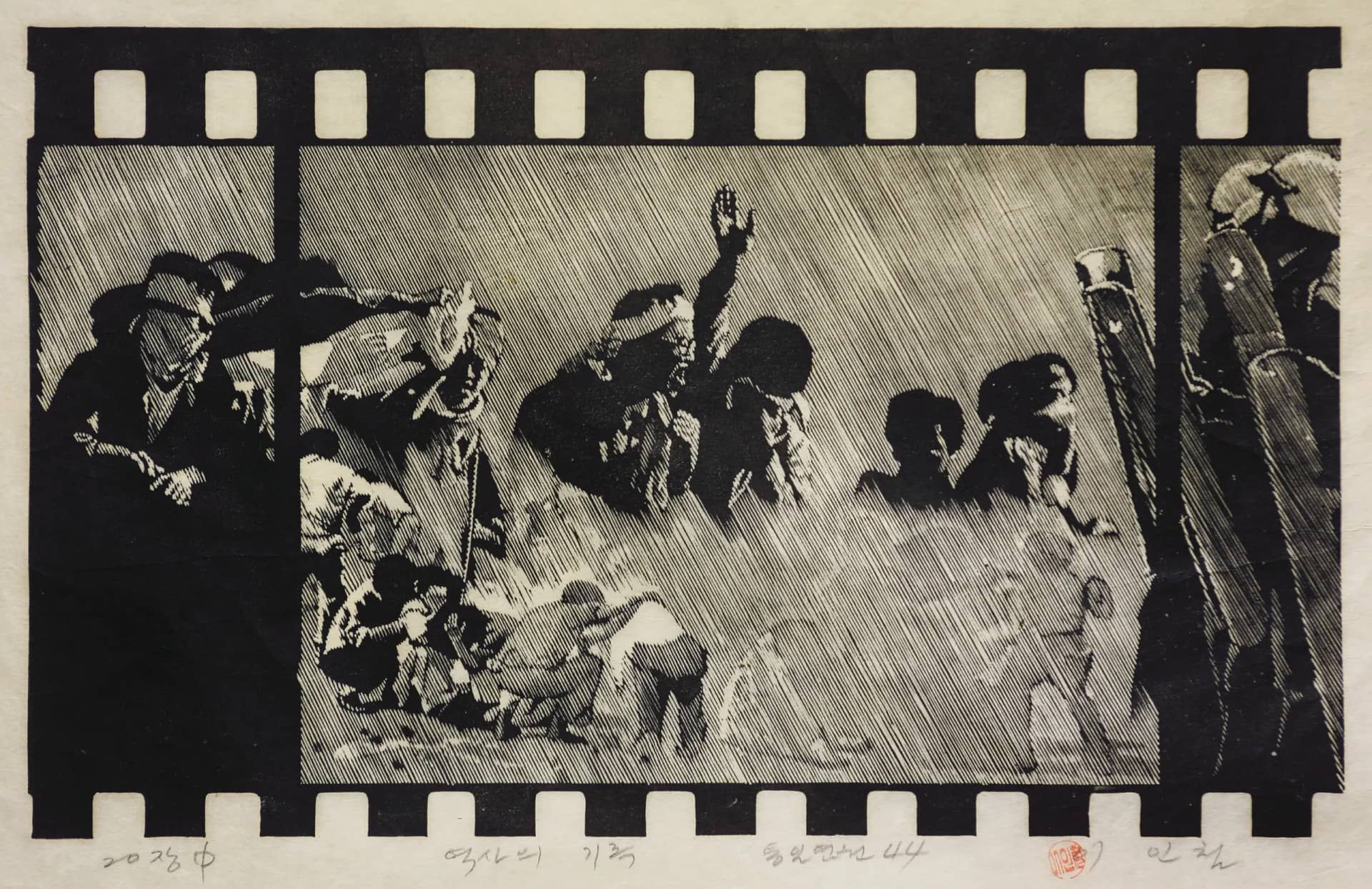
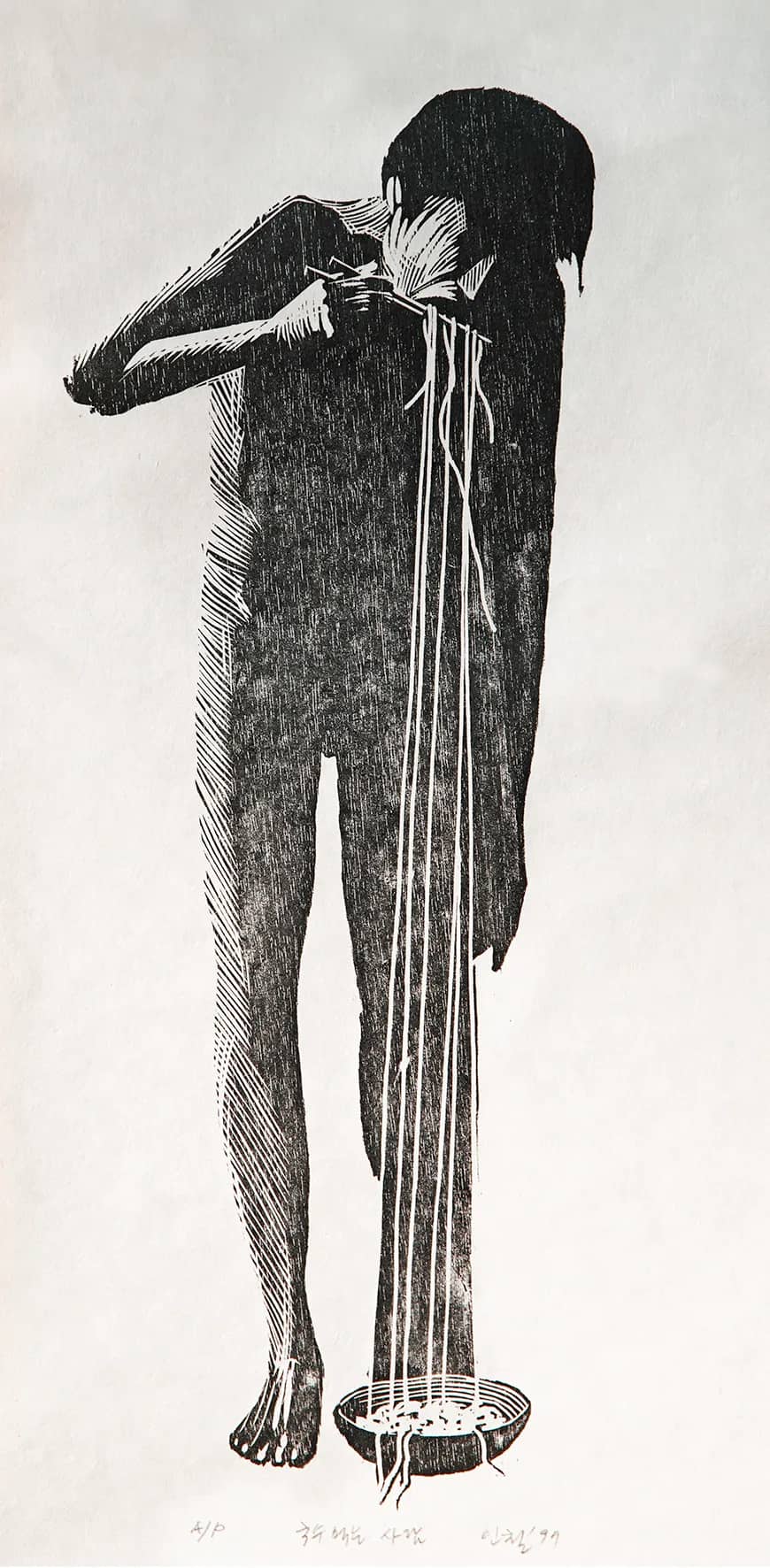
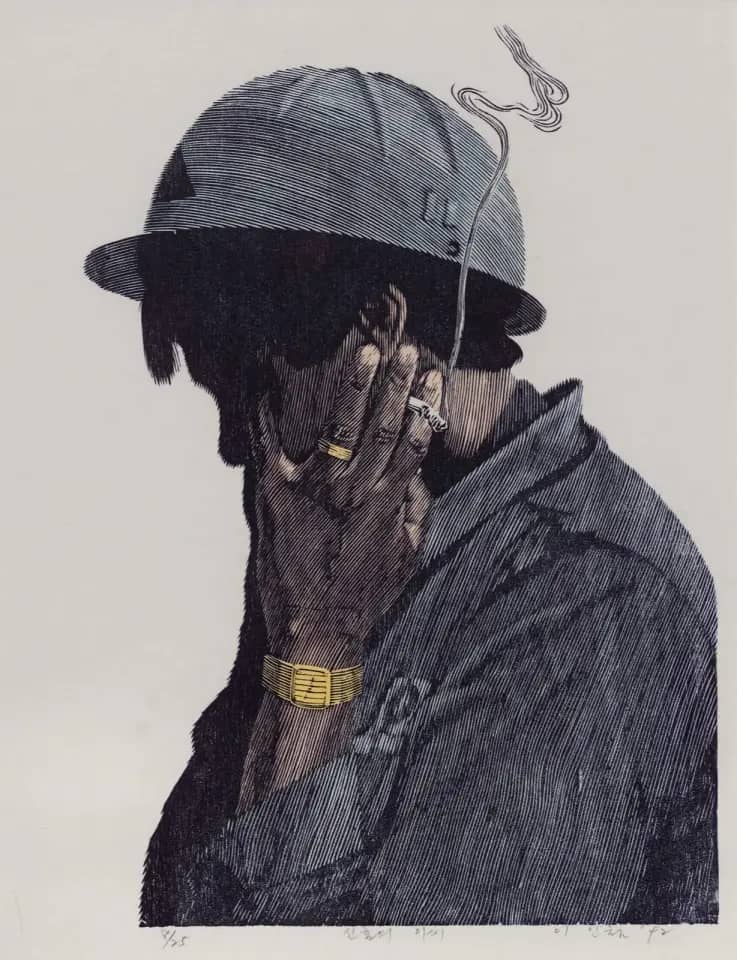
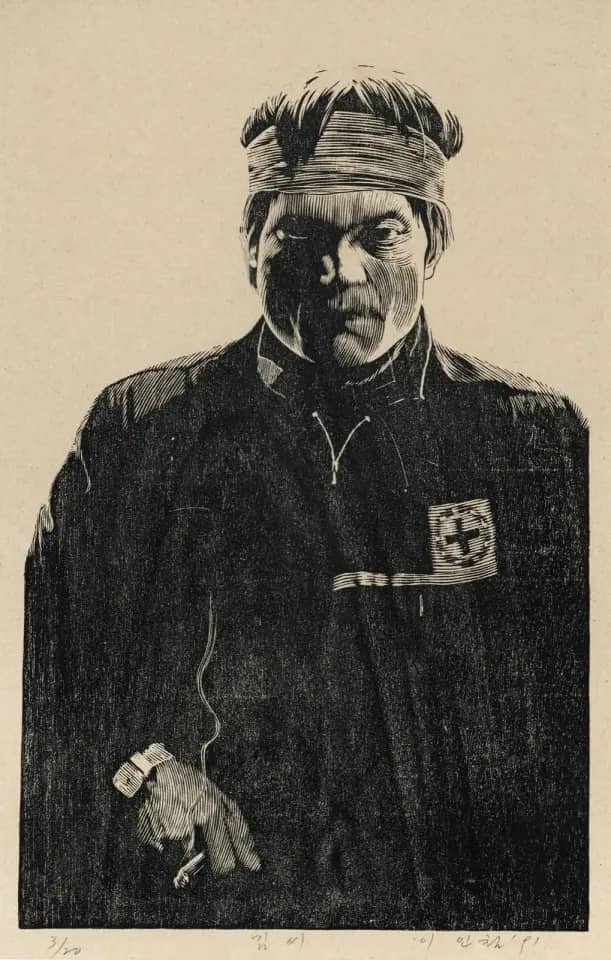
Selected Works
4 works are featured here.
Lee In-cheol joined this campaign in solidarity with fellow artists. Every work sold flows directly into the artists' mutual-aid loan fund— a purchase becomes the next month's lifeline for an artist navigating financial exclusion today.