Why does a painting cost ₩3M, a print ₩300K, a photograph ₩800K, and a sculpture ₩5M? Each medium has its own pricing logic. A complete buyer’s guide to all four.
Painting, Print, Photograph, Sculpture — A Buyer's Guide to Medium and Price
A single artist's work can vary in price by a factor of 5 to 10 depending on medium. ₩3,000,000 for a painting, ₩300,000 for a print, ₩800,000 for a photograph, ₩5,000,000 for a sculpture — there's a reason for each digit of the gap.
This guide is for first-time buyers. It covers painting, print, photography, and sculpture — their pricing logic, conservation needs, selection criteria, and the most common misconceptions.
Knowing the Medium Means Reading the Price
Let's start at the conclusion: one of the largest determinants of an artwork's price is its medium. Even within a single artist's same period, the medium changes:
- Supply — 1 painting vs. 30 prints vs. 10 photographs
- Production time — 3 months for a single oil painting vs. 1 month for an entire print series
- Material cost — canvas vs. paper vs. photo paper vs. bronze and stone
- Conservation difficulty — media that last 100 years vs. media that last 50
- Resale market depth — the auction market for paintings vs. the one for photography
Let's go through all four.
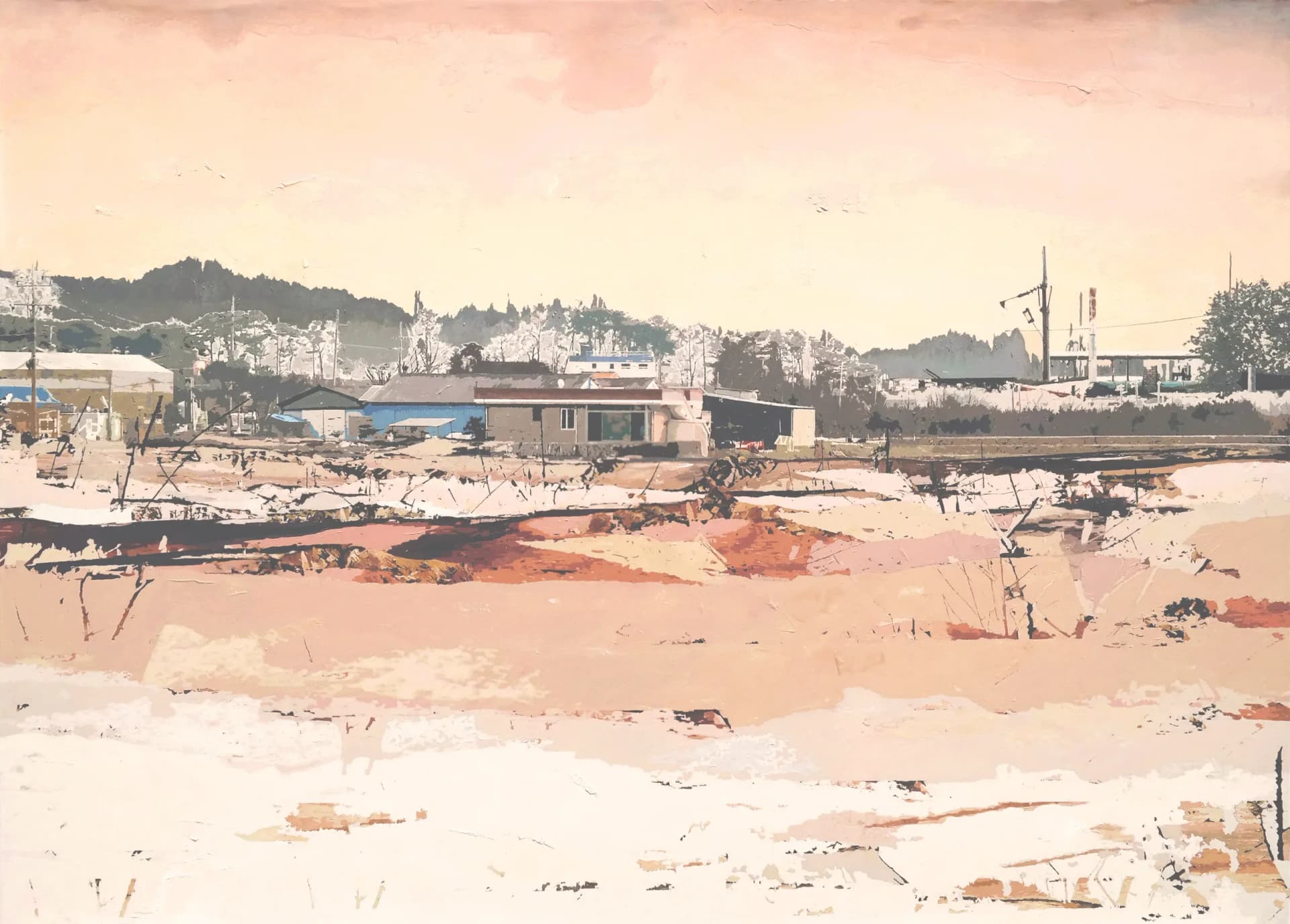
① Painting — The Most Expensive, the Most Permanent
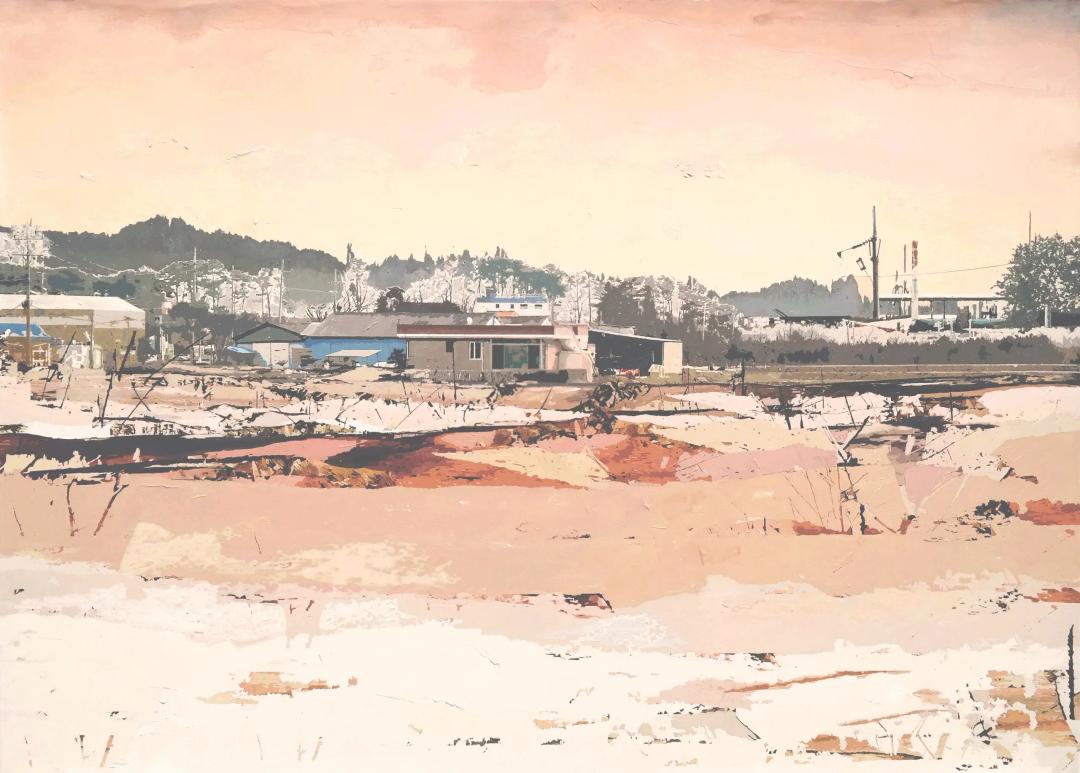
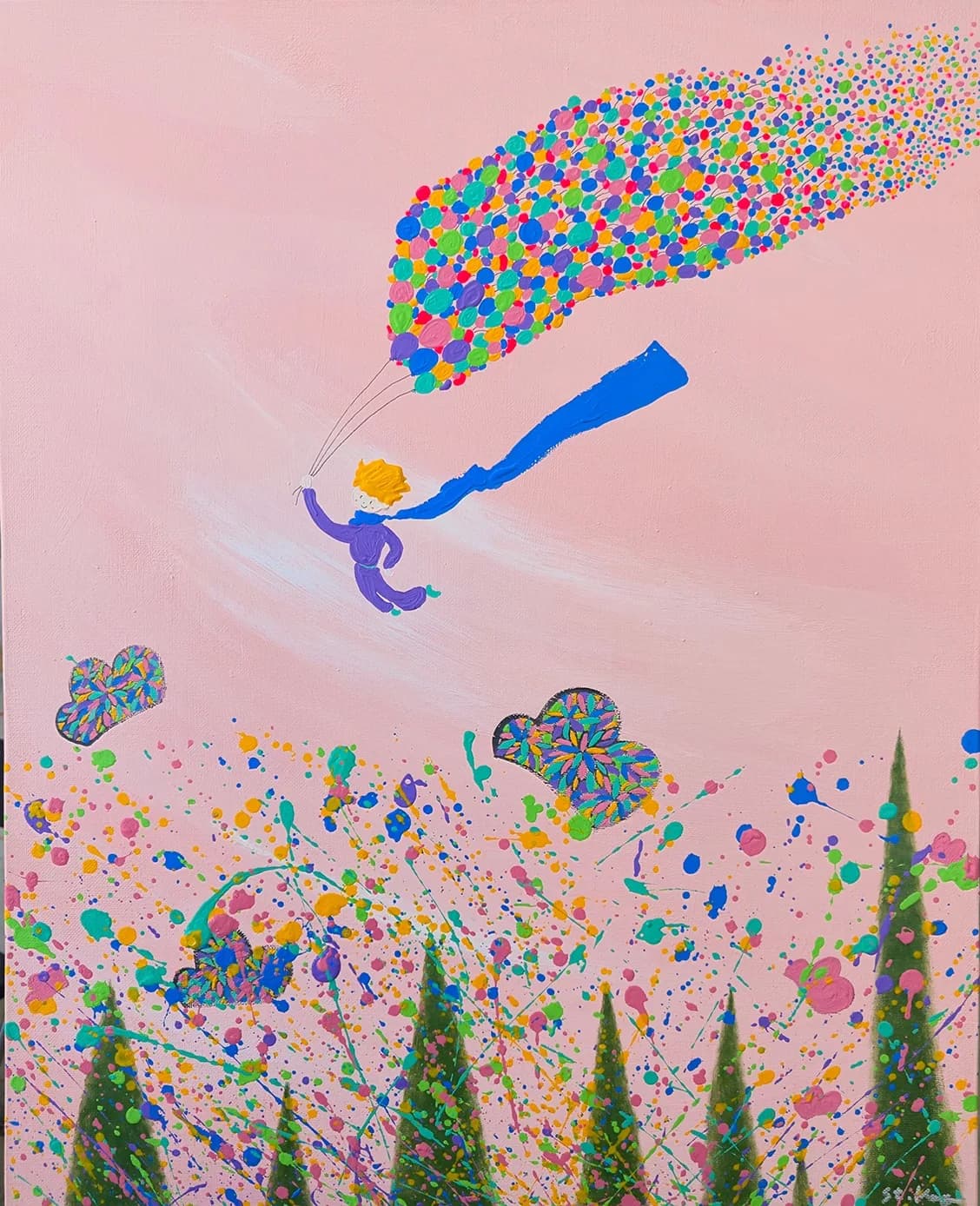
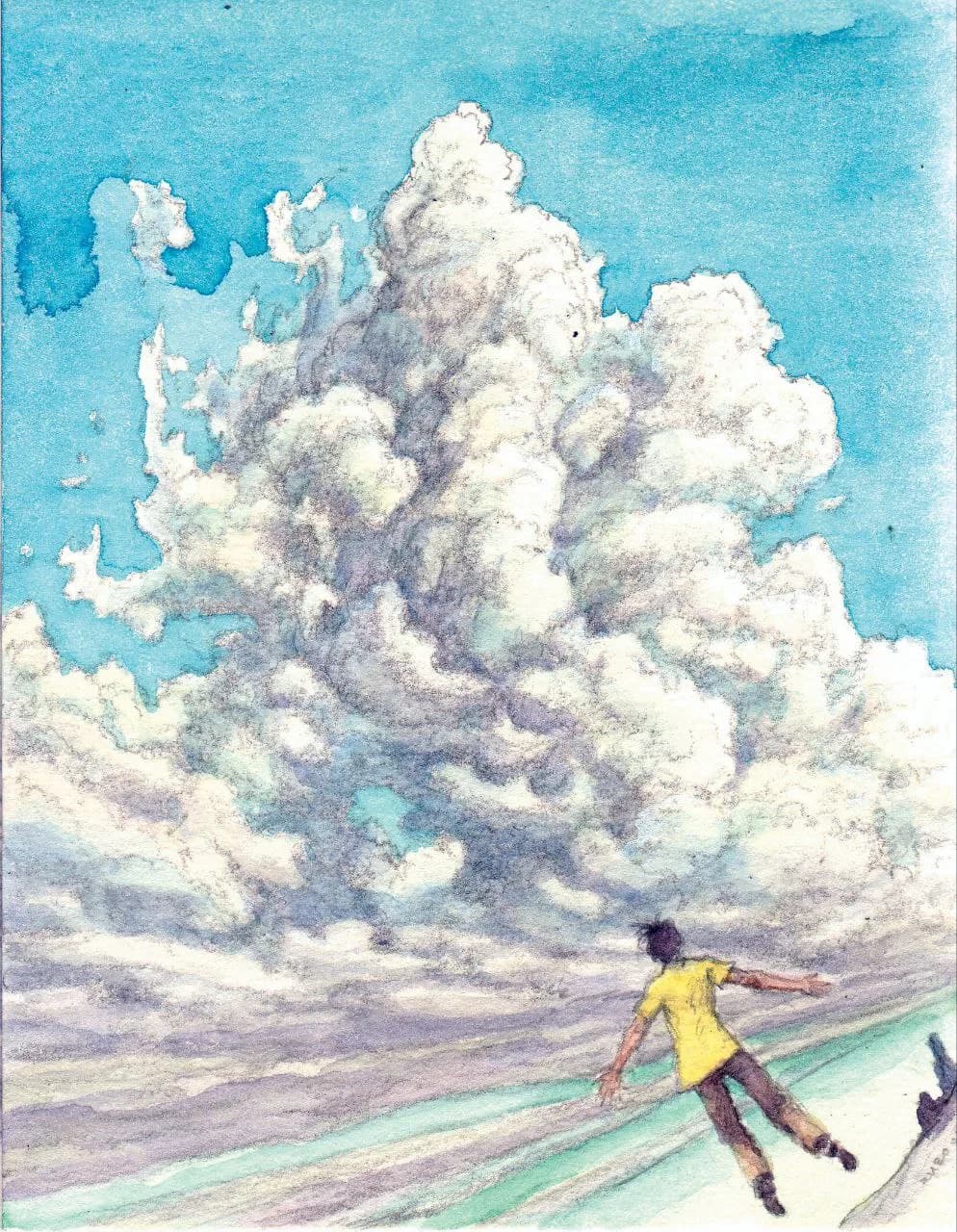
Kim Gyu-hak — Mid-career painter who translates light and atmosphere into a distinctly Korean visual language.
In a line: A single original where the artist has applied pigment directly with brush or knife to canvas or paper. The center of the art market and the most expensive medium.
How paintings are priced
The reasons paintings are the most expensive of the four are clear.
- Supply: only one in existence (even if the artist paints it again, that becomes a different work).
- Production time: small works take days to weeks; large ones take months to a year.
- Materials: quality canvas, oil paint, varnish — materials alone for an 80-ho painting can cost ₩500,000–1,000,000.
What to look for when buying a painting
- The relationship between size (ho) and price. The Korean market commonly uses a "price per ho" formula. Emerging artists run ₩50,000/ho, mid-career ₩100,000–300,000/ho, established ₩500,000–2,000,000/ho. A 30-ho work by an emerging artist at ₩1,500,000 is in line with the market.
- Type of paint. Oil should look and behave like oil; acrylic like acrylic. The two require different conservation environments.
- The condition of the canvas. The canvas should be taut, the staples free of rust. An unframed painting still needs protective treatment on the surface.
Conserving a painting
- Light: never direct sunlight. UV will fade the pigments.
- Humidity: 40–60% is ideal. Too dry and the canvas cracks; too humid and mold appears.
- Temperature: 18–22°C. Sudden temperature swings are the greatest danger.
Common misconceptions
"A painting is one of one, so it's automatically a good investment."
→ Uniqueness is one reason a painting is expensive — not a guarantee of investment value. The artist's place in art history, the integrity of the series, and market demand all decide together.
"Oil is more valuable than acrylic."
→ Not true. From the 1980s on, contemporary art has used acrylic more than oil. Value is decided by the artist and the work, not the medium.
② Printmaking — A Real Original at a Reasonable Price
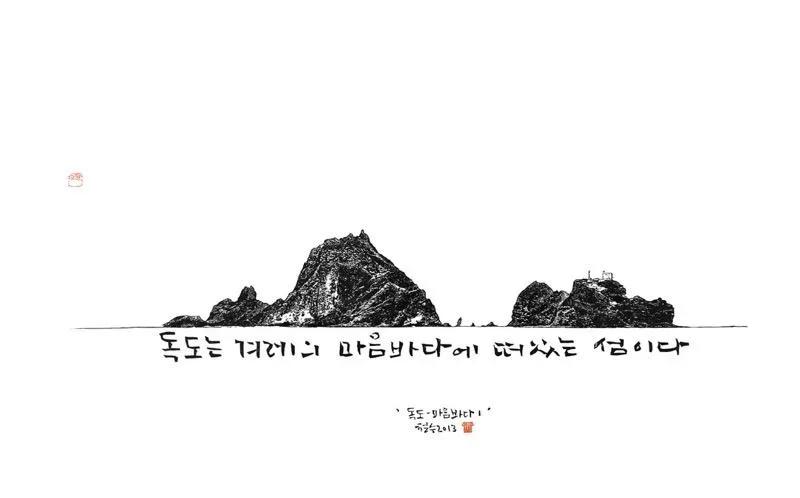
Lee Cheol-soo — Master of hanji woodblock printmaking. A limited-edition print offers original authorship at a fraction of the price.
In a line: An official original, in a fixed edition, made and approved by the artist from a matrix the artist prepared. Five to ten times less expensive than a unique painting, but with the same status as an original.
Three meanings of the word "print"
No medium is more often misunderstood. The same word covers three different things.
| Type | Definition | Price |
|---|---|---|
| Limited Edition Print | Artist prepares and approves the matrix; issued in a fixed run (10–100 impressions) | ₩300,000–3,000,000 |
| Open Edition | Printed without a numerical limit; used by some artists | ₩50,000–300,000 |
| Reproduction | A photograph of an original output by inkjet; not an original work | ₩10,000–100,000 |
In this article, "buying a print" means a limited edition print. For more, see Why Prints and Originals Differ by 10×.
Printmaking by technique
Prints are categorized by process:
- Woodcut — incised into a wood block with a knife. Coarse texture.
- Etching — a metal plate bitten with acid. Fine line.
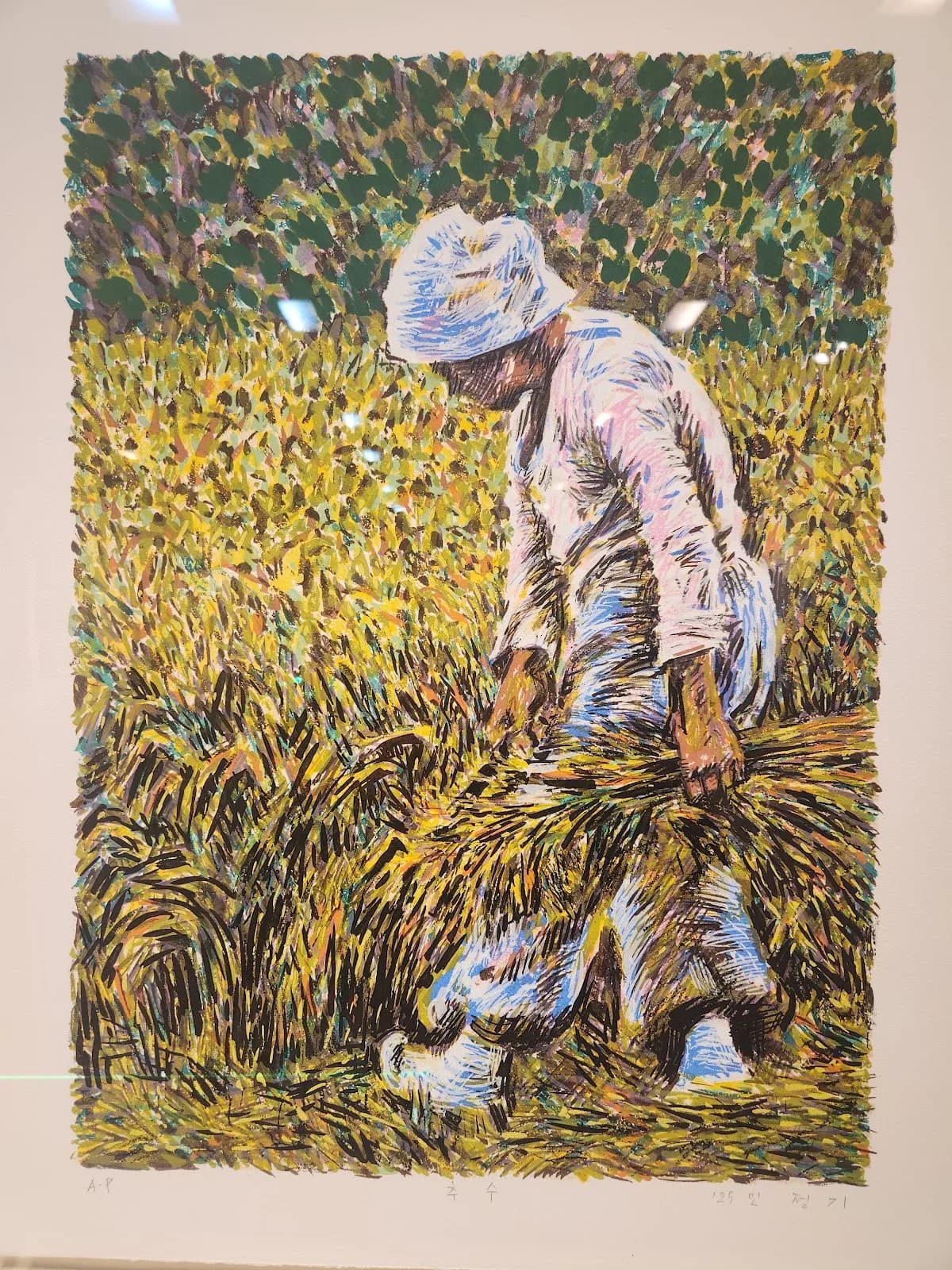
- Lithograph — drawn with greasy ink onto stone or metal. Painterly color.
- Silkscreen — ink pushed through a silk mesh. Flat fields of color.
Even within one artist's practice, prices differ by technique. As a rule, etching/lithograph > silkscreen/woodcut, reflecting differences in production time and technical difficulty.
What to confirm when buying a print
- The edition number. A handwritten pencil notation like
12/30should appear at the bottom of the work — meaning the 12th impression of a run of 30. - A signature by the artist's own hand, in pencil or ink — not printed.
- The meaning of AP / EA / HC.
AP(Artist's Proof, kept by the artist),EA(Épreuve d'Artiste, the French equivalent),HC(Hors Commerce, not for sale). These are issued in addition to the main edition; the price is similar but the quantity is smaller.
Conservation
- Limit light exposure. Paper is highly sensitive to sunlight. Frame with UV-blocking glass.
- Frame correctly. Use acid-free mats; ordinary mats yellow paper over time.
- Humidity — even more sensitive than painting. Maintain 40–50%.
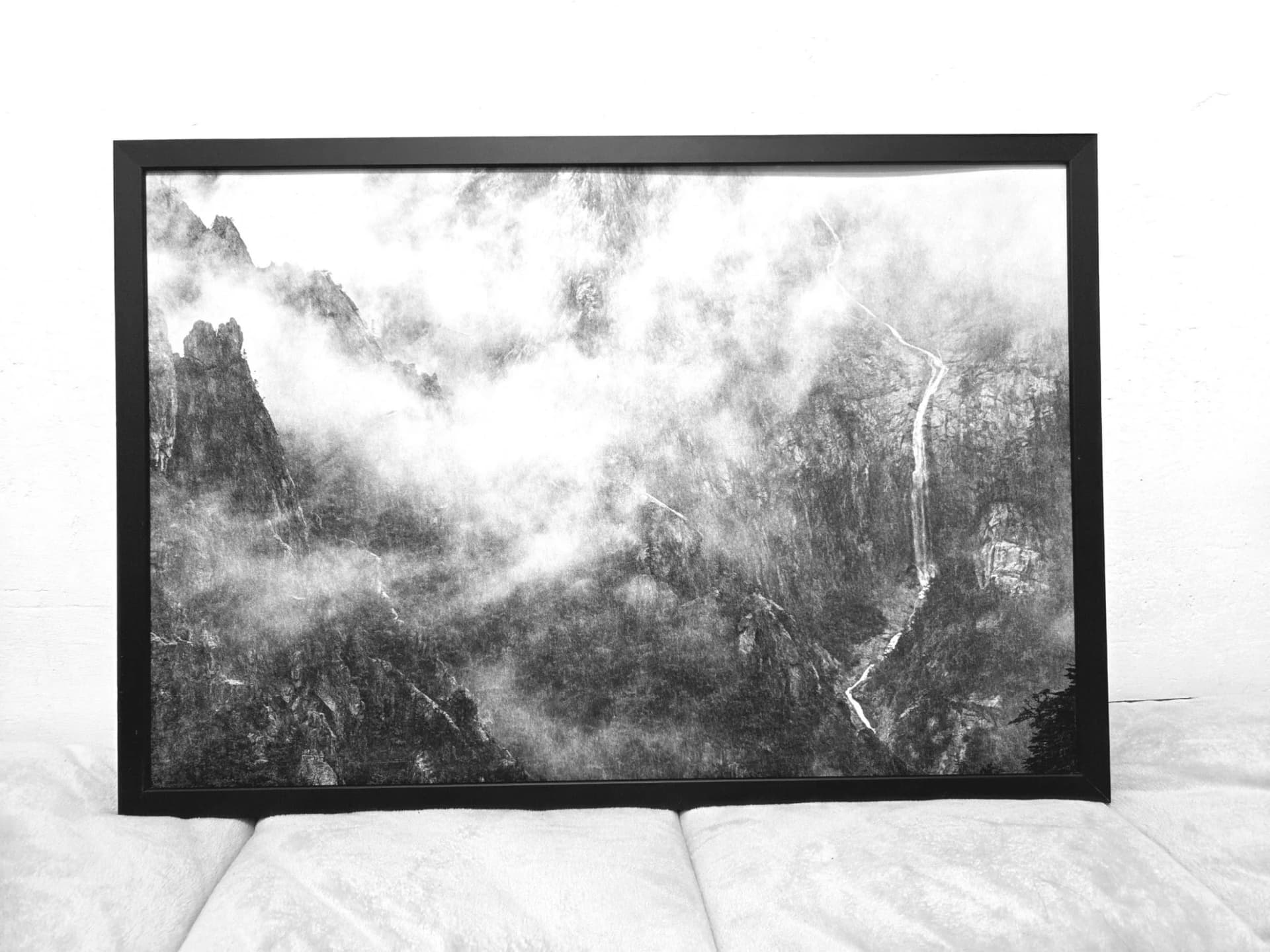
③ Photography — The Limited Edition of the Digital Age
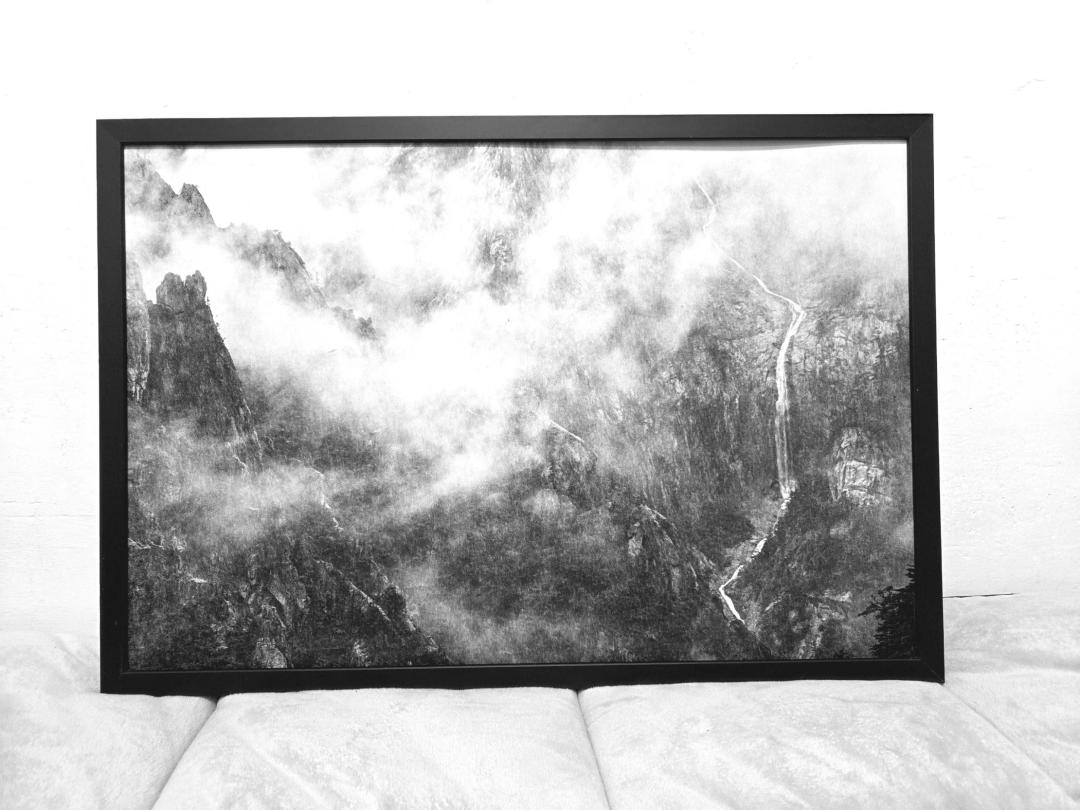
Kang Re-a — Climbs mountains, photographs them, prints on hanji. A singular voice in Korean fine-art photography.
In a line: A limited-edition print examined and signed by the artist. Photography follows an edition system similar to printmaking, with prices ranging widely from ₩300,000 to ₩5,000,000.
Photographic art vs. ordinary photographs
What sits between a phone snapshot and a photographer's work? Three things.
- Concept — part of a coherent series or project, not an isolated record.
- Edition system — printed in a fixed quantity (typically 5–20).
- Print quality — archival paper and inks designed to last 100 years.
Photography pricing
Photography is priced by size and edition size.
| Size | Edition | Emerging | Mid-career |
|---|---|---|---|
| Small (16×20") | 10–20 | ₩300,000–800,000 | ₩1,000,000–2,000,000 |
| Medium (24×30") | 7–15 | ₩800,000–1,500,000 | ₩2,000,000–5,000,000 |
| Large (40×50") | 3–7 | ₩1,500,000–3,000,000 | ₩5,000,000–15,000,000 |
Larger sizes have smaller editions, so doubling the size typically triples or quintuples the price.
What to check
- The paper. Hahnemühle, Canson, Epson Hot Press — archival-grade. Standard photo-lab paper will fade within 50 years.
- Print quality. Detail in the shadows, no blown-out highlights. Print quality is a photographer's signature.
- Edition number plus signature. On the verso or on a separate certificate, signed by the artist with the edition number.
Conservation
- UV exposure. Photographs are the most UV-sensitive of the four. Never direct sun; always UV-blocking glass.
- Temperature swings. Sudden changes warp the paper.
- Air gap from the wall. Make sure the frame allows airflow at the back.
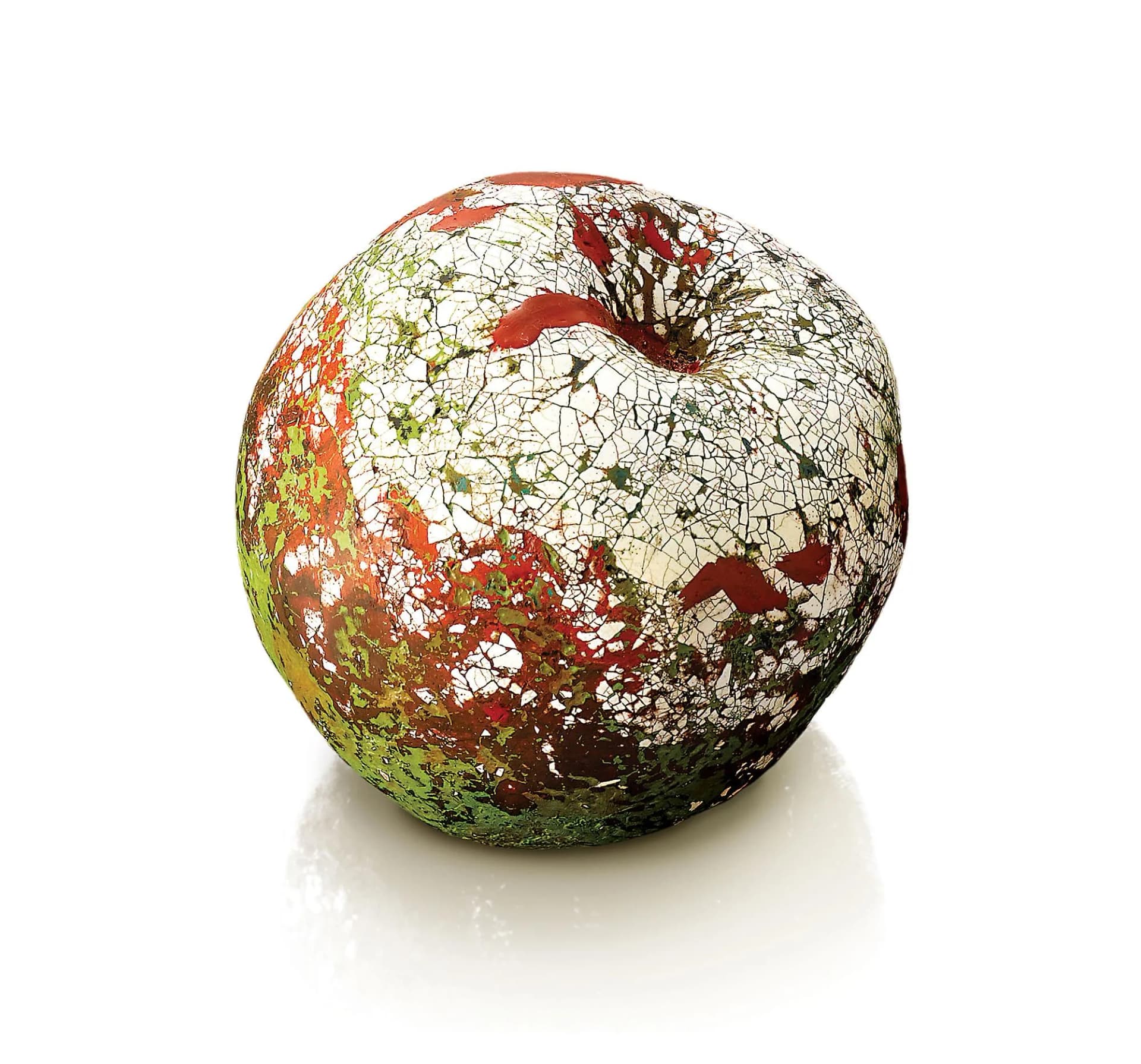
④ Sculpture and Craft — Three-Dimensional Works That Take Up Space
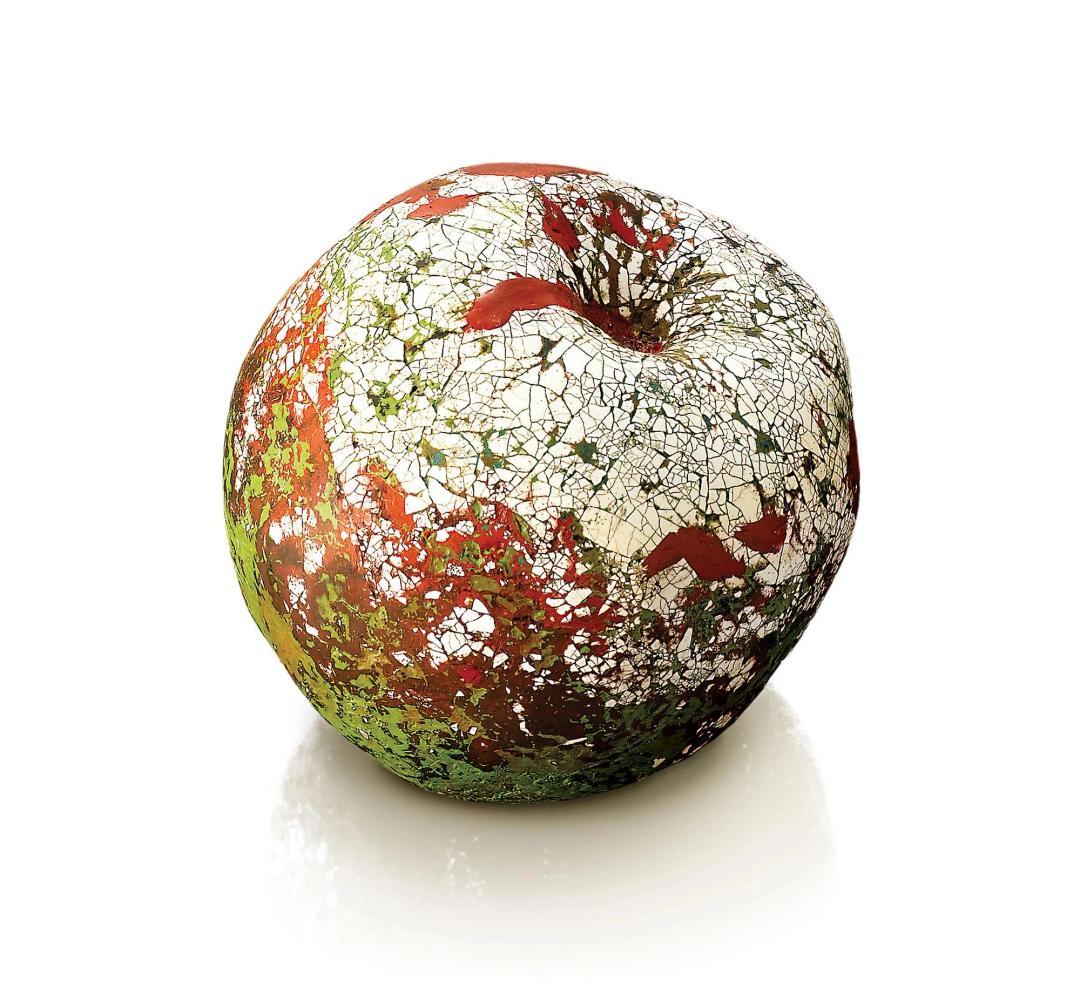
Jeong Chae-hee — Works in lacquer and eggshell inlay, bringing traditional Korean craft into contemporary dialogue.
In a line: Three-dimensional works in bronze, stone, wood, ceramic, and other materials. Korean craft works in ottchil (lacquer), najeon (mother-of-pearl), and gold leaf also belong here. Comparable in price to painting, but with greater demands for conservation, transport, and installation.
Sculpture by material
- Bronze — the most permanent, suitable for outdoor display. Made in unique editions or small editions of 8–12.
- Stone — granite, marble, etc. Always unique. Extremely heavy.
- Wood — warm in surface, sensitive to humidity.
- Ceramic — a strength of Korean artists. Fragile.
- Mixed Media — the dominant mode of contemporary sculpture.
How sculpture is priced
Material cost is significant in sculpture.
- A 30cm bronze — bronze alone runs ₩500,000–1,000,000.
- A 50cm marble — stone and transport alone exceed ₩1,000,000.
- A ceramic work — kiln costs and firing time.
Price is therefore decided by:
- Material cost (a major difference from painting)
- Size — a 100cm work is 5 to 10 times the price of a 30cm one
- The artist's place in art history
What to check
- The edition system. Bronze sculpture is usually issued in a limited edition; check the number, e.g.,
2/8. - Weight and installation site. Do you have space for a 50kg piece? Account for ceiling and floor load capacity.
- Transport and installation costs. For larger sculpture, transport and installation can run ₩500,000–2,000,000 separately. Ask in advance whether the artist or gallery covers these.
Conservation
- Bronze — outdoors, a green patina forms naturally. Indoors, dust off with a soft cloth.
- Stone — never use acidic cleaners; water only.
- Wood — humidity matters. Avoid direct sun.
- Ceramic — the highest breakage risk. Confirm the stability of the pedestal.
Related reading
If this piece helped, you may also enjoy these related articles:
A Comparative Table
| Medium | Price range | Supply | Conservation | First-buy rating |
|---|---|---|---|---|
| Painting | ₩1M–30M | 1 | Moderate | ★★★★ (stable) |
| ₩300K–3M | 10–100 | Demanding | ★★★★★ (best entry) | |
| Photograph | ₩300K–5M | 5–20 | Demanding | ★★★ (specific taste) |
| Sculpture | ₩1M–50M | 1 to limited | Easy (bronze) | ★★ (space required) |
Where Should You Begin?
Three scenarios.
Scenario ① — "I want my first wall piece."
Start with a print or a small original painting. The ₩300,000–1,000,000 tier is a reasonable place to begin, and conservation is relatively simple.
Scenario ② — "There's a particular artist I love."
Go to that artist's primary medium. If they're a painter, buy a small original; if a photographer, a small limited print. Approaching the work in its native form is more rewarding than detouring through prints.
Scenario ③ — "I need something to fill the space."
Sculpture, or large painting or photography. With sculpture, measure the space and check load capacity in advance; with large paintings, factor in wall color and lighting.
Where to Buy by Medium
Reliable sources differ by medium.
- Painting — direct from the artist, gallery representation, trusted online platforms.
- Prints — direct from the artist, specialist print galleries, museum-published editions sold in museum shops.
- Photography — direct from the artist, specialist photography galleries (e.g., the Hanmi Photography Museum shop).
- Sculpture — direct from the artist is safest (transport and installation are usually collaborative).
Gallery vs. Direct from the Artist — A Comparison of Buying Channels covers the trade-offs in detail.
Further Reading
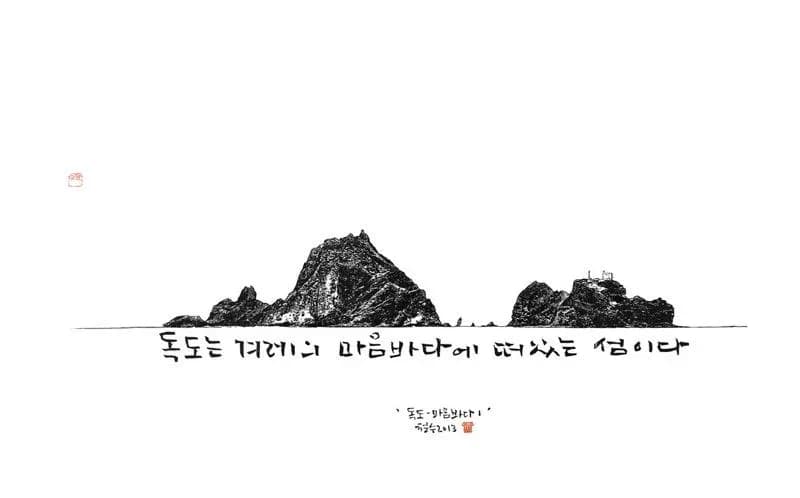
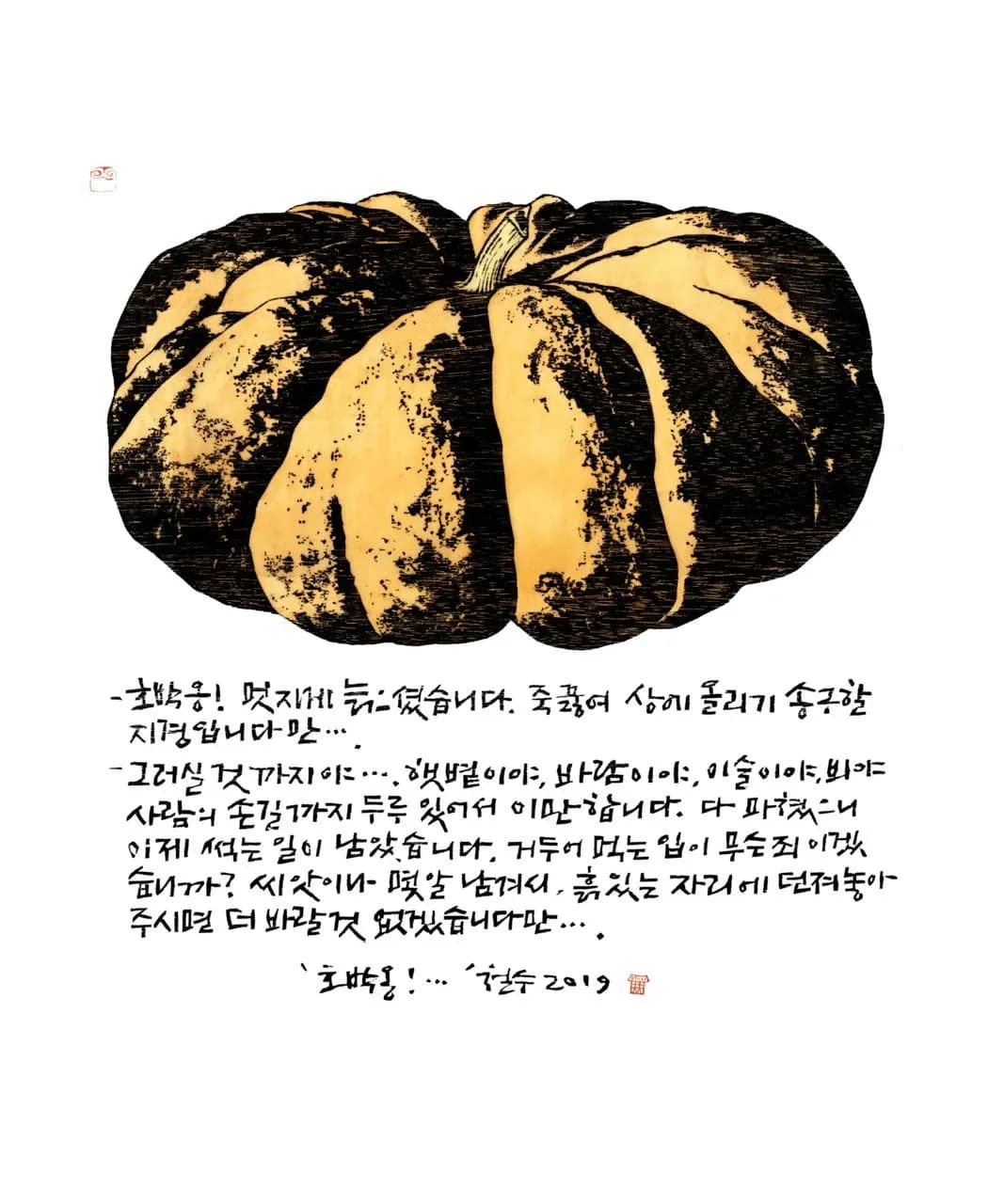
Browse SAF by medium: Painting · Prints · Photography · Sculpture
Related Guides
Seed Art Festival
·