Art is now bought online — but screen color differs from reality, and forgery risks lurk. A practical 5-step checklist before payment, plus what to do in the 7 days after.
Buying Art Online — A Safe 5-Step Checklist
In 2024 the share of online transactions in the Korean art market grew to 25–30%. Seeing a work on mobile, paying for it, and receiving it at home a few days later is becoming everyday.
But buying art online carries risks that buying directly at a gallery does not.
- Difference between monitor color and the real thing — the same work looks different on a laptop, a phone, and the wall at home
- Risk of forgery and reproduction — on unverified platforms, what's listed as a limited print may arrive as a digital reproduction
- Shipping accidents — canvas works damaged in transit
- Return disputes — when the policy isn't clear, refund and return become difficult
This guide organizes online art purchasing into a 5-step pre-payment checklist plus a 7-day post-payment guide. Following it removes more than 90% of these risks.
Pre-Payment 5-Step Checklist
Step 1. Verify the platform — where are you buying?
The first thing is trust verification of the platform itself. No matter how good the work, an unsafe platform makes the transaction itself unsafe.
Items to check
- ✅ Business registration number — visible in the footer, terms of service, and payment page
- ✅ Mail-order business filing — verifiable through the Korea Fair Trade Commission's lookup
- ✅ Privacy policy — security certifications stated (ISMS, ISO 27001, etc.)
- ✅ Operating period — platforms running for at least 1–2 years are safer
- ✅ Customer contact channels — at least two of email, phone, KakaoTalk channel
Warning signs
- ❌ Business registration information missing or hard to find
- ❌ Payment page on http rather than https
- ❌ Only KakaoTalk 1:1 payment accepted (no licensed PG)
- ❌ Domain less than a year old, or non-standard domains like .info, .top
- ❌ Signs of using artist images without consent
Trust levels of Korean online art platforms
| Type | Examples | Trust Level |
|---|---|---|
| Gallery's own website | Gana Art, Hakgojae, Gallery Hyundai | ★★★★★ |
| Major auction online | Seoul Auction Online, K Auction | ★★★★★ |
| Verified marketplace | Art & Guide, Open Gallery, Gallery K | ★★★★ |
| Platforms with social value | SAF Online, etc. | ★★★★ |
| Direct from artist (personal SNS) | Artist Instagram | ★★★ (verify artist identity) |
| Unverified new platform | (under 1 year, sparse information) | ★ (avoid) |
Step 2. Verify the work — what are you buying?
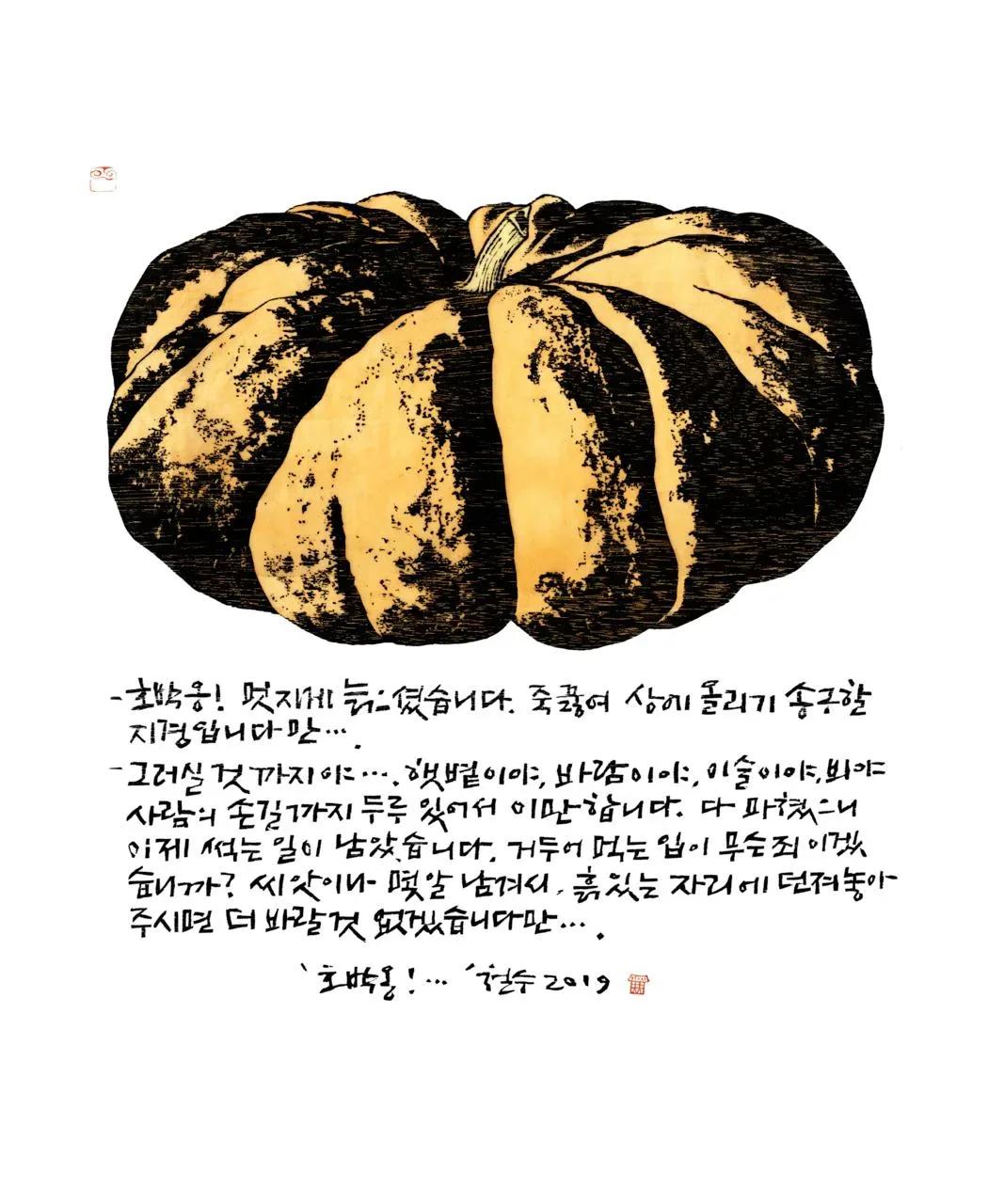
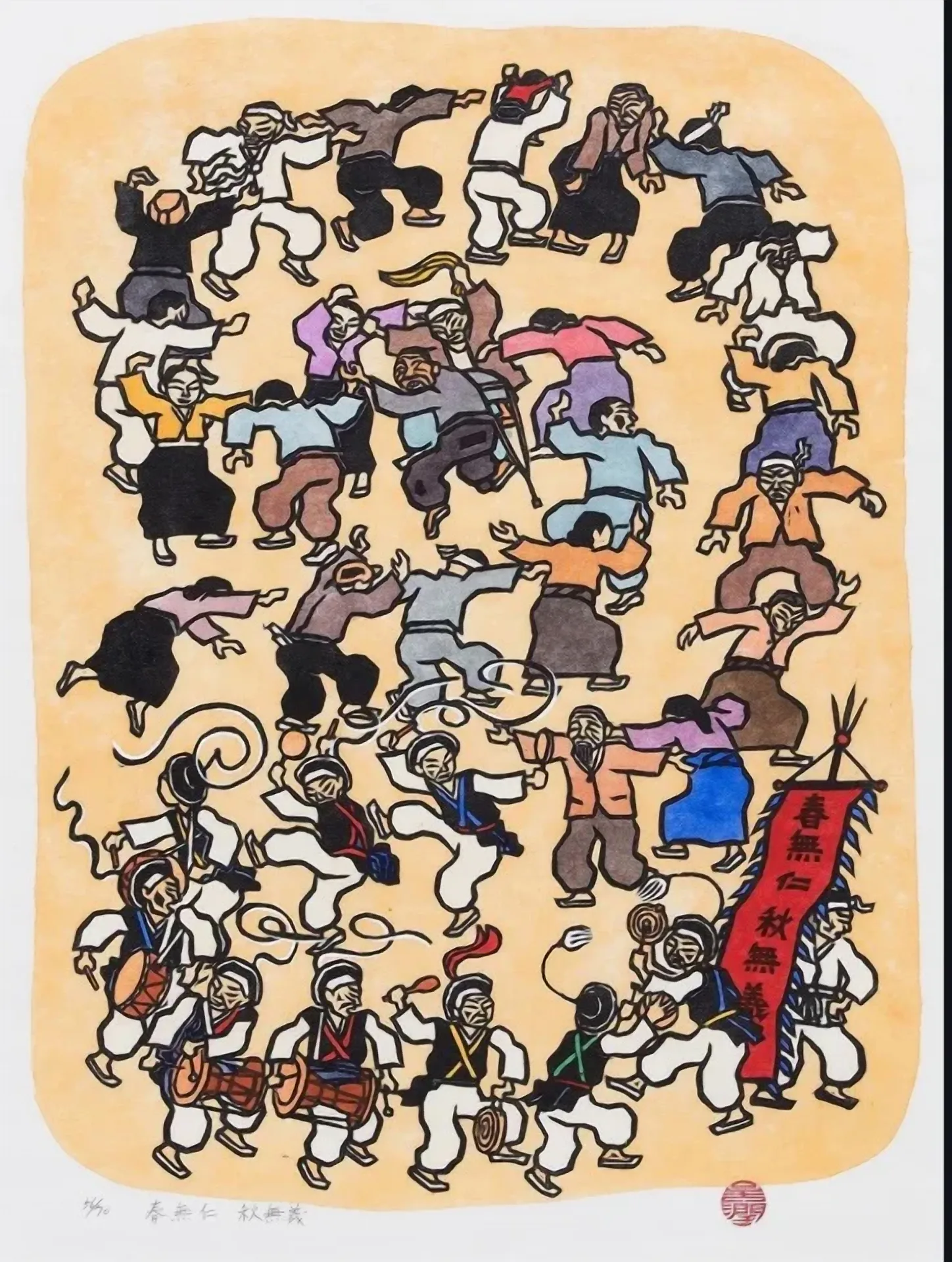
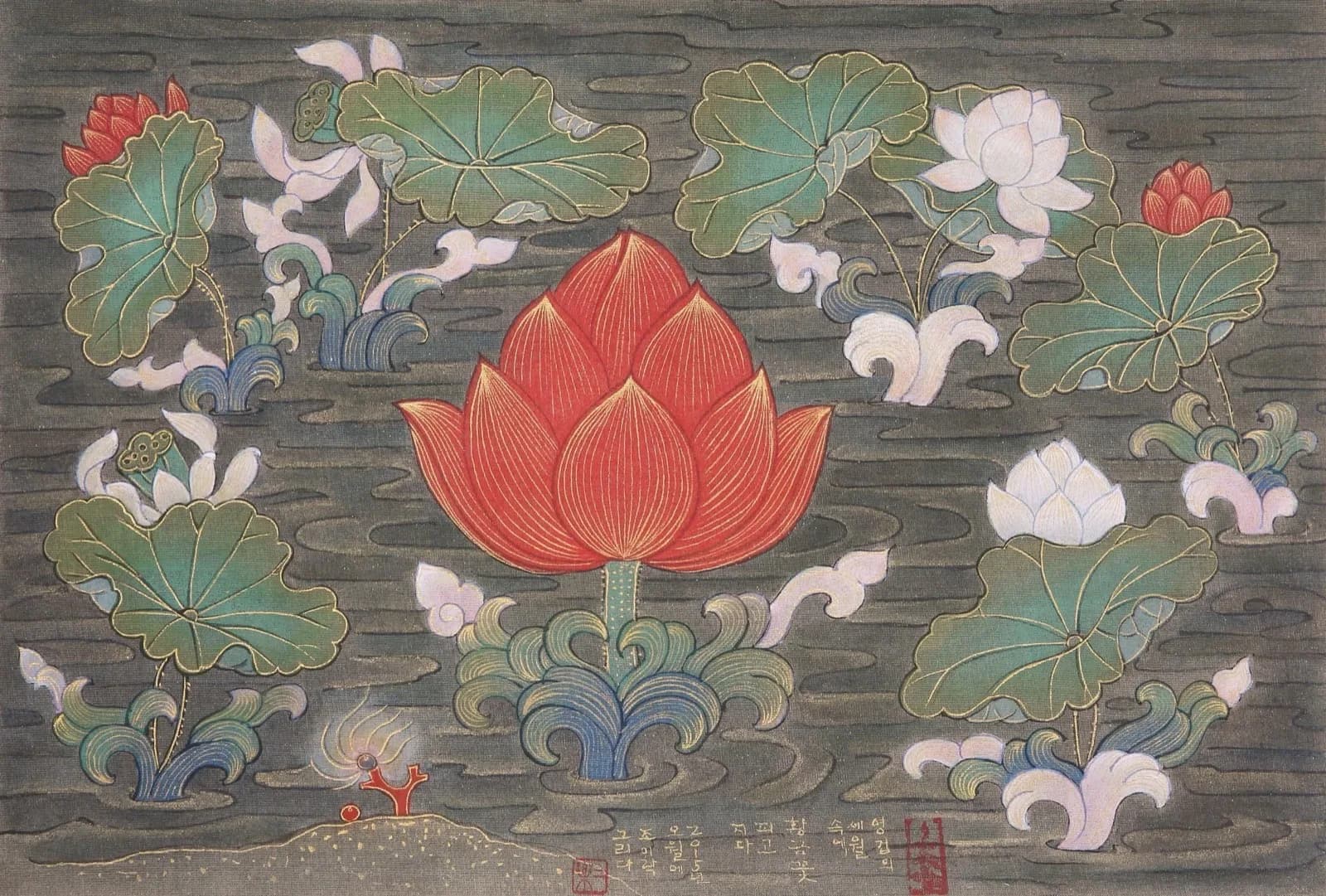
Lee Cheol-soo — A hanji woodblock master you can discover online first. Even through a screen, the texture and grain of his prints come through.
Once the platform is safe, the next step is the work itself. Online doesn't allow you to touch — so the information must be richer.
For paintings and drawings
- ✅ Artist name and exact title
- ✅ Year of creation
- ✅ Exact size (in cm, with traditional Korean ho sizing if relevant)
- ✅ Medium (oil, acrylic, watercolor, etc.)
- ✅ Canvas state (whether framed)
- ✅ Location and image of the artist's signature
For prints (must verify)
- ✅ Edition number (e.g.
12/30— 12th of 30) - ✅ Notation of AP/EA/HC if any
- ✅ Direct artist signature (in pencil or ink, not printed)
- ✅ Print technique (woodblock, etching, lithograph, screenprint, etc.)
- ✅ Print year and publishing gallery/atelier
The most common print fraud is labeling a work as a limited print and shipping a digital reproduction (inkjet). For details, see Why Prints and Originals Differ in Price by 10x.
For photographs
- ✅ Edition size (e.g. 3rd of 7)
- ✅ Paper type (Hahnemühle, Canson, archival grade)
- ✅ Print year
- ✅ Location of artist signature (typically on the verso)
Quality of the work's photographs
- ✅ High-resolution images (2,000 px and up)
- ✅ Multiple angles (front, side, detail)
- ✅ Images that allow size comparison (next to a person or with a ruler)
- ✅ Photos of the back (signature, canvas state)
- ❌ A single small frontal photo is reason for suspicion
Step 3. Simulate color and size — sense the real thing
The biggest online risk is the difference between monitor color and the actual work. Two ways to build a near-real impression before payment.
Method 1. Look on multiple screens
Compare the same work's photo on:
- A laptop (sRGB color space)
- A phone (DCI-P3 — more saturated)
- A printout on paper (closest to the real thing)
If the impression is good across all three, the actual work is likely to satisfy.
Method 2. Size simulation
Mark the work's size as a rectangle on your wall with masking tape. A 30-ho canvas (91x65cm) feels smaller or larger than expected. Live with it for a few days and you'll naturally judge whether it fits the space.
AR (augmented reality) simulation
Some platforms now offer AR functions that let you place a work virtually on your wall via your phone's camera. If available, use it.
Step 4. Verify payment safety — how are you paying?
No matter how good the work and platform, an accident at the payment stage makes the rest meaningless.
Safe payment methods
- ✅ Card payment through a licensed PG — Toss Payments, Inicis, KG Inicis, etc.
- ✅ Escrow — funds released to the seller after the buyer receives and confirms the work
- ✅ Installment payment — for larger works, deposit + balance options
Methods to avoid
- ❌ Bank transfer only — unclear liability in case of dispute
- ❌ KakaoTalk 1:1 payment — not a licensed PG; refunds difficult in case of fraud
- ❌ Cryptocurrency — hard to trace (avoid for serious collecting)
- ❌ Cash, in person — without receipt or contract, no evidence in dispute
Documents to receive at payment
- Tax invoice or cash receipt — proof of business transaction
- Receipt with work details — artist, title, year, materials, price
- Certificate of authenticity — included by reputable platforms
- Copy of terms and refund policy at the time of purchase
Step 5. Verify the return policy — what happens if you don't love it?
The last item to verify before paying.
Standard return policy (Korean e-commerce law)
- ✅ Change-of-mind return within 7 days of receipt — a legal right. 'No returns' notices are unenforceable
- ✅ Refund or exchange for defects — damage, suspected forgery, etc.
- ✅ Round-trip shipping — buyer pays for change of mind; seller pays for defects
Particularities of art
Art differs from general goods in that value rarely changes after opening, so return policies are comparatively generous. However:
- If shipped framed, frame damage may justify partial refund deduction
- If shipped removed from canvas, the cost of reattaching may be deducted
Red flags in a return policy
- ❌ 'Absolutely no returns' — illegal
- ❌ '50% return fee' — exceeds legal limits
- ❌ No return policy stated at all
A 7-Day Guide After Payment — What to Do When It Arrives
Payment is not the end but the beginning. Confirm the following within 7 days of receipt.
Day 1 — On arrival
- ✅ Photograph the packaging condition — evidence for any damage
- ✅ Film the unboxing — strong evidence in disputes; mount your phone and record
- ✅ If the packaging is damaged, report it immediately to the platform with photos — within 24 hours improves your chances of refund or exchange
Day 1–2 — Inspect the work
- ✅ Check the condition of the work
- Painting: canvas flatness, paint flaking, unusual smell
- Print/photograph: paper creases, discoloration, frame state
- Sculpture: damage, stability
- ✅ Verify against the listing
- Measure the size with a ruler
- Check artist signature and edition number
- Confirm material descriptions match
- ✅ Confirm certificate of authenticity is included
Day 2–3 — First impressions review
- ✅ Hang temporarily on the wall and live with it for a few days
- First impressions are the strongest
- Note how it changes with the light
- ✅ Listen to family or friends (optional)
- ✅ Compare to the listing photographs — note any color differences
Day 4–7 — Final decision
- ✅ Decide whether it's worth living with — if yes, frame and install
- ✅ If returning, file within 7 days — past 7 days, the change-of-mind right expires
After Day 7 — Begin conservation
If you're keeping the work, set up the conservation environment.
- Avoid direct sunlight
- Maintain 40–60% humidity
- Frame as needed
- Consider insurance (works above ₩10 million)
For medium-by-medium care, see Painting, Print, Photography, Sculpture — A Guide by Medium.
Five Common Online Art Scams — and How to Avoid Them
Scam 1. Limited print → digital reproduction
Situation: Advertised as 'edition of 30', but an inkjet reproduction arrives.
Defense: After delivery, check the edition number and signature. If only a printed signature is present and there's no pencil signature, file a return immediately.
Scam 2. Misuse of an artist's name
Situation: A work is listed under a famous artist's name but is unrelated to the actual artist.
Defense: Verify against the artist's own SNS or website. For gallery-represented artists, the gallery can confirm authenticity.
Scam 3. Fake certificate of authenticity
Situation: A certificate is included, but the issuing institution doesn't exist or is forged.
Defense: Contact the issuing body (gallery, artist, appraisal association) directly to verify. The Korean Art Appraisal Association is an official appraisal body.
Scam 4. After arrival, the seller claims 'it was always like that' and refuses refund
Situation: The work differs from the listing or is damaged, but the seller refuses refund saying 'it was always like that'.
Defense: Save a copy of the return policy at purchase. Photograph and film the packaging and work on arrival. File a dispute within 7 days.
Scam 5. Payment received but no shipment
Situation: Payment is received but shipment is delayed for days or weeks, then communication ends.
Defense: Use only licensed PG payment. With a card, refund through the card company is possible. If 7 days pass with no shipping information, start dispute proceedings immediately.
When Online Buying Is and Isn't Suitable
✅ Suitable for online
- Works under ₩1 million — a price band galleries rarely handle
- Works by artists in distant regions — when in-person visits are difficult
- Starting a collection — many works are easy to compare
- Clear taste — when you already know what you want
❌ Not suitable for online
- Works above ₩10 million — authenticity guarantees and physical inspection are decisive
- Works whose subtle color is essential — Dansaekhwa, minimalist painting
- Large-scale sculpture — spatial sense is decisive
- Artists whose authenticity is hard to verify — those with active forgery markets
Final Principles for Safe Online Art Buying
Three principles to take with you.
- Verify in order: platform → work → payment → returns → conservation. If any single stage shows a red flag, stopping is the safe choice.
- Always keep photos and videos. The listing page before payment, and the unboxing video after, are the strongest evidence in any dispute.
- Don't suspect the cheap, but suspect the too-cheap. A work priced more than 50% below market is most likely a forgery, reproduction, or scam.
Further Reading
Buying safely at the SAF online gallery:
- Direct gallery sales + certificate of authenticity + 7-day no-questions return + free shipping
- Toss Payments licensed PG
- Sales proceeds become the artists' mutual-aid fund: 354 loans to artists with a 95% repayment rate
Related reading
If this piece helped, you may also enjoy these related articles:
Related Guides

Explore Further
Seed Art Festival
·