Price
₩1,300,000
Limited edition of 16 — 16 left
Art protects art
8 out of 10
artists are shut out by banks
354
loans extended to fellow artists
95%
repayment rate — trust comes full circle
~KRW 140M
interest saved vs. predatory rates
Until the next exhibition, the next performance. For artists, income gaps are an unavoidable reality. For fellow artists forced into predatory loans just to afford paint, canvas, and studio rent, proceeds from this artwork become the Seed Fund — extending a fair hand at fair rates.
Voices of fellow artists
“The memory of going hungry for three days, alone, so my children wouldn't know.”
— 50s, theater artist
“I've been putting off urgent dental treatment because I can't afford it. I should be seeing a doctor regularly, but enduring instead of going has become a habit.”
— 50s, actor
“I kept delaying ear treatment because I had no money, and the symptoms in both ears worsened.”
— 30s, musician
“I couldn't pay my hospitalized mother's bills, so we had to delay her discharge, and she had to give up tests and treatment she needed.”
— 50s, actor/broadcaster
“Because of money troubles I had nowhere to go — drifting between gosiwon rooms and rehearsal studios, and for a while sleeping rough.”
— 30s, musician
“Because of unpaid rent, my collective was forced to vacate our shared workspace and home. Neither bank loans nor artist loans could help.”
— 50s, actor
“Without money, life collapses — and creating art? Out of the question.”
— 50s, artist
“It's painful that solving this month's money problems has to come before the work itself. As an artist, I can only earn well when the work succeeds — yet I have to chase odd jobs every month instead. It feels like being trapped in a vicious cycle.”
— 40s, musician
“Debt collection calls disrupted my rehearsals and performances, and the psychological burden made every day painful and the next day frightening.”
— 40s, theater artist
“Many times the loan payments looming each month forced me to step away from performing and focus on part-time work.”
— 50s, actor
“Sleeping less than four hours a night, juggling part-time jobs and theater — but the more I performed, the more debt piled up. Eventually I decided to quit performing.”
— 30s, actor
“When things were hardest, I couldn't even attend close friends' weddings or funerals — and as a result, relationships were severed.”
— 50s, actor/broadcaster
“When I said I was a stage actor, the loan officer called me "unemployed."”
— 50s, actor
“The shame and severed friendships that came with borrowing from people I knew, the pressure of failing to pay it back, the helplessness.”
— 50s, cartoonist/visual artist
“Even with programs meant for low-income citizens, I feel shame when I can't produce enough documentation simply because I'm an artist.”
— 30s, film/broadcasting professional
One artwork becomes the oxygen that keeps a fellow artist creating.
Sales proceeds go to the artist mutual-aid fund.
The Time of Quarks #135
Choi Jaeran
- Category
- Photography
- Material
- Archival pigment print What's a pigment print? →
- Size
- 30×40cm · Size 6 · Small How big is this? →
- Year
- 2026
- Edition
- Edition 1/16 What's an edition? →
- Price
- ₩1,300,000
- Availability
- For sale
About the Artist
Choi Jaeran is a Suwon-based photographer who has documented Hwaseong Fortress and urban landscapes through photography. After receiving her B.A. in Photography from Chung-Ang University and her M.P.A. from the Graduate School of Public Policy at Ajou University, she has held solo exhibitions including 〈Kairos Mural〉 at Art Space Areum (2023), 〈Hwaseong: Landscape of Apocalypse〉 at Haenggung-jae Gallery and Suwon SK Artrium (2020 and 2022), 〈Tears〉 at DDP (2019), 〈Hwaseong: Peripheral Landscape〉 at Ideale (2019), and 〈Dreaming Ballad〉 at Nosong Gallery (2017). She has participated in numerous photography festivals and curated exhibitions, including the Republic of Korea International Photo Festival, the Gyeonggi-do Photo Festival, the Busan International Photo Festival Open Call Special Exhibition, and the Culture Line 1 Touring Exhibition across Bupyeong, Bucheon, Yeongdeungpo, Suwon, and Uijeongbu.
Artist Statement
The Time of Quarks
Artist's Statement
Choi Jae-ran
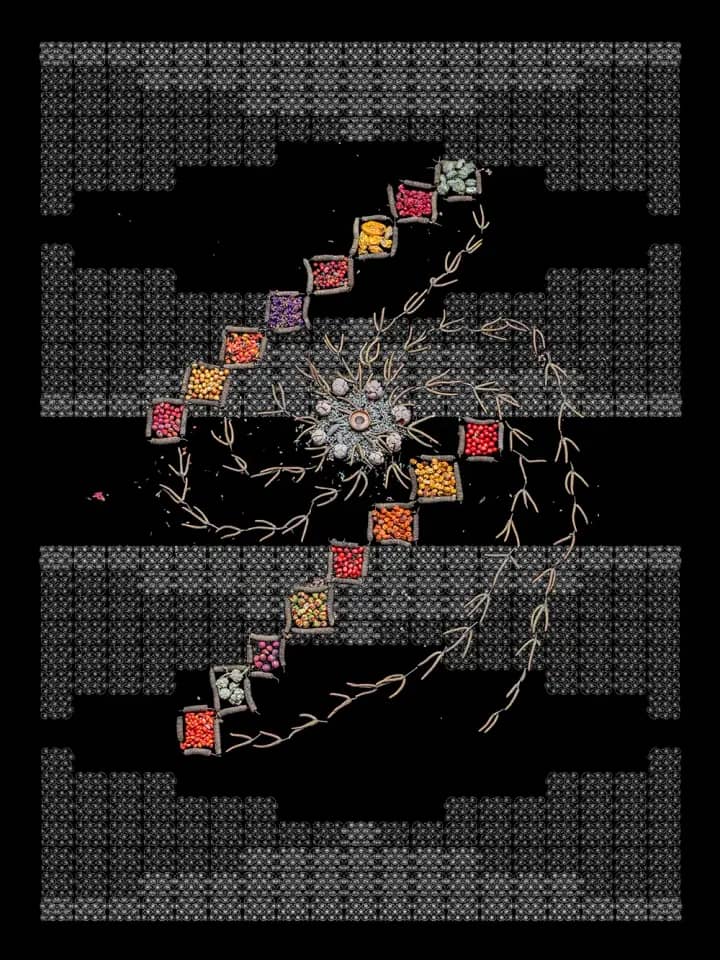
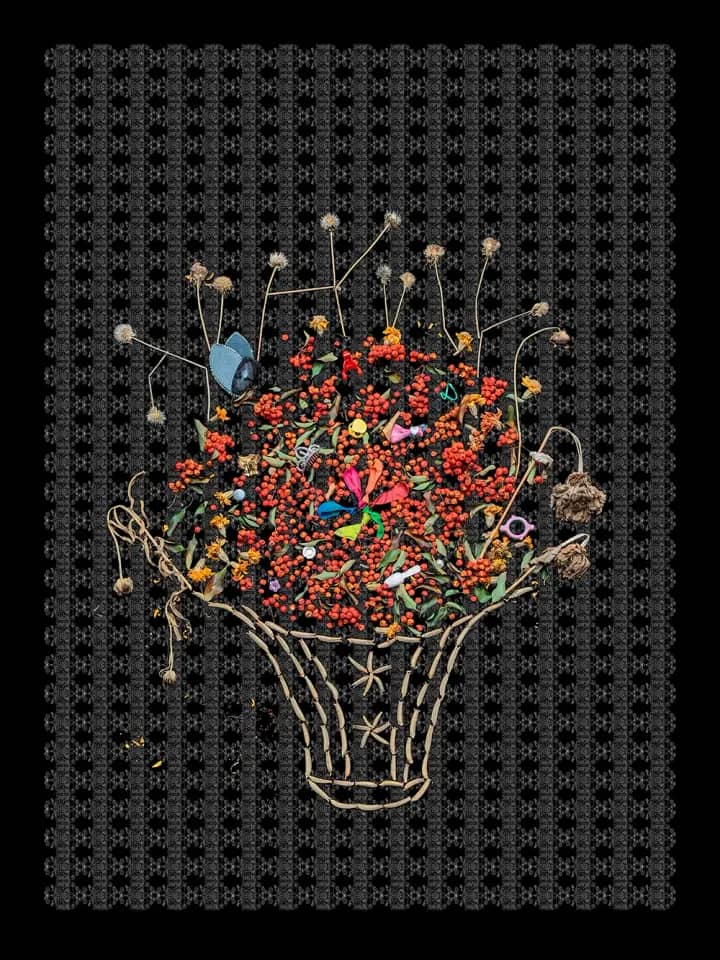
According to the Standard Model of particle physics, the "quark" is a constituent of the protons and neutrons of atomic nuclei, and the most fundamental particle that makes up the universe. <The Time of Quarks> is a work that contemplates the unseen time we experience and feel at every moment in everyday life, by borrowing the concept of time from physics. I gather and collect natural objects encountered on walks — fallen petals, fruits, small seeds — arrange them as a still life, and then symbolically draw the unseen time of the universe over them, trying to express the directionality of time.
From long ago, human beings have reflected on the source of life and the principles of living through nature, striving to live humbly in accordance with nature's cycles. In this work, the figure of nature withering and disappearing recalls the human cycle of birth, aging, sickness, and death; I arrange the gathered objects while imagining the night sky and the infinite time of the cosmos, and over them I draw constellations, the universe, time as conceived in physics, and traditional patterns.
The working method is at once everyday and ritualistic. Each day I walk, observe, and collect natural objects; against a black ground, imagining the universe, I hang withered things by wire, attach seeds and fruits, fix the fading with pins, and recombine them, expressing the essence of nature as a still life. Then over the still life I draw, in symbolic form, constellations, the universe, time as conceived in physics, and traditional patterns. In ancient times stars were taken to symbolize the birth or death of great figures, or to suggest the world to come, and the movements of the stars were markers of the passing of seasons and time. I drew constellations into the work with the wish that the still lifes I had composed might become stars within my own universe. Prehistoric rock paintings, too, hold the cosmology, faith, and ritual practices of those who made them, and the "chilbo" (seven-treasures) pattern, one of Korea's traditional motifs, is a symbolic pattern wishing for good fortune, longevity, and blessings, widely used on ceramics, garments, and ornaments. By borrowing and reinterpreting these ancient symbols and traditional patterns, I tried to lend continuity and the flow of time to the work, and to express a longing for the eternal.
<The Time of Quarks>, through its still-life compositions in which life and death are present at once, is a metaphor for the truth that all beings live within finite time. By performing the still-life arrangement and the act of drawing as if they were a ritual, I have tried to hold a mourning for vanishing beings, and an earnest wish that they might shine forever in my own universe. In the end we are all beings who live a finite span of time. Born on Earth — a small dot in the vast universe — and moving in one direction, where are we going? I hope this question becomes a moment to reflect on my own existence and on the meaning of life.
Next I am planning a follow-up series, <The Time of Quarks: Sea>. It will unfold the directionality of time from a different angle, centered on small fragments worn down by long years of waves, through still-life composition and drawing.
Key Career Highlights
Related materials
Korean media · Original Korean article
This article text is currently available in Korean. Open the source to read the original version.
Korean media · Original Korean article
This article text is currently available in Korean. Open the source to read the original version.
Korean media · Original Korean article
This article text is currently available in Korean. Open the source to read the original version.
Korean media · Original Korean article
This article text is currently available in Korean. Open the source to read the original version.
Magazine
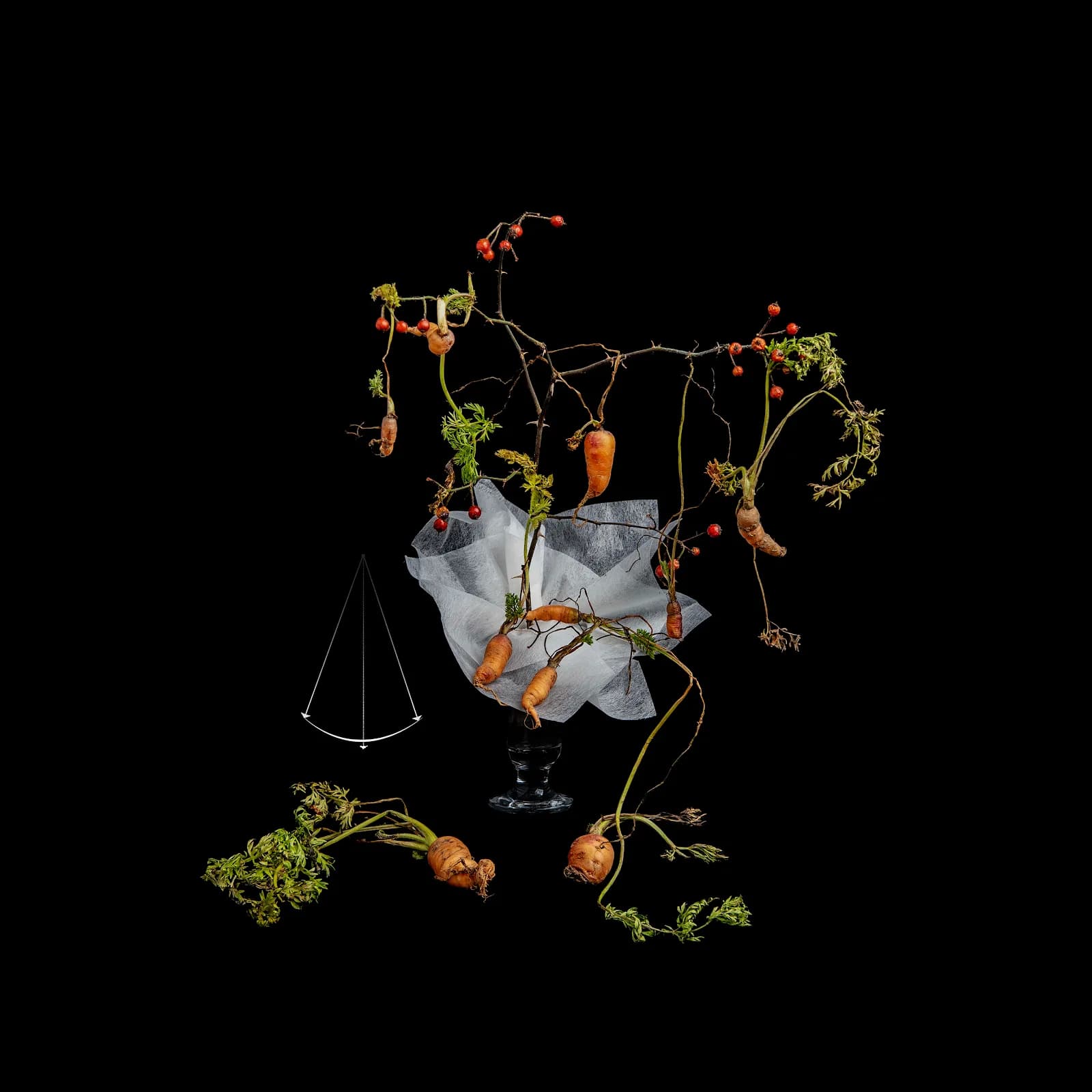
Between Quarks and Kairos: Choe Jaeran's Suwon, Photographs of Time
Choe Jaeran's *Time of Quarks* overlays daily-walk natural objects with drawings of invisible time. Photography and public administration, kairos and chronos.
Apr 20, 2026 · Seed Art Festival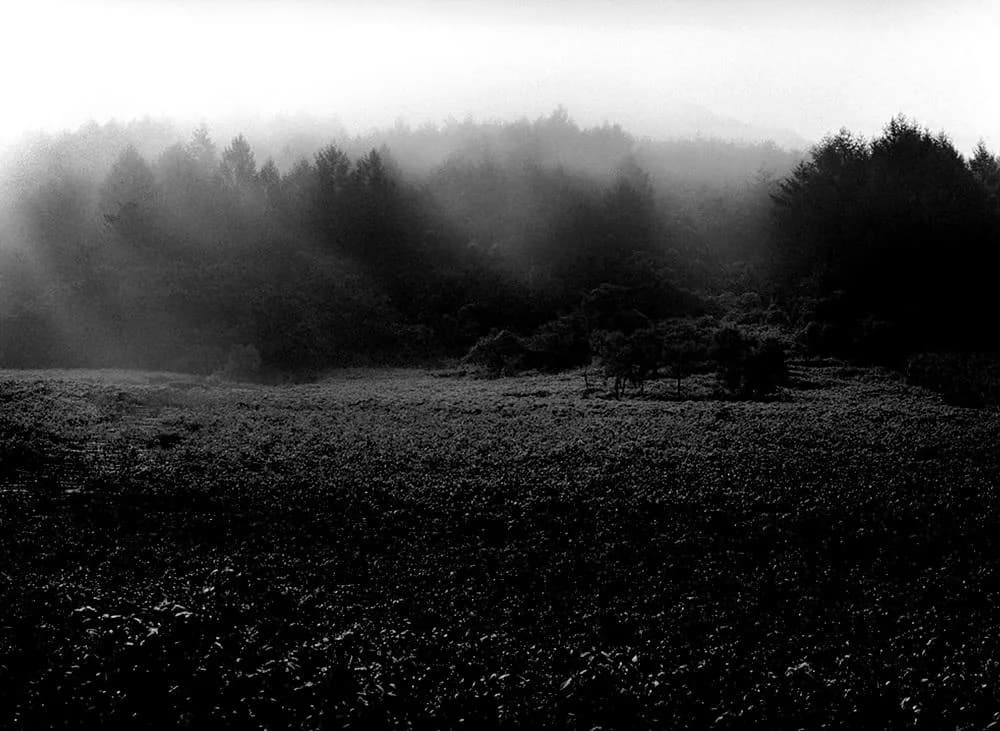
Korean Landscape and the Lives of Common People — The Documentary Photography of Cho Mun-ho, Jeong Yeong-shin, and Kim Soo-oh
The flow of Korean documentary and landscape photography — the practices of three masters Cho Mun-ho, Jeong Yeong-shin, and Kim Soo-oh, plus five collecting perspectives.
May 10, 2026 · Seed Art Festival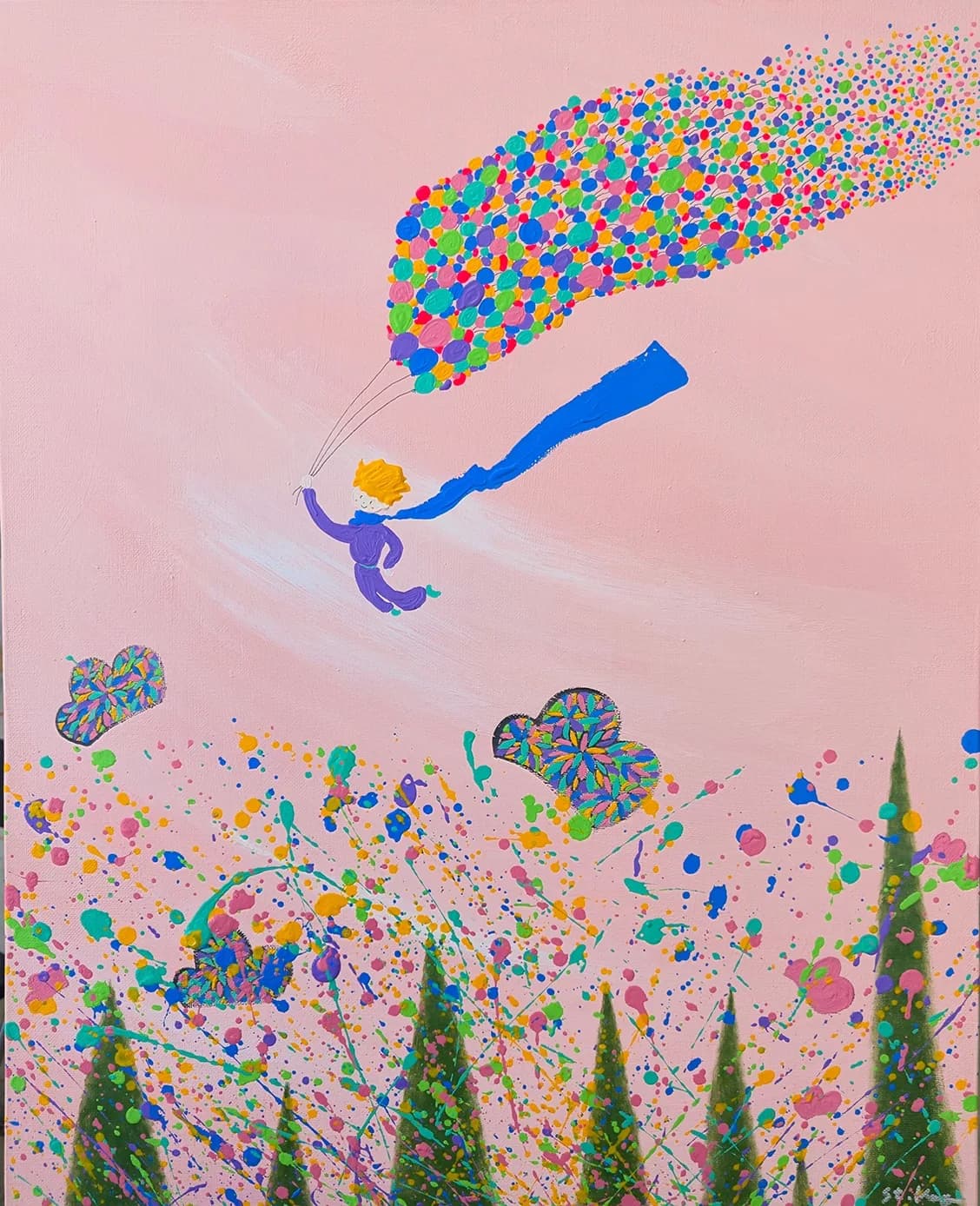
A First-Time Art Buyer’s Price Guide — From ₩300K to ₩10M
“How much should I start with?” The most common question from first-time art buyers. Here is what you can buy, and how to choose, at four price tiers — ₩300K, ₩1M, ₩3M, and ₩10M.
Apr 30, 2026 · Seed Art FestivalOther works by Choi Jaeran
View All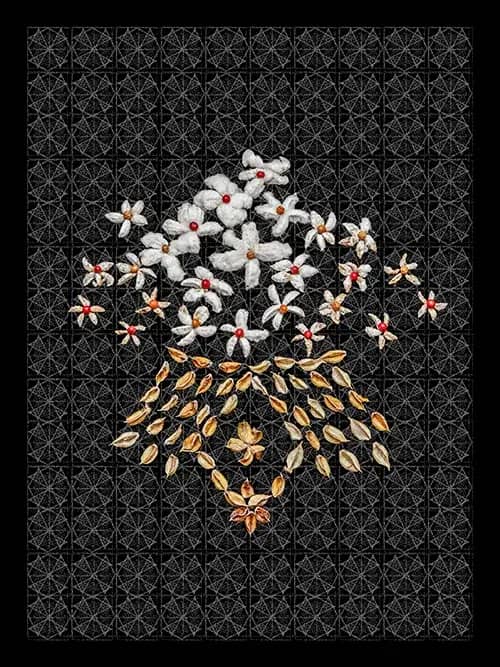
More Photography Artworks
View all Photography
Price
₩1,300,000
Two beginnings made by one piece
- For you —
- One of only 16 limited prints
- For the artist —
- the pride of standing with a peer
- For a fellow artist —
- a new ₩3,000,000 path of low-interest support
354 artists have walked this path of recovery; 95% returned to open it for the next.